
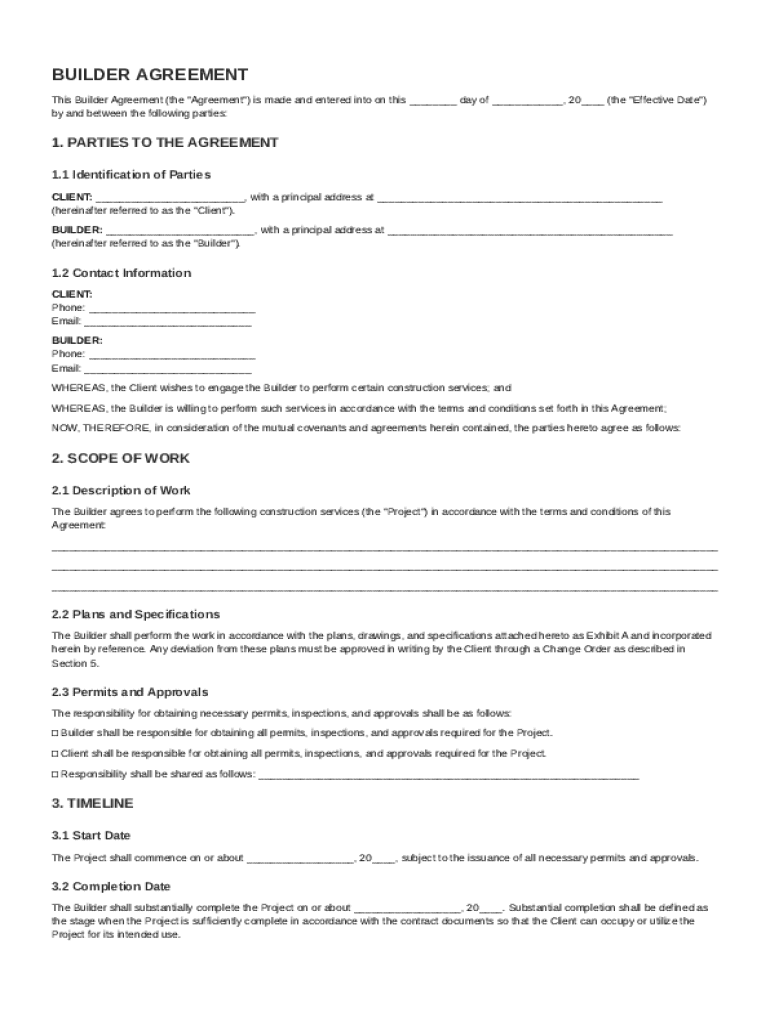







Definition & Meaning
The Builder Agreement Template is a legally binding document that establishes the terms and conditions between a client and a builder for construction services. This agreement outlines the responsibilities and expectations of both parties, ensuring clarity and compliance throughout the project. It serves as a comprehensive guide detailing everything from project scope to dispute resolution methods. By clearly defining the commitments and obligations of each party, the template minimizes misunderstandings and promotes a smooth construction process.
Key Elements of the Builder Agreement Template
The Builder Agreement Template consists of several critical components that define the contractual relationship:
- Identification of Parties: Clearly identifies the client and the builder, including their legal names and contact information.
- Scope of Work: Details the specific tasks and responsibilities assigned to the builder, including timelines and deliverables.
- Payment Terms: Outlines the structure for payments, such as milestones, due dates, and acceptable payment methods.
- Change Orders: Explains how modifications to the original contract will be managed, including any associated costs.
- Liabilities and Insurance: Addresses the builder's liability and insurance obligations to mitigate risks during the construction.
- Termination Clauses: Specifies the conditions under which either party can terminate the agreement.
- Dispute Resolution: Provides methods for settling any disputes that may arise, such as mediation or arbitration.
- Miscellaneous Provisions: Covers additional terms that may not fit into other categories but are essential for the agreement's enforceability.
Steps to Complete the Builder Agreement Template
Completing the Builder Agreement Template involves several steps to ensure accuracy and compliance:
- Gather Necessary Information: Collect all relevant details about the project, parties involved, and scope of work.
- Fill in Party Details: Enter the legal names and contact details for both the client and the builder.
- Define the Scope of Work: Provide an itemized list of tasks, timelines, and deliverables expected from the builder.
- Establish Payment Terms: Specify payment amounts, schedules, and methods to avoid disputes over financial aspects.
- Include Change Order Procedures: Detail how changes to the scope or budget will be handled and documented.
- Detail Insurance Requirements: Ensure all necessary insurance policies are outlined and maintained by the builder.
- Outline Dispute Resolution: Agree on methods for resolving disagreements, promoting a cooperative approach.
- Review and Sign: Both parties should thoroughly review and sign the document to formalize the agreement.
Important Terms Related to the Builder Agreement Template
Understanding the terminology used within the Builder Agreement Template is crucial:
- Construction Schedule: A timeline that outlines when specific tasks should be commenced and completed.
- Retainage: A portion of the agreed contract price withheld until the work is substantially complete to ensure fulfillment of obligations.
- Substantial Completion: A phase in which the project is sufficiently complete for the client to use, though minor tasks might remain.
- Force Majeure: A clause that frees parties from liability or obligation when an extraordinary event prevents one or both from fulfilling the contract.
- Lien Waiver: A document from a contractor, subcontractor, or supplier waiving their right to file a lien against the property for unpaid work or materials.
Legal Use of the Builder Agreement Template
The Builder Agreement Template is designed to be legally compliant with construction laws and regulations in the United States. It ensures that both parties recognize their legal responsibilities, which include adhering to building codes, ensuring worker safety, and maintaining accurate financial records. By providing a structured framework, this template supports the enforcement of legal rights if disputes arise. Legal provisions such as indemnity clauses and warranties contribute to this enforceability, protecting both the client and builder under U.S. law.
State-Specific Rules for the Builder Agreement Template
Construction laws and regulations can vary significantly across different U.S. states. Therefore, it's essential to tailor the Builder Agreement Template to comply with local laws. For instance:
- California: Requires specific wording for arbitration clauses and compliance with stringent licensing laws.
- Texas: Emphasizes the importance of clearly written contracts due to the state's robust lien laws.
- Florida: Mandates disclosures related to construction liens and contractor licensing laws.
- New York: Requires inclusion of the Home Improvement Disclosure for residential construction contracts.
Each state might have unique requirements that necessitate customizing the agreement to avoid legal complications.
Examples of Using the Builder Agreement Template
The Builder Agreement Template can serve various scenarios within the construction industry:
- Residential Construction: Used when building single-family homes, ensuring both the homeowner and builder understand their commitments.
- Commercial Construction: Employed in larger projects like office buildings, where clear guidelines on scope and payment are crucial.
- Home Renovations: Utilized for remodeling projects, detailing specific parts of the home to be updated and associated costs.
- Subcontracting: When a builder hires subcontractors, this template helps define the scope and terms under which these parties operate.
Each application of the template ensures that all involved parties operate with a clear, shared understanding of expectations.
Digital vs. Paper Version
In today's digital age, using a digital version of the Builder Agreement Template offers several advantages over the traditional paper format:
- Efficiency: Digital agreements streamline the process of editing and signing documents, reducing time and errors.
- Accessibility: Digital documents can be easily accessed and managed from anywhere, facilitating remote collaboration and adjustments.
- Security: Online platforms like DocHub provide encryption and access controls, enhancing the security of sensitive contract details.
- Environmentally Friendly: Reduces the need for paper, contributing to environmental conservation efforts.
Despite these benefits, some parties may still prefer paper versions due to familiarity or existing infrastructural constraints.







