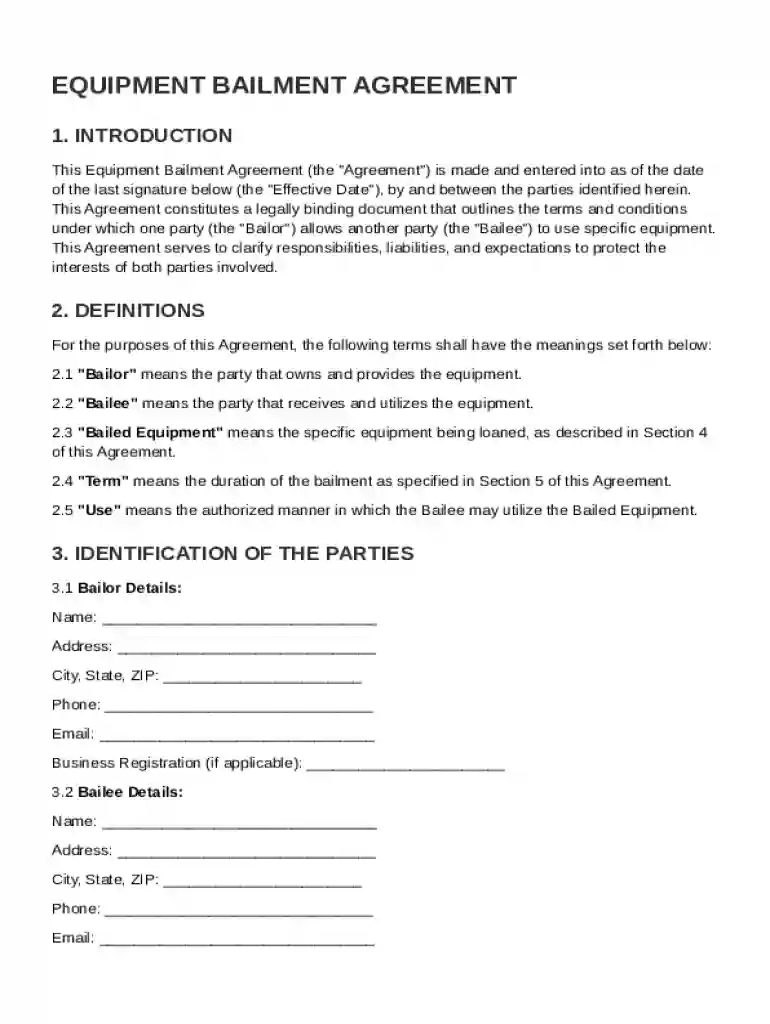
Definition and Meaning of Equipment Bailment Agreement Template
An Equipment Bailment Agreement Template is a legal document that outlines the terms and conditions under which a bailor (the owner) permits a bailee (the user) to use specific equipment. This agreement covers a range of critical aspects, including the responsibilities of each party, the use and maintenance of the equipment, and ownership rights. It serves to protect both parties by clearly articulating expectations and liabilities, thereby minimizing potential disputes. A well-structured agreement will include clauses on indemnification, dispute resolution via mediation or arbitration, and stipulations on insurance and liability.
Core Elements
- Roles and Responsibilities: Defines who the bailor and bailee are, detailing their respective duties.
- Equipment Description: Lists the specific equipment included under the agreement, ensuring clarity on what is being loaned.
- Usage Guidelines: Sets boundaries on how the equipment can be used by the bailee, ensuring it is utilized appropriately.
- Maintenance Requirements: Details who is responsible for maintaining the equipment and the standards that need to be upheld.
- Liability and Insurance: Addresses who bears the responsibility for the equipment in case of damage or loss, including requisite insurance coverage.
Key Elements of the Equipment Bailment Agreement Template
To ensure the Equipment Bailment Agreement Template is comprehensive, several key elements need to be included. These elements safeguard the interests of both parties and ensure that the equipment is adequately protected and responsibly used.
Essential Components
- Authorized Use: Specifies permitted uses of the equipment to prevent misuse and ensure it is operated under the agreed terms.
- Indemnification Clauses: Protects each party from potential legal claims arising from the equipment's use.
- Amendments and Notices: Outlines procedures for making changes to the agreement, including providing notices to the other party.
- Ownership Rights: Affirms the bailor's ownership of the equipment throughout the agreement period.
- Dispute Resolution: Provides options for resolving disagreements, such as mediation or arbitration, to avoid litigation.
How to Use the Equipment Bailment Agreement Template
Using the Equipment Bailment Agreement Template involves several steps to ensure that it accurately captures the terms agreed upon by the parties involved. This helps guarantee that expectations are clear, and the arrangement operates smoothly.
Step-by-Step Guide
- Review Template: Start by thoroughly reading the template to understand the structure and the sections that need input.
- Complete Party Information: Input the full legal names and contact information for both the bailor and bailee.
- Describe Equipment: Provide details about the equipment, including make, model, and serial number, to avoid any ambiguity.
- Set Terms and Conditions: Clearly state the duration of the bailment, any restrictions on the use of equipment, and maintenance responsibilities.
- Include Legal Clauses: Ensure all necessary legal provisions are included, such as indemnity and liability clauses.
- Sign and Date: Both parties should sign and date the document to formalize the agreement, ideally in the presence of a witness.
Important Terms Related to Equipment Bailment Agreement Template
Understanding the terminology used in the Equipment Bailment Agreement Template is crucial for both parties to comprehend their rights and obligations fully.
Glossary of Terms
- Bailor: The party who owns the equipment and permits its use by the bailee.
- Bailee: The party who receives permission to use the equipment under the terms of the agreement.
- Indemnification: A provision agreeing to compensate for any loss or damage incurred.
- Arbitration: A method of dispute resolution wherein an independent third party is chosen to settle conflicts without court involvement.
- Liability: Legal responsibility for the equipment's safety and any resultant damage.
Who Typically Uses the Equipment Bailment Agreement Template
The Equipment Bailment Agreement Template is utilized across various industries and by different entities to legally manage the temporary transfer of equipment.

Typical Users
- Business Owners: Companies lending equipment to contractors or partners.
- Service Providers: Businesses that require specialized equipment for operation but don’t own it.
- Educational Institutions: Schools or universities lending equipment to students or faculty for educational purposes.
- Nonprofits: Organizations that need equipment for events or outreach activities temporarily.
- Individuals: Personal loans of equipment for non-commercial activities, such as hobbyists sharing tools.
Legal Use and Compliance of the Equipment Bailment Agreement Template
The legal framework surrounding the Equipment Bailment Agreement Template varies by jurisdiction but maintains essential principles nationally. It is critical to ensure compliance with legal standards to prevent disputes.
Legal Considerations
- Jurisdictional Rules: Familiarize with state regulations regarding bailment to ensure the agreement adheres to local laws.
- Insurance Requirements: Verify insurance coverage is sufficient and meets legal stipulations to cover potential liabilities.
- Standards and Practices: Ensure that the agreement complies with industry standards for safety and operational use.
State-Specific Rules for the Equipment Bailment Agreement Template
While the core principles of a bailment agreement remain constant, there can be state-specific rules and regulations that impact its applicability.
Variations by State
- Insurance Mandates: Some states require specific insurance policies for bailees concerning high-value equipment.
- Regulatory Compliance: Adherence to state transportation guidelines if equipment is moved across state lines.
- Consumer Protection Laws: Differences in consumer rights might influence agreement terms, particularly regarding private loans.
Risks and Liabilities Concerning the Equipment Bailment Agreement Template
Understanding the risks and liabilities associated with the Equipment Bailment Agreement Template is crucial to manage responsibilities effectively and mitigate potential issues.
Risk Management
- Equipment Damage: Define who is responsible for repairs or replacements in case of damage, including options for insurance claims.
- Failure to Return: Include penalties or ramifications for failing to return equipment on the agreed date.
- Miscalculations in Maintenance Costs: Clearly outline how maintenance costs are computed to prevent misinterpretations.