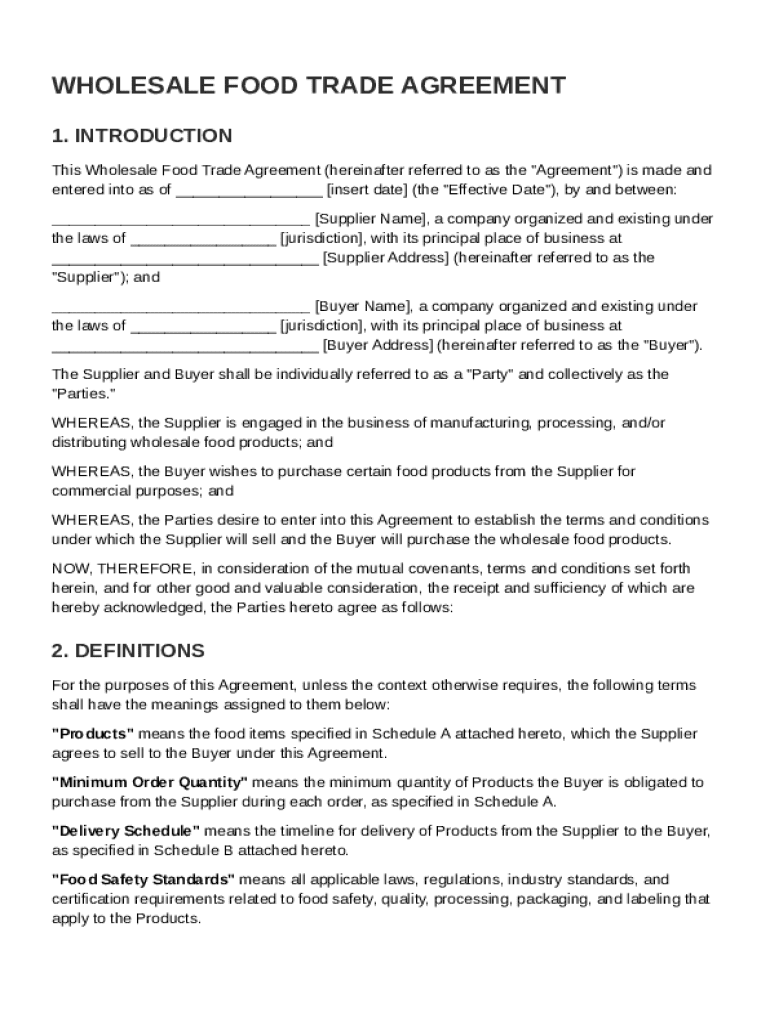







Definition & Meaning
A Wholesale Food Trade Agreement Template serves as a structured document establishing terms between a Supplier and Buyer in the wholesale food industry. It outlines responsibilities, rights, and expectations, setting a framework for product transactions. This agreement includes essential details such as definitions of key terms, pricing structures, payment conditions, delivery obligations, warranties, liability clauses, confidentiality agreements, and dispute resolution methods. It functions as a foundational legal document that ensures clarity and alignment between parties regarding wholesale food product transactions.
Key Elements of the Wholesale Food Trade Agreement Template
The template includes several critical components integral to maintaining a clear and enforceable agreement:
- Definitions: Provides clarity on terms and conditions, ensuring both parties understand their roles and responsibilities.
- Pricing and Payment Terms: Details the cost mechanisms, including any discounts, payment schedules, and penalties for late payments, ensuring both parties are aligned on financial expectations.
- Delivery Obligations: Specifies the logistics of product shipments, including timelines, locations, and conditions for the delivery of goods.
- Warranties and Liability Limitations: Outlines the guarantees provided by the Supplier and limits on liability should issues arise, protecting both parties legally.
- Confidentiality Provisions: Ensures sensitive business information is kept private, preventing unauthorized disclosures.
- Dispute Resolution Mechanisms: Details the processes for handling disagreements, potentially through arbitration or mediation, to avoid litigation.
How to Use the Wholesale Food Trade Agreement Template
The effective use of this template involves several steps to ensure it adequately addresses the unique needs of both the Supplier and Buyer:
- Customization: Tailor the template to the specific business relationship, adjusting terms that reflect the particular products and services involved.
- Review Legal Requirements: Verify that the agreement complies with applicable laws and regulations, considering any state-specific legal requirements as needed.
- Consultation: Engage with legal counsel to ensure that the language in the contract is precise and provides adequate coverage for the agreed terms.
- Negotiation and Agreement: Discuss the terms with the Buyer or Supplier to reach mutually beneficial agreements on all points.
- Finalization and Signing: Execute the contract with electronic or handwritten signatures, ensuring both parties have legal copies for their records.
Important Terms Related to Wholesale Food Trade Agreement Template
Understanding the terminology used in the template is fundamental to ensuring clarity and compliance. Key terms include:
- Supplier and Buyer: The parties involved in the transaction, each with respective rights and obligations.
- Minimum Order Quantity: The smallest amount need to be purchased to validate the transaction.
- Net Terms: The period the Buyer has to pay the Supplier following receipt of goods or services.
- Indemnification: A clause where one party agrees to compensate the other for any harm, liability, or loss arising out of the contract.
Legal Use of the Wholesale Food Trade Agreement Template
This section focuses on the legal implications of utilizing the template:
- Compliance with Laws: It is crucial to ensure that the agreement is legally binding and adheres to federal, state, and local regulations governing food trade.
- Enforcement of Terms: Clearly articulated terms within the agreement can be legally enforced should disputes arise.
- Protection Against Breaches: The agreement acts as a tool to legally protect against breaches or non-completion of obligations, offering recourse through specified legal channels.
Who Typically Uses the Wholesale Food Trade Agreement Template
This template is most commonly used by various parties in the food distribution chain:
- Food Suppliers: Entities providing goods for purchase in bulk to other businesses.
- Wholesalers and Distributors: Companies that buy food products in bulk from suppliers to sell to retailers.
- Retailers: Businesses, such as grocery stores or restaurants, that purchase wholesale goods to sell directly to consumers.


Steps to Complete the Wholesale Food Trade Agreement Template
Filling out the template involves a series of detailed steps:
- Input Basic Details: Enter the names and contact information for both parties.
- Specify Terms: Clearly define payment, pricing, delivery, and product specifications.
- Include Legal Provisions: Ensure the inclusion of confidentiality, liability, and dispute resolution clauses.
- Review and Revise: Scrutinize the agreement to ensure all terms are acceptable and any errors are corrected.
- Validation and Signature Gathering: Collect signatures from all involved parties to execute the contract officially.
Examples of Using the Wholesale Food Trade Agreement Template
Several real-world scenarios illustrate the utility of this template:
- A national grocery chain negotiates with a regional produce supplier, leveraging the contract to set prices and delivery schedules.
- An international food distributor uses the agreement to supply specialty items to local suppliers with clear terms on payment and quality assurance.
- A restaurant group finalizes a deal with a seafood supplier, aligning the supply timelines with their peak business periods to ensure fresh inventory.