






Definition and Meaning
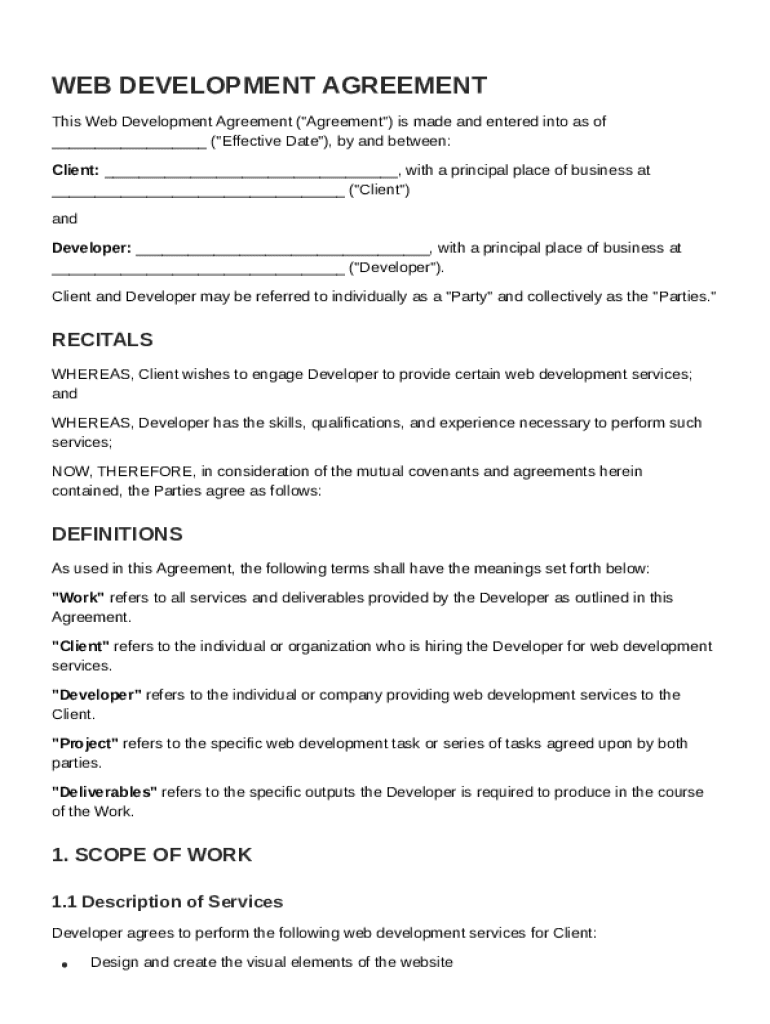
A Web Development Agreement Template serves as a formal contract that defines the terms between a client and a developer for web development services. This document is pivotal in setting clear expectations, responsibilities, and deliverables for both parties. It typically includes definitions of key terms, the scope of the project, ownership rights, confidentiality obligations, and warranties. The agreement aims to protect the interests of both the client and the developer, minimizing potential disputes and misunderstandings.
Key Components
- Scope of Work: Clearly outlines the services provided by the developer, including specific deliverables, timelines, and milestones.
- Compensation Structure: Details payment terms, including the total project cost, billing schedule, and any contingencies.
- Intellectual Property Ownership: Specifies who holds the rights to the developed site and components after project completion.
- Confidentiality Obligations: Protects sensitive information shared between parties during and after the project.
- Warranties and Liabilities: Covers the developer's assurance of work quality and any limitations on liability.
Key Elements of the Web Development Agreement Template
Creating an effective web development agreement involves addressing several crucial elements to ensure clarity and legal soundness.
Essential Clauses
- Definitions and Interpretations: Clearly define all technical terms to prevent any ambiguities.
- Deliverables and Acceptance Criteria: Specify the deliverable outputs and the criteria for client acceptance.
- Change Request Procedures: Outline how modifications to project scope or timelines will be handled.
- Termination Conditions: Detail the conditions under which either party may terminate the agreement without penalties.
- Dispute Resolution: Include mechanisms such as mediation or arbitration to resolve conflicts amicably.
How to Use the Web Development Agreement Template
Use of the template requires understanding its structure and adapting its sections to specific project needs.
Step-by-Step Guide
- Review Standard Clauses: Ensure understanding of all pre-written clauses; they should reflect the standard practices and laws applicable in your state.
- Customize the Template: Modify sections to reflect your project’s particularities, including scope, timelines, and specific client and developer responsibilities.
- Consult Legal Assistance: If uncertain, consult with a legal professional to ensure the agreement complies with applicable laws and adequately covers your interests.
- Obtain Mutual Agreement: Both parties should discuss and reach a consensus on terms before signing the form.
- Store Safely: Keep a digital or physical copy of the signed agreement for future reference.
Legal Use of the Web Development Agreement Template
The legal framework surrounding web development agreements ensures both parties are protected throughout the development process.
Compliance Obligations
- Adhering to Contract Laws: The agreement must comply with the contract laws of the state in which services are provided.
- Confidentiality Considerations: Ensure proper measures are in place to protect sensitive client data, particularly in industries regulated by privacy laws such as HIPAA.
- Electronic Signature Validity: Confirm the legal acceptability of electronic signatures if the agreement isn’t signed physically.
Important Terms Related to the Web Development Agreement Template
Understanding key terms in the agreement can prevent future disputes and enhance communication clarity.
Common Terms
- License: Defines the rights granted to the client for the use of developed software.
- Source Code: Refers to the fundamental code written by developers that may or may not be shared with the client.
- Third-Party Tools: Any external software or platforms used within the web development deliverables.
- Indemnification: Obligations of one party to compensate the other for any losses or damages arising from specific actions.
Steps to Complete the Web Development Agreement Template
Completing the template involves ensuring all sections accurately reflect the mutual intentions of the involved parties.
Sequence of Actions
- Gather Necessary Information: Collect project details, deliverables, timelines, and both parties' contact information.
- Customize Each Section: Tailor the template to address project-specific requirements, ensuring all standard provisions align with the agreement's purpose.
- Finalize the Agreement: Both parties should review the entire document to ensure completeness and correctness of all included clauses.
- Signature Process: Sign the agreement digitally through a secure platform such as DocHub or manually, ensuring each party retains a copy.
Examples of Using the Web Development Agreement Template
Examples provide clarity on the practical application of the agreement template across various scenarios.
Practical Scenarios
- Freelance Developer Hiring: A small business engaging a freelance developer to build an e-commerce website could use the template to outline expectations and deliverables.
- Agency Retainer Contract: A digital marketing agency might use the template to formalize an ongoing retainer agreement with a business looking to continuously update their web presence.
- Startup Venture: Startups outsourcing web development for their platform often use the agreement to protect proprietary business ideas and secure intellectual property rights.
Applicable State-Specific Rules
Though largely standard, web development agreements may be subject to varying state laws.
Regional Considerations
- State Differences: Certain states, such as California, have unique legal requirements regarding intellectual property transfers and independent contractor classifications.
- Dispute Resolution Variations: The acceptable forms of dispute resolution (e.g., arbitration vs. litigation) can be influenced by state law.
- Privacy Laws: Compliance with state-specific privacy regulations, such as the California Consumer Privacy Act (CCPA), may affect confidentiality terms.