







Definition and Meaning
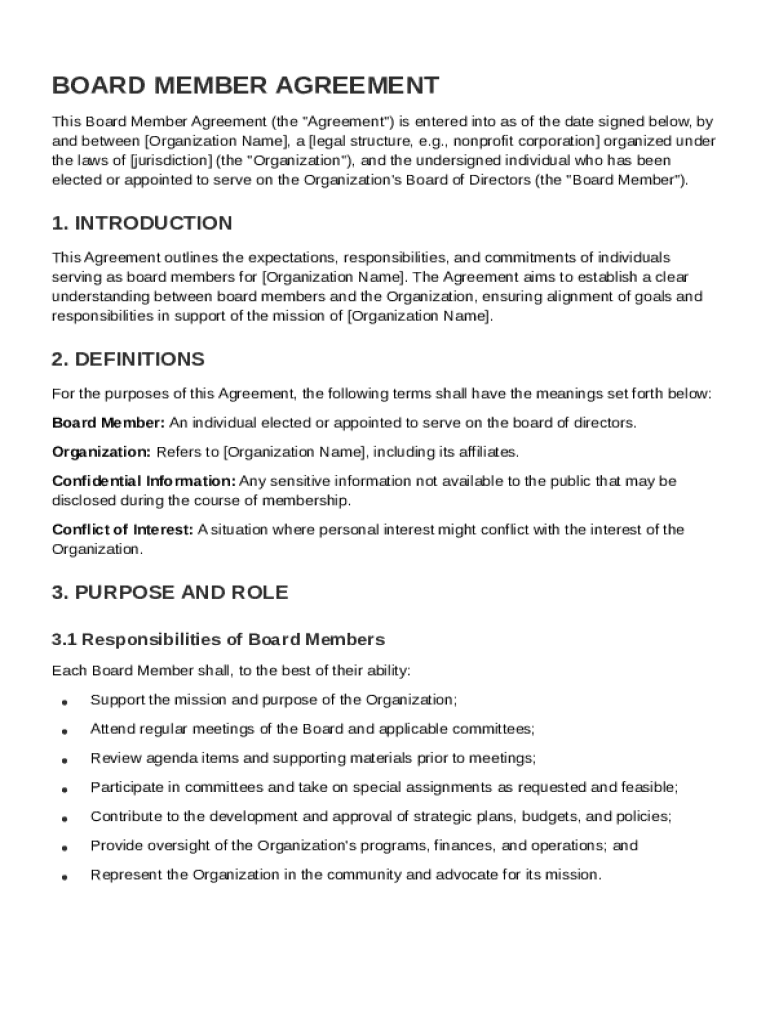
The Board Member Agreement Template is a vital document that outlines the specific roles, responsibilities, and ethical commitments expected from individuals serving on a Board of Directors. It serves as a formal agreement between the board members and the organization, detailing expectations such as attendance, confidentiality, and conflict of interest disclosures. Board members are expected to support the organization's mission while adhering to legal and ethical standards.
Key Components
- Roles and Responsibilities: Clearly defines the duties each board member must fulfill.
- Ethical Commitments: Includes guidelines for maintaining integrity and transparency.
- Confidentiality Clauses: Protects sensitive information discussed in board meetings.
- Conflict of Interest: Requires disclosures to prevent biased decision-making.
- Termination Conditions: States grounds for removal or resignation from the board.
How to Use the Board Member Agreement Template
To effectively utilize the Board Member Agreement Template, organizations should follow a systematic process to ensure all sections are properly addressed and relevant to their specific context.
Steps to Implementation
- Customizing the Template: Adjust sections like roles, responsibilities, and specific organizational values.
- Reviewing by Legal Counsel: Have the agreement reviewed by a legal expert to ensure compliance with applicable laws.
- Presentation to Board Members: Share the document with potential board members to clarify expectations.
- Collecting Signatures: Secure signatures from all parties involved to formalize the agreement.
Case Example
Consider a non-profit organization adopting this template to streamline their board processes. By detailing specific expectations, the organization reduces misunderstandings and ensures alignment among board members towards common goals.
Key Elements of the Board Member Agreement Template
The template incorporates various essential elements that form the backbone of effective governance.
Core Sections
- Mission Statement Alignment: Ensures board activities reflect the organization’s mission.
- Attendance Policy: Specifies the required participation level for meetings and events.
- Financial Obligations: Outlines any financial contributions or fundraising expectations.
- Performance Evaluation: Describes how board members will be evaluated periodically.
Importance of Each Element
Every section contributes to a comprehensive framework for board governance, ensuring members understand their role and the contributions expected. These elements foster accountability and promote a culture of transparency.
Examples of Using the Board Member Agreement Template
The template's flexibility allows it to be adapted for various types of organizations, showcasing its wide range of applications.
Scenario Applications
- Corporate Boards: Establishes clear guidelines for directors in publicly traded companies.
- Non-Profit Boards: Focuses on mission alignment and ethical standards.
- Advisory Boards: Emphasizes confidentiality and conflict of interest standards without financial commitment.
Real-World Impact
A charity using the agreement template reported increased board engagement and clear accountability, leading to more effective fundraising initiatives and mission-driven activities.
Important Terms Related to the Board Member Agreement Template
Understanding the terminology within the agreement aids in clearer communication and compliance with legal standards.
Key Terms
- Quorum: The minimum number of members required to validate the proceedings of a meeting.
- Bylaws: The rules governing the internal management of an organization.
- Indemnification: Protection for board members against potential legal liabilities.
Usage of Terms
Familiarity with these terms can prevent misinterpretations and enhances the overall effectiveness of board interactions and decision-making processes.
Legal Use of the Board Member Agreement Template
The agreement must comply with various legal standards to be enforceable and effective.
Compliance Requirements
- ESIGN Act: Ensures electronic signatures on agreements are legally binding.
- State Laws: Compliance varies by state; it is crucial to integrate state-specific legal requirements.
- Ethical Standards: Must adhere to established ethical guidelines and industry best practices.
Legal Review
Organizations should engage legal counsel when drafting or adapting the agreement to ensure it meets all regulatory and compliance requirements relevant to their jurisdiction.
State-Specific Rules for the Board Member Agreement Template
Different states may have unique regulations that affect the use and formation of board agreements.
Notable Variations
- California: May require additional disclosures related to financial interest.
- New York: Might have specific attendance requirements for board members in certain sectors.
- Florida: Could necessitate specific language about indemnification for non-profit boards.
Adapting the Template
Adjustments should be made based on state-specific legal requirements to prevent compliance issues and optimize the agreement’s enforceability within the relevant jurisdiction.
Who Typically Uses the Board Member Agreement Template
Understanding who utilizes this template can provide insights into its widespread applicability.


Typical Users
- Non-profit Organizations: Ensures board members are committed to the mission and ethical standards.
- Corporations: Aligns board activities with shareholder interests and governance policies.
- Startups: Clarifies roles and expectations as the management team expands.
Benefits for Users
Organizations of all types gain from using a well-structured agreement, fostering consistent governance practices, enhancing transparency, and improving organizational effectiveness across various sectors.





