Definition & Meaning
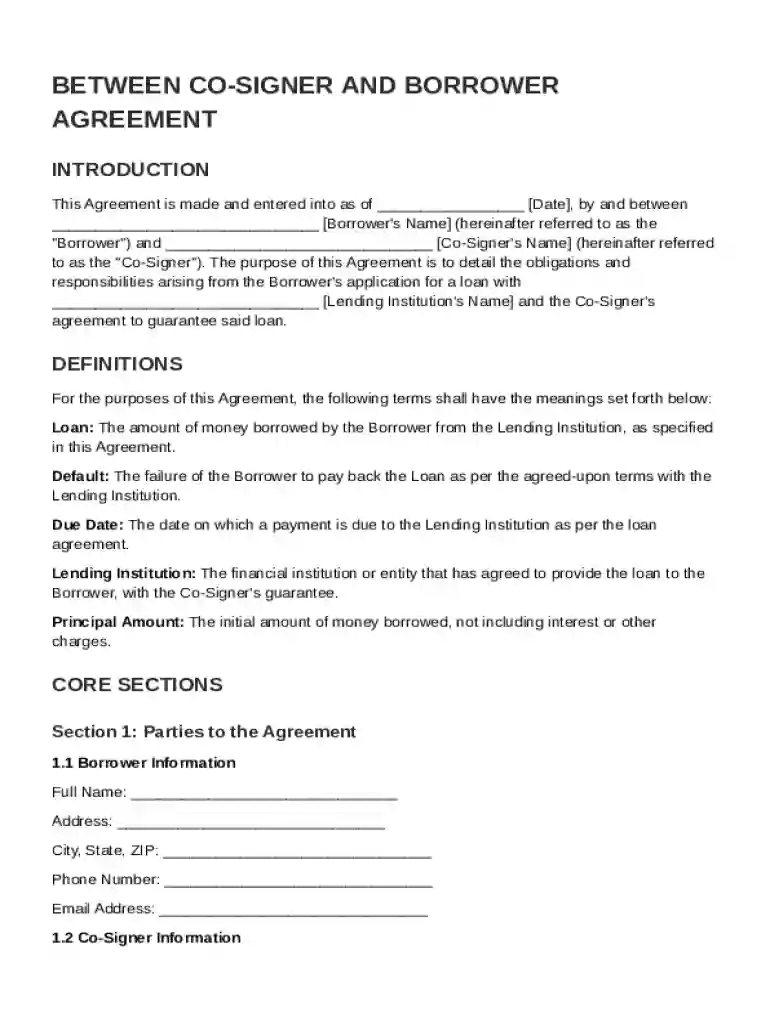
The Between Co-Signer and Borrower Agreement is a legal document designed to outline the responsibilities and obligations of both a co-signer and a borrower in the context of a loan application. It serves as a formal record detailing how both parties are to handle loan-related matters, providing explicit terms on financial obligations, expected conduct, and communication channels. This type of agreement is vital for ensuring that both parties clearly understand their roles, minimizing potential disputes and misunderstandings.
Key Components
- Roles and Responsibilities: This includes the specific duties of both the co-signer and the borrower. Typically, the borrower is responsible for repaying the loan, while the co-signer guarantees payment if the borrower defaults.
- Payment Obligations: Details on who is responsible for what portion of the loan repayment, including any minimum payment requirements and deadlines.
- Communication Requirements: Specifies how and when the parties should communicate about loan-related issues, including contact information updates and notices of financial hardship.
Key Elements of the Agreement
Understanding the core components of the Co-Signer and Borrower Agreement is essential for both parties. Each element within the document serves a distinct purpose and maintains the interests of both the borrower and the co-signer.
Essential Clauses
- Amendments: Guidelines for modifying the existing agreement to accommodate changing circumstances, such as a change in loan terms or payment structures.
- Governing Law: Indicates the jurisdiction whose laws will govern the agreement, typically aligned with the location where the loan is issued or where either party resides.
- Binding Effects: Clarifies that the agreement is legally binding on both parties and their respective heirs, successors, and assigns.
Steps to Complete the Co-Signer and Borrower Agreement
Completing the Between Co-Signer and Borrower Agreement requires careful attention to detail to ensure compliance with legal standards. The process should be comprehensive and documented thoroughly.
Step-by-Step Instructions
- Review All Sections: Both the co-signer and the borrower should carefully read the entire document to ensure they understand all terms.
- Fill Out Basic Information: Include names, addresses, and contact details for both parties.
- Specify Loan Details: Clearly state the loan amount, interest rate, and repayment schedule.
- Clarify Responsibilities: Detail who is responsible for which aspects of the loan, especially regarding repayment and financial obligations.
- Signatures: Both parties should sign the agreement in the presence of a witness or notary public if required to ensure legality.
- Keep Copies: Make sure that both parties retain copies of the signed agreement for their records.
How to Use the Agreement Template
Using the Between Co-Signer and Borrower Agreement Template effectively involves understanding its structure and how to customize it according to the specific loan situation.
Practical Use Cases
- Loan Applications: Ideal for personal loans, auto loans, or mortgages where a co-signer is necessary to meet lender requirements.
- Financial Planning: Helps in setting clear financial terms and can be used as a reference in financial discussions with lenders.
Customization Tips
- Adjust terminology and clauses if the loan type or terms deviate from typical scenarios.
- Consider consulting with a legal professional to ensure all legal requirements and personal conditions are met.
User Profiles
- Students: Often need co-signers for student loans if they lack sufficient credit history.
- First-Time Borrowers: Individuals with no or limited credit history may require a co-signer to qualify for loans.
- Individuals with Low Credit Scores: Those seeking to secure a loan despite unfavorable credit scores may engage a co-signer to improve their chances.
Legal Use of the Agreement
The proper legal use of the Between Co-Signer and Borrower Agreement ensures that the document is enforceable and protects the interests of both parties involved.
Compliance Considerations
- Legal Review: Obtaining a legal review by a qualified attorney to ensure the agreement complies with federal and state laws.
- Consent and Disclosure: Ensures all parties understand the terms and voluntarily agree to them without coercion.
Important Terms Related to the Agreement
Understanding the terminology used within the Between Co-Signer and Borrower Agreement is crucial for avoiding misunderstandings and ensuring compliance with relevant regulations.
Common Terminology
- Default: Failure to meet the legal obligations of the loan, such as missing a payment.
- Collateral: An asset pledged by the borrower that the lender can take if the loan is not repaid.
- Credit Score: A numerical expression used to evaluate the creditworthiness of the borrower.
State-Specific Rules
State-specific regulations may influence the content and enforcement of the Between Co-Signer and Borrower Agreement.
Regional Differences
- Usury Laws: States might have varying limits on the interest rates that can be charged on loans.
- Notarization Requirements: Some states may require notarization of the agreement for it to become legally binding.
- Legal Age for Co-Signing: Legal requirements dictating the minimum age for a co-signer can vary by state.