







Definition & Meaning
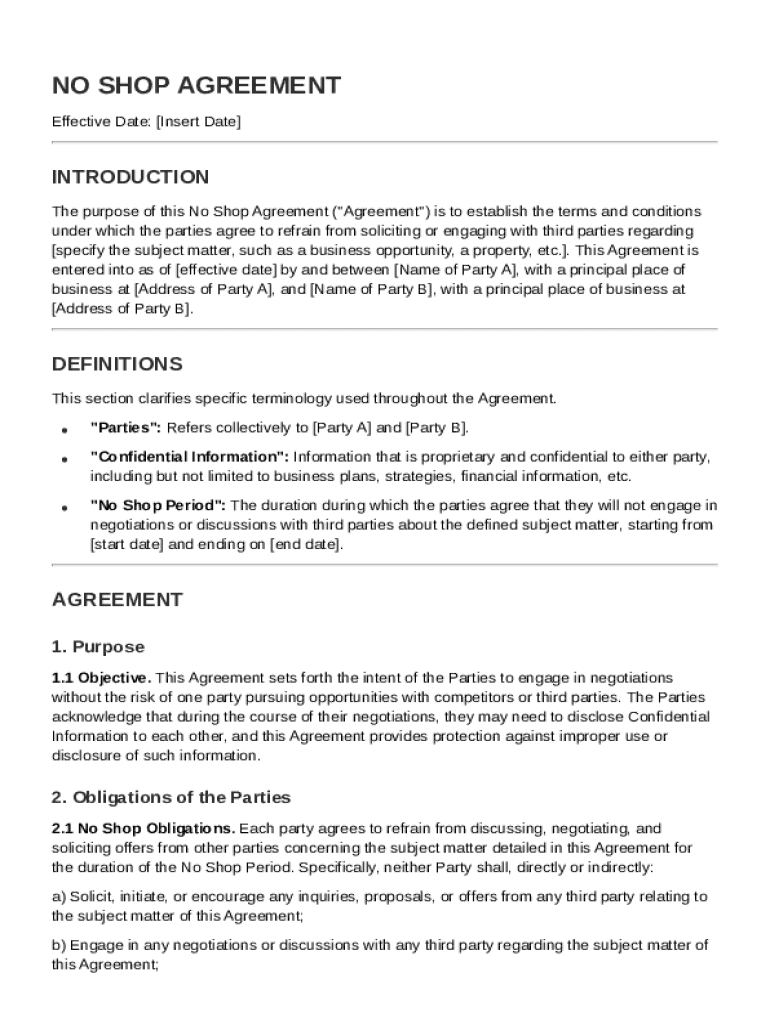
A No Shop Agreement is a legal contract between two parties that restricts them from seeking alternative deals or engaging with third parties over a designated period, known as the 'No Shop Period.' This agreement helps ensure exclusive negotiations, maintaining both parties' focus on the current deal without distractions. It protects sensitive negotiations from being interrupted by external influences, by preventing one or both parties from courting other potential partners.
Key Characteristics
- Exclusivity: It guarantees that both parties are committed to negotiating exclusively with each other.
- Confidentiality: Often, there are clauses to prevent the sharing of sensitive information during the negotiations.
- Time-bound: The agreement specifies a time frame within which parties must maintain exclusivity.
Key Elements of the No Shop Agreement Template
Understanding the components of a No Shop Agreement Template is crucial for effective implementation. Here are the primary elements typically included:
Obligations of the Parties
- Restricted Actions: Outlines specific activities parties are prohibited from, like negotiating or soliciting third-party offers.
- Access to Information: Details on how sensitive information can be shared and limits on further dissemination.
No Shop Period
- Effective Duration: Clearly specifies the start date and end date of the no-shop period.
- Extension Conditions: Procedures under which the period can be extended, if necessary.
Termination Conditions
- Breach Scenarios: Specifies what constitutes a breach and potential repercussions.
- Automatic Termination: Conditions that would automatically render the agreement null and void.
Steps to Complete the No Shop Agreement Template
Completing a No Shop Agreement Template involves a series of methodical steps to ensure that both parties' interests are accurately documented and protected.
Initial Preparation
- Identify Parties: Clearly identify and confirm the names and details of both parties involved in the agreement.
- Clarify Objectives: Establish mutual understanding on the purpose and scope of the agreement.
Drafting the Agreement
- Fill in Obligations: Specify the responsibilities and restricted actions of each party.
- Define Confidentiality Measures: Insert clauses related to the handling of confidential information.
Finalizing the Agreement
- Review Terms: Have both parties review all terms and conditions thoroughly.
- Legal Consultation: Consider having a legal expert review the agreement to ensure compliance with applicable laws.
Execution
- Signatures: Ensure that both parties sign the agreement, with dates clearly indicated.
- Distribution: Provide each party with a copy of the signed agreement for their records.
Legal Use of the No Shop Agreement Template
A No Shop Agreement is a legally binding document when executed properly. Legal considerations include:
Governing Law
- State Jurisdiction: Understand which state laws apply, as these can influence the enforceability and interpretation.
- Conflict Resolution: Include terms on how disputes will be handled, whether through mediation, arbitration, or court proceedings.
Compliance Requirements
- Confidentiality Clauses: Ensure they comply with state and federal laws regarding business secrets.
- Non-compete Restrictions: Verify that non-compete clauses do not violate anti-trust laws.
State-Specific Rules for the No Shop Agreement Template
Different states have varying rules that might affect the provisions commonly included in a No Shop Agreement.
Understanding Local Variations
- Non-compete Regulations: Some states have stricter rules on non-compete clauses, which influences the agreement's enforceability.
- Disclosure Obligations: State-specific requirements might affect how confidential information is managed and shared.
Practical Examples
- California: Generally has more restrictive laws regarding non-compete clauses, which may necessitate adjustments in the agreement’s language.
- New York: Offers robust protection for trade secrets, underscoring the importance of including comprehensive confidentiality clauses.
Important Terms Related to No Shop Agreement Template
Understanding legal terminology related to No Shop Agreements is essential for accurate interpretation and application.
Common Legal Terms
- Exclusivity: Refers to the requirement that parties cannot pursue third-party negotiations.
- Breach: Violation of the terms that could lead to penalties or nullification of the agreement.
Confidentiality and Disclosure
- Trade Secrets: Information that both parties agree to protect from disclosure.
- Non-Disclosure Agreement (NDA): Sometimes included as a subsection to further protect confidential information.
Examples of Using the No Shop Agreement Template
Real-world applications help illustrate the usefulness of No Shop Agreements in various business contexts.
Mergers and Acquisitions
- Case Study: A company engaging in negotiations to purchase another business uses a No Shop Agreement to ensure the seller does not entertain other offers.
- Outcome: Ensures the buyer invests time and resources in the negotiation without fear of losing the deal to another competitor.
Joint Ventures
- Scenario: Two tech companies plan to collaborate on a new product. A No Shop Agreement prevents either from pursuing similar partnerships with competing firms.
- Benefit: It provides peace of mind that both parties are committed to the venture without external disruptions.
Who Typically Uses the No Shop Agreement Template
This template caters to a variety of businesses and professionals engaged in exclusive negotiations.


Typical Users
- Entrepreneurs and Startups: Often used during funding rounds to secure investor commitments.
- Corporate Entities: Employ the template during mergers, acquisitions, or joint venture discussions.
Professional Advisors
- Legal Professionals: Lawyers draft and review these agreements to ensure legal soundness.
- Consultants: Advisors may facilitate negotiations and ensure compliance with the agreement.




