




01. Edit your form online
Type text, add images, blackout confidential details, add comments, highlights and more.

Type text, add images, blackout confidential details, add comments, highlights and more.

Draw your signature, type it, upload its image, or use your mobile device as a signature pad.

Send it via email, link, or fax. You can also download it, export it or print it out.
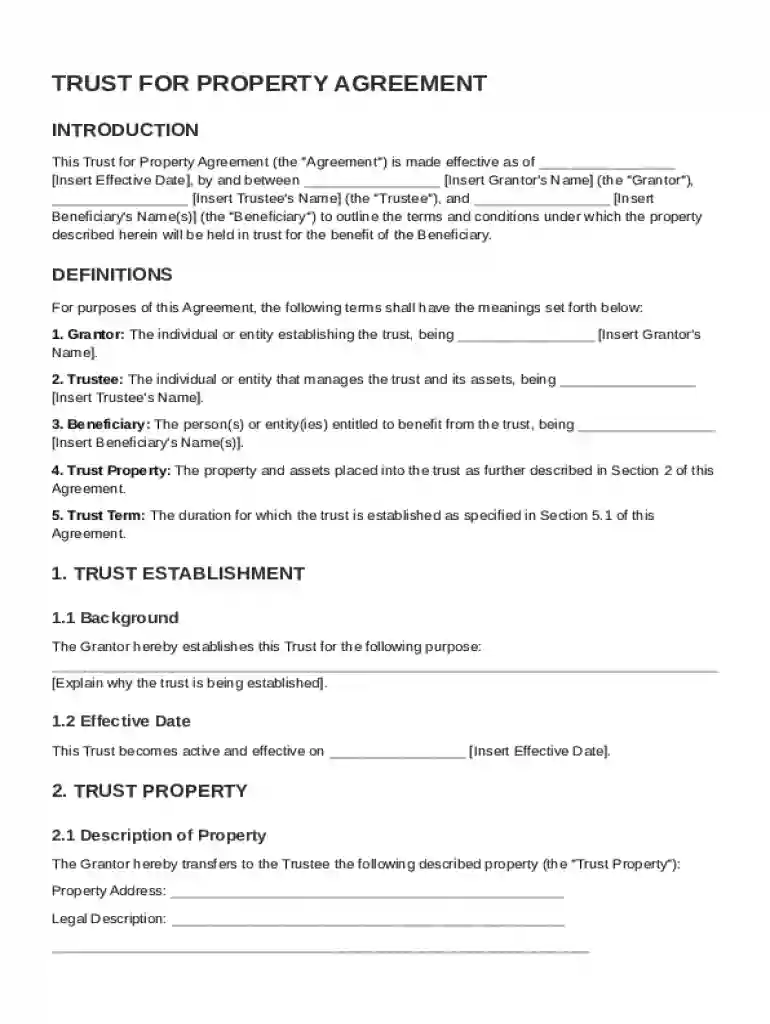
A Trust for Property Agreement Template is a formal legal document that establishes a fiduciary relationship where one party, known as the Grantor, transfers property to another party, the Trustee, to hold and manage for the benefit of a third party, known as the Beneficiary. This agreement outlines the specific terms and conditions that govern the management and distribution of the trust property, ensuring that the rights and interests of the Beneficiary are protected. The template provides a standardized framework that can be customized to accommodate the unique needs and preferences of the involved parties. It defines key roles, responsibilities, and terms necessary for effective trust administration, making it an essential tool for formalizing trust arrangements.
The Trust for Property Agreement Template contains several critical components that are essential for its validity and functionality:
Grantor Information: Details of the individual or entity establishing the trust, including their full name and address.
Trustee Designation: Identification of the person or institution tasked with managing the trust. This includes their powers, duties, and any limitations on their authority.
Beneficiary Rights: A detailed explanation of the rights and interests of the Beneficiary. This may cover the distribution schedule, conditions for distribution, and any specific benefits they are entitled to.
Trust Property Description: A comprehensive inventory of the assets being placed into the trust, including property descriptions, value, and any relevant ownership documents.
Terms of Administration: Instructions on how the trust is to be managed, including any special instructions or conditions that must be followed.
Termination Conditions: This section outlines the circumstances under which the trust may be dissolved, including termination clauses and any processes for amending the terms of the trust.
Gather Necessary Information: Collect all relevant personal details of the Grantor, Trustee, and Beneficiary, as well as a detailed list of the property to be held in trust.
Complete the Template: Use the template to input the gathered information, ensuring all sections are filled in accurately and comprehensively.
Review the Terms and Conditions: Carefully evaluate the outlined terms and conditions to ensure they meet the intended purposes and comply with applicable laws.
Consult Legal Counsel: Before finalizing the agreement, seek legal advice to ensure all obligations and rights are legally enforceable and properly documented.
Sign and Notarize the Document: Arrange for all parties to sign the agreement in the presence of a notary public to formalize the document legally.
Distribute Copies: Provide all relevant parties with copies of the signed agreement for their records and future reference.
The Trust for Property Agreement Template must be used in accordance with relevant state laws and regulations. It is crucial to verify that the trust complies with local legal requirements, as trust laws can vary significantly between states. The document must also adhere to federal regulations where applicable, ensuring it is recognized as a legally binding contract. This includes compliance with any statutory requirements regarding the content and execution of trust documents. Using this template helps ensure legal clarity and enforceability, mitigating potential disputes among parties.
Understanding the terminology associated with trust agreements is essential:
Grantor: Also known as the Settlor, the individual who creates the trust and transfers assets into it.
Trustee: The appointed manager of the trust, responsible for administering trust assets according to the specified terms.
Beneficiary: The person or entity entitled to receive benefits from the trust.
Principal: The original assets and property placed into the trust by the Grantor.
Fiduciary: A legal obligation of the Trustee to act in the best interests of the Beneficiary.
Revocable Trust: A trust that allows the Grantor to alter or terminate the trust during their lifetime.
Irrevocable Trust: A trust that cannot be modified or terminated without the consent of the Beneficiary or a court order, once established.
This template is commonly used by individuals looking to manage their estate planning efficiently. It is particularly beneficial for:
Individuals Planning for Incapacity: Setting up a trust can ensure property is managed appropriately if the Grantor becomes unable to do so.
Families with Minor Children: Parents create trusts to provide for their children's financial needs until they reach adulthood.
High-Net-Worth Individuals: Establishing a trust can be part of a strategy to manage and protect wealth against future liabilities.
Charitable Entities: Organizations may establish trusts to manage donations and endowments in a structured manner.


Each state has its own legal framework governing trusts, which can influence the structure and enforcement of a Trust for Property Agreement. Key considerations include:
Fiduciary Duties: States may define different fiduciary obligations for Trustees, affecting how they must manage the trust property.
Probate and Estate Taxes: State laws on probate and taxation can impact the trust's administration and the distribution of assets to Beneficiaries.
Registration Requirements: Some states may require trusts to be registered or filed with a state authority to be valid.
Guardian and Conservatorship stipulations: These rules may affect how trusts are used in the care of minors or incapacitated individuals.
Practical scenarios where this template may prove invaluable include:
Scenario A: A family with significant real estate holdings uses the template to establish a trust ensuring properties are managed according to their wishes and eventually passed to their children.
Scenario B: An entrepreneur uses the template to create a trust that stipulates how business assets are handled relative to heirs and potential successors.
Scenario C: Parents of a special needs child set up a trust detailing specific care-related expenditures, ensuring financial security and continuity of care.
Each scenario underscores the versatility of the Trust for Property Agreement Template as a pivotal tool in effective estate planning and wealth management.
At DocHub, your data security is our priority. We follow HIPAA, SOC2, GDPR, and other standards, so you can work on your documents with confidence.




You can start with our free template on Real Estate Property RFP template and tailor it to your environment. cover security, pricing, integrations, and
This document contains the instructions regarding management of the trust assets, how the assets are to be distributed from the trust, and further instructionsRead more


