






Definition and Purpose
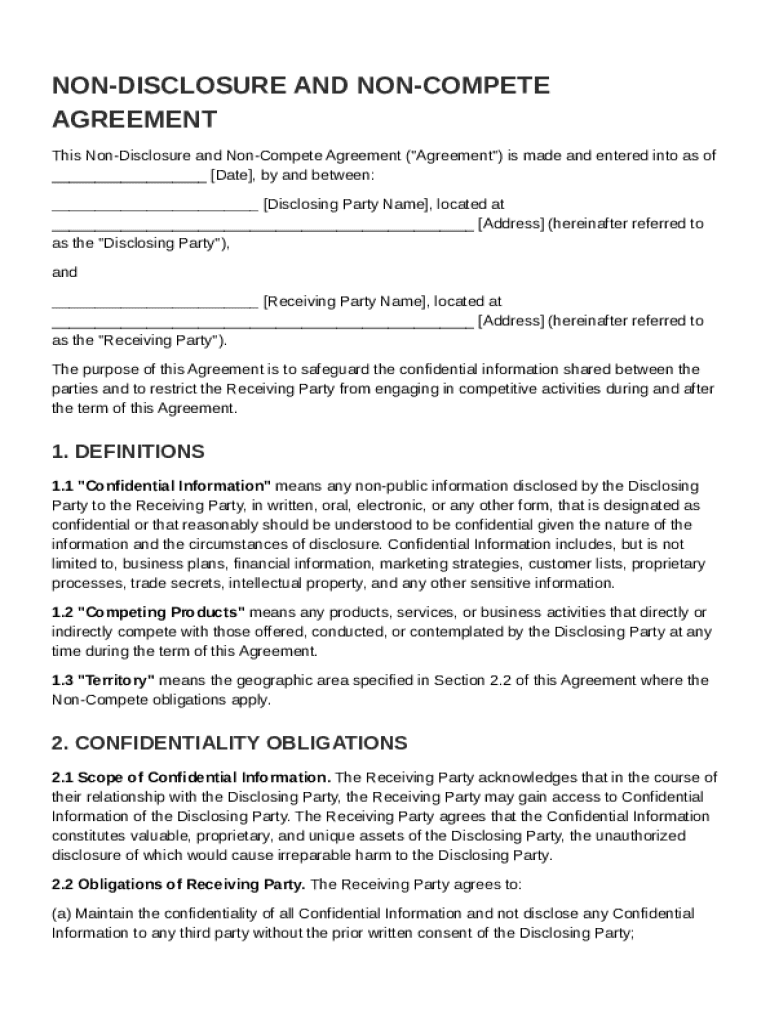
An NDA Non-Compete Agreement Template is a legal document designed to safeguard sensitive information shared between two parties, known as the Disclosing Party and the Receiving Party. This agreement prohibits the Receiving Party from disclosing confidential information and engaging in competitive business activities during and after the term of the agreement. It includes provisions outlining what constitutes confidential information, the duration of confidentiality, and the scope of restricted activities. In business contexts, such agreements are crucial for protecting trade secrets, proprietary information, and maintaining competitive advantage.
Key Elements of the NDA Non-Compete Agreement
The template includes several critical components to ensure comprehensive protection for the parties involved:
-
Confidential Information: Detailed definitions of what is considered confidential, including trade secrets, business strategies, customer lists, and product ideas.
-
Obligations of Confidentiality: Explicit duties the Receiving Party must adhere to, such as not disclosing information without consent and taking reasonable measures to protect the information's secrecy.
-
Non-Compete Clauses: Restrictions on the Receiving Party's ability to engage in business activities that compete with the Disclosing Party. These clauses often specify time frames, geographic areas, and particular industries that are off-limits.
-
Exceptions and Limitations: Scenarios where the non-compete or confidentiality obligations do not apply, such as information that becomes public through no fault of the Receiving Party.
-
Termination Conditions: Conditions under which the agreement can be terminated, along with stipulations for handling information post-termination.
-
Governing Law: Legal jurisdiction that will govern the agreement, which is typically based on the state laws where the Disclosing Party operates.
How to Use the NDA Non-Compete Agreement Template
Using the NDA Non-Compete Agreement Template effectively involves several steps to tailor it to specific needs:
-
Customization: Modify the template to reflect the specifics of the relationship between the Disclosing and Receiving Parties. This includes adding unique definitions of confidential information and adjusting non-compete terms as needed.
-
Review and Approvals: Have the agreement reviewed by legal counsel to ensure compliance with relevant laws and to confirm that it meets the organization's needs.
-
Signing Process: Utilize electronic signature tools like those available on platforms such as DocHub, which offer legally binding electronic signatures conforming to the ESIGN Act.
-
Distribution: Send the signed document to all relevant parties, ensuring that everyone involved has a copy for their records.
Legal Use of the NDA Non-Compete Agreement Template
Non-compete agreements must comply with state-specific legal requirements:
-
Enforceability: Some states, like California, largely prohibit non-compete agreements unless they fall under specific exceptions. It is important to review state laws to ensure the agreement is valid.
-
Reasonableness: Non-compete clauses must be reasonable in duration, geography, and scope to be upheld by courts. Agreements that are overly restrictive may be deemed unenforceable.
-
Consideration: Ensure that the agreement offers tangible benefits or consideration to the Receiving Party, such as employment, promotion, or access to valuable information.
Steps to Complete the NDA Non-Compete Agreement Template
Here is a detailed process to fill out the NDA Non-Compete Agreement Template:
-
Identify Parties: Clearly list the legal names and contact information of the Disclosing and Receiving Parties.
-
Detail Confidential Information: Specify what information is protected under the agreement and define its scope.
-
Outline Non-Compete Restrictions: Clearly articulate the non-compete terms, including covered activities, geographic limitations, and time frames.
-
State Exceptions: Include any exceptions, such as information already publicly available or received from a source other than the Disclosing Party.
-
Set Agreement Duration: Define how long the confidentiality and non-compete obligations will last.
-
Add Termination Clauses: Specify conditions that can lead to the agreement's termination and post-termination obligations.
-
Execute the Agreement: Use DocHub or a similar platform to facilitate signing and ensure all parties have authenticated documents.
Who Typically Uses the NDA Non-Compete Agreement Template
The NDA Non-Compete Agreement Template is commonly used by:
-
Businesses: To protect sensitive information when engaging with contractors, vendors, or potential partners.
-
Employees: Often required for new hires or current employees accessing proprietary information.
-
Entrepreneurs and Startups: To safeguard innovative ideas and business strategies.
-
Consultants: To ensure their insights and methodologies remain confidential with their clients.


Real-World Applications of the NDA Non-Compete Agreement Template
In practice, these agreements are vital tools in many professional scenarios:
-
Technology Firms: When outsourcing software development, NDAs protect source code and development methodologies.
-
Medical Practices: Binding staff to confidentiality on patient records and proprietary treatments.
-
Manufacturing Companies: Protecting design patents and trade processes when sharing blueprints with partners.
State-Specific Rules for the NDA Non-Compete Agreement Template
To ensure compliance, the agreement must align with varying state laws:
-
California: Generally restricts non-compete agreements, making them largely unenforceable except for certain business transactions.
-
Florida and Texas: Permit non-competes but require they are reasonable in scope and supported by a legitimate business interest.
-
New York: Has a nuanced approach, enforcing non-competes provided they are reasonable and necessary to protect business interests.
Understanding these details assists parties in drafting agreements that hold up legally and ethically across different jurisdictions.