
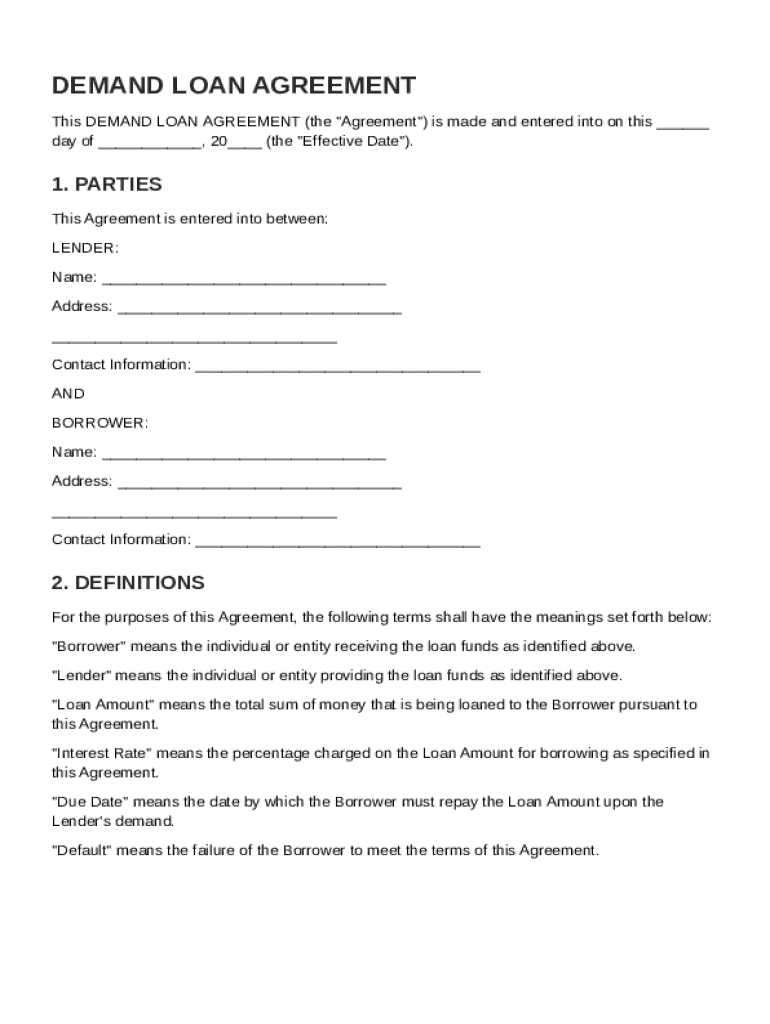







Definition & Meaning
A Demand Loan Agreement Template is a legal document that formalizes the terms of a loan provided by a lender to a borrower. Unlike other types of loans, a demand loan does not have a fixed repayment schedule; it can be called in, or demanded, by the lender at any time with a stipulated notice period. This template serves as a crucial tool for outlining specific terms such as loan amount, interest rates, and the rights and obligations of both parties. It provides a structured format to ensure that all necessary details are covered, safeguarding the interests of both the lender and borrower.
Key Elements of the Demand Loan Agreement Template
A well-constructed Demand Loan Agreement Template should include several essential components to ensure it is legally binding and comprehensive:
- Parties Involved: Clearly define the lender and borrower, including their full legal names and contact information.
- Loan Amount: Specify the principal amount of the loan being provided.
- Interest Rate: Detail the annual interest rate applicable to the loan and any conditions for rate adjustments.
- Repayment Terms: Clarify how and when the loan must be repaid, including the demand notice period.
- Default Conditions: Outline conditions that would constitute a default by the borrower and the repercussions.
- Security: Specify whether the loan is secured or unsecured and describe any collateral involved.
- Governing Law: Identify which state’s laws will govern the agreement.
- Signatures: Both parties must sign the document to validate their understanding and acceptance of the terms.
How to Use the Demand Loan Agreement Template
Using the Demand Loan Agreement Template effectively requires attention to specific steps to ensure all details are accurately captured:
- Review the Template: Start by carefully reading the template to familiarize yourself with its structure and content.
- Fill in Basic Information: Enter the names and contact details of both the lender and borrower.
- Specify Loan Terms: Input the amount of the loan, the interest rate, and any security arrangements.
- Outline Repayment Conditions: Detail repayment terms and the notice period for demanding repayment.
- Include Governing Law: State the jurisdiction under which the agreement will be interpreted.
- Signature Section: Ensure both parties understand their obligations and sign the document to make it binding.
Legal Use of the Demand Loan Agreement Template
This template is primarily used for drafting agreements that are legally binding, ensuring a transparent relationship between the lender and borrower:
- Contractual Protection: Provides a legal framework that protects both parties by clearly outlining obligations.
- Enforceability: By signing the agreement, both parties agree to the terms, making it enforceable in court if disputes arise.
- Customization: Allows for customization to meet specific needs and requirements, such as adding clauses for grace periods or variations in interest rates.
- Risk Management: Mitigates risks related to repayment by clearly stating default conditions and remedies.
Steps to Complete the Demand Loan Agreement Template
Finalizing the template involves a structured approach to ensure all relevant sections are properly completed:
- Identify the Parties: Include complete and accurate contact information for both the lender and borrower.
- Detail Loan Specifics: Clearly state the loan amount, applicable interest rate, and any fees or charges.
- Outline Security Terms: If the loan is secured, specify the collateral and conditions under which it may be seized.
- Establish Repayment Obligations: Describe how and when payments should be made, and the process for making a demand for repayment.
- Legal Jurisdiction: Determine which state’s laws will govern the agreement to ensure clarity in case of legal disputes.
- Execute the Agreement: Both parties should read, understand, and sign the agreement in the presence of any required witnesses or notaries.
Who Typically Uses the Demand Loan Agreement Template
This template is often leveraged by various individuals and entities to ensure clear, enforceable loan terms:
- Individual Lenders: Private individuals offering personal loans to friends or family.
- Businesses: Companies that offer short-term credit facilities to partners or affiliates.
- Financial Institutions: Banks or credit unions utilizing demand loans for flexible financing options.
- Real Estate Investors: Those needing quick access to capital with the intent to repay upon further financing or asset sales.


Important Terms Related to the Demand Loan Agreement Template
Understanding the terminology used within the agreement can aid in its effective application:
- Demand Notice: An official communication from the lender demanding repayment of the loan.
- Secured Loan: A loan in which the borrower provides collateral.
- Unsecured Loan: A loan based solely on the borrower’s creditworthiness without collateral.
- Default: Failure to meet the repayment terms as outlined in the agreement.
- Collateral: An asset pledged by the borrower to secure the loan, which the lender can claim if the borrower defaults.




