







Definition & Meaning
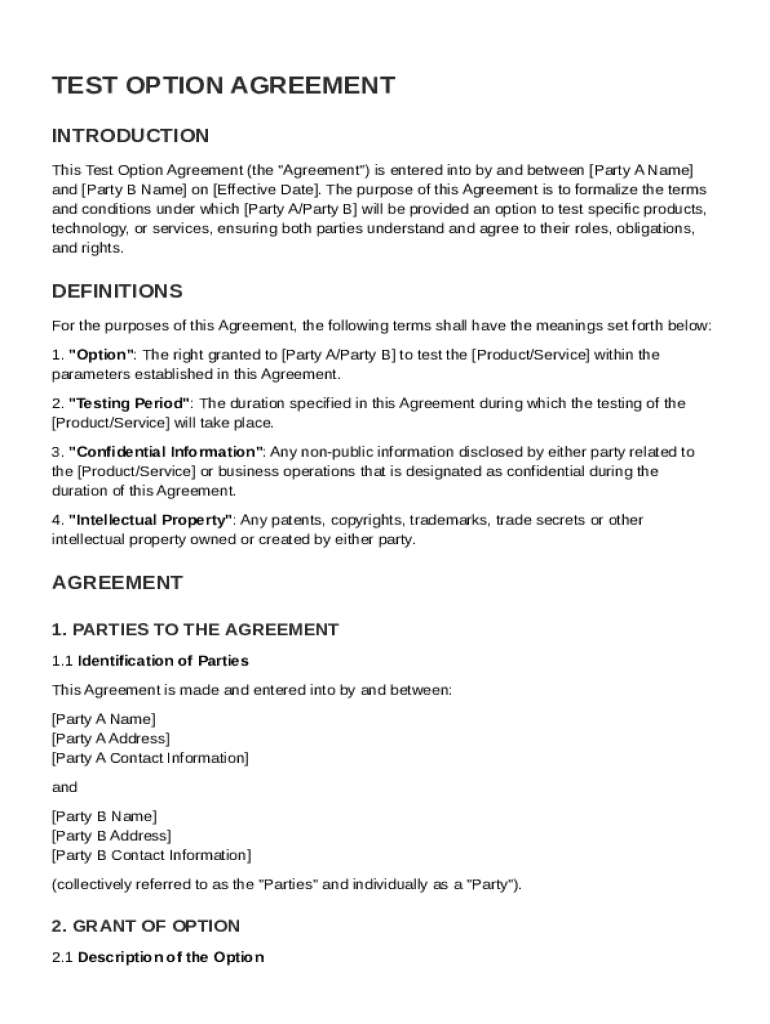
The Test Option Agreement Template is a formal document outlining the terms under which one party (referred to as Party B) is granted the ability to test specific products, technology, or services offered by another party (Party A). This agreement serves as a binding contract that clarifies roles, responsibilities, and expectations between the involved parties. It allows for a structured testing process that ensures Party A's products or services are evaluated under clear guidelines. The document can be tailored to include specific conditions such as the duration of the test, confidentiality provisions, and the handling of intellectual property rights.
Key Elements of the Test Option Agreement Template
A well-crafted Test Option Agreement Template encompasses several crucial components to protect both parties' interests. Key elements include:
- Definitions: Clearly defined terms used within the document.
- Testing Period: Specific start and end dates for the testing phase.
- Responsibilities: Obligations and duties of each party in the testing process.
- Confidentiality: Clauses to ensure that proprietary information is safeguarded.
- Liability Limits: Limitation of responsibility for losses or damages.
- Termination Clauses: Conditions under which the agreement can be ended prematurely.
- Intellectual Property Rights: Clarity on the ownership of any results or data produced during testing.
Steps to Complete the Test Option Agreement Template
Completing the Test Option Agreement Template involves several important steps to ensure it is filled out accurately:
- Gather Necessary Information: Collect details about the parties involved, including contact information and roles.
- Define Testing Parameters: Specify what will be tested, how, and over what period.
- Draft Confidentiality Provisions: Detail how sensitive information will be protected.
- Outline Responsibilities: Clearly assign tasks and duties to each party.
- Include Legal Provisions: Add dispute resolution clauses, liability limits, and termination conditions.
- Review Legal Compliance: Confirm the document complies with applicable state and federal laws.
- Seek Legal Advice: Have an attorney review the agreement for any potential issues.
- Finalize and Sign: Both parties should carefully read, agree to terms, and sign the document to activate the agreement.
Examples of Using the Test Option Agreement Template
This template is useful for various scenarios where testing of a product, service, or technology might occur. For example:
- A tech company might provide access to its software for a partner company to test its compatibility with their system.
- A manufacturer may allow a retailer to perform durability tests on a prototype product.
- An automotive company could let a third-party engineering firm evaluate the performance of a new vehicle component.
Each situation involves assessing the product's functionality, usability, and reliability under specific conditions outlined in the Test Option Agreement.
Who Typically Uses the Test Option Agreement Template
The Test Option Agreement Template is commonly utilized by businesses across different sectors, including technology, manufacturing, and research and development. Companies that provide innovative products or services often rely on external testing to validate their offerings. Legal teams and business developers are typically responsible for drafting and managing these agreements to ensure all technical and legal aspects are addressed. By using this template, businesses can efficiently establish testing frameworks that protect their interests while promoting collaboration.


Legal Use of the Test Option Agreement Template
This template serves as a legal safeguard, ensuring that all parties are aware of their rights and obligations during the testing phase. Key legal provisions include:
- Binding Nature: A signed agreement that is enforceable in a court of law.
- Dispute Resolution: Stipulations for handling disagreements, often through mediation or arbitration.
- Compliance: Adherence to relevant laws and regulations, including data protection and intellectual property statutes.
By ensuring these elements are in place, the agreement minimizes legal risks and fosters a transparent testing relationship.
Software Compatibility
Test Option Agreement Templates are best handled using document management platforms that can accommodate a wide range of file formats, such as PDF, DOC, or TXT. Platforms like DocHub allow users to edit, sign, and manage these documents online, providing flexibility and streamlined workflow. The software compatibility also extends to integration with services like Google Drive and Dropbox, ensuring easy access and sharing. This helps businesses to manage versions efficiently and maintain records of the agreement lifecycle.
State-Specific Rules for the Test Option Agreement Template
The enforcement and validity of a Test Option Agreement may vary based on state-specific regulations within the United States. Important considerations include:
- Statutes Governing Contracts: Each state has its own set of laws regulating contract formation and enforcement.
- Confidentiality Requirements: States may have different statutes related to trade secrets and confidential information protection.
- Dispute Resolution Norms: The preferred methods and venues for resolving disputes can vary.
It is important to consult legal professionals familiar with the state-specific laws to ensure that the Test Option Agreement is compliant and enforceable in the relevant jurisdictions. Adjusting the agreement to meet state guidelines helps mitigate legal risks and ensures the document's validity.




