






Definition & Meaning
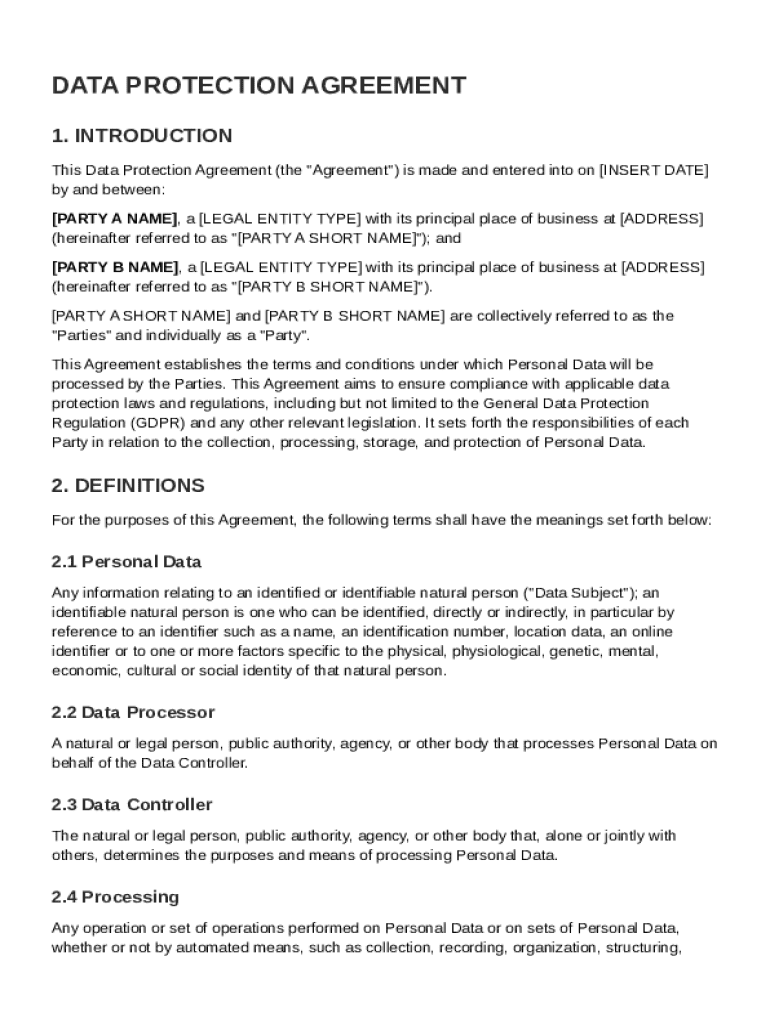
A Data Protection Agreement Template serves as a structured document outlining the responsibilities and obligations of parties involved in the processing of Personal Data. It is fundamental to ensuring compliance with data protection laws, such as the General Data Protection Regulation (GDPR) in the European Union or similar statutes in other jurisdictions. The agreement aims to define roles such as Data Controller and Data Processor, stipulate data handling protocols, establish security measures, and delineate the rights of Data Subjects. Crucially, it creates a framework to prevent unauthorized data use and manages the procedures for data breaches, international data transfers, and dispute resolution.
Key Elements of the Data Protection Agreement Template
A robust Data Protection Agreement Template includes several critical elements to ensure comprehensive data protection:
- Roles and Responsibilities: Clearly defines the roles of Data Controllers and Data Processors, including their duties in safeguarding Personal Data.
- Compliance Requirements: Specifies adherence to relevant data protection laws, ensuring legal standards are met.
- Data Subject Rights: Outlines the rights of individuals, such as access to data, the right to rectification, and measures to prevent misuse.
- Security Measures: Details technological and organizational security protocols to protect Personal Data from breaches.
- Audit and Monitoring: Establishes rights to audit compliance and implement continuous monitoring processes to ensure ongoing adherence to data protection duties.
- Breach Notification: Provides procedures for informing stakeholders promptly in case of data breaches, including timelines and communication methods.
How to Use the Data Protection Agreement Template
Using a Data Protection Agreement Template involves several key steps to adapt it to the specific needs of the parties involved:
- Identify the Parties: Clearly specify the names and roles (e.g., Data Controller, Data Processor) of the parties involved in the data handling activities.
- Define Scope: Detail the specific types of Personal Data to be processed, how it will be used, and for how long it will be stored.
- Adapt Legal Clauses: Adjust sections related to jurisdiction, governing law, and liability according to the applicable legal framework of the parties involved.
- Include Detailed Instructions: Incorporate practical guidelines and procedural instructions for data processing and protection activities.
- Review and Approval: Ensure that all parties thoroughly review the agreement before signing to confirm mutual understanding and consent.
Legal Use of the Data Protection Agreement Template
The legal validity of a Data Protection Agreement Template depends on adherence to jurisdiction-specific regulations and the inclusion of essential clauses that establish clear, enforceable obligations:
- Governing Law: Specify which country's laws will govern the agreement, ensuring alignment with local and international legal standards.
- Liability Clauses: Clearly outline the extent of liability for each party in cases of data breaches or non-compliance.
- Rights and Remedies: Establish the legal remedies available to Data Subjects in the event of unauthorized data use or other breaches.
- International Data Transfer: Address the legality and mechanisms for transferring Personal Data across borders, complying with requirements such as those stipulated by the GDPR.
Who Typically Uses the Data Protection Agreement Template
A variety of entities utilize Data Protection Agreement Templates, each with specific needs and compliance concerns:
- Businesses and Corporations: To protect customer and employee data during various operations.
- Nonprofits and NGOs: For managing donor and volunteer information securely.
- Government Agencies: Ensuring a lawful basis for the collection and processing of citizen data.
- Healthcare Providers: Protecting sensitive patient information under health-specific data protection regulations.
- Technology and Data Processing Companies: Managing data for clients and adhering to stringent compliance requirements.


Examples of Using the Data Protection Agreement Template
Several scenarios illustrate how organizations apply Data Protection Agreement Templates:
- Cloud Service Providers: Draft agreements to ensure customer data stored on their servers is protected against unauthorized access and breaches.
- Marketing Firms: Develop templates to ensure data collected from web users via analytics tools complies with data protection regulations.
- Outsourcing Partners: Formulate agreements that detail the handling of data transferred between client and service provider to maintain privacy and compliance.
State-Specific Rules for the Data Protection Agreement Template
While federal regulations like the GDPR provide a broad framework, state-specific rules can influence the content and application of Data Protection Agreements:
- California Consumer Privacy Act (CCPA): Imposes stringent requirements on how companies handle consumer data in California, necessitating specific clauses in agreements tailored to this jurisdiction.
- New York SHIELD Act: Requires businesses to implement reasonable security measures, influencing the security and compliance sections of the agreement.
- Illinois Biometric Information Privacy Act (BIPA): Mandates consent before collecting biometric data, which would need special clauses in a Data Protection Agreement.
Penalties for Non-Compliance
Failing to adhere to the terms outlined in a Data Protection Agreement can result in significant repercussions:
- Fines and Penalties: Non-compliance with data protection laws, such as GDPR or CCPA, can lead to substantial fines.
- Reputational Damage: Breaches of Personal Data can severely damage an organization's reputation, leading to a loss of trust.
- Legal Actions: Data Subjects have the right to initiate legal proceedings against entities that fail to uphold data protection obligations.
By diligently crafting and adhering to a Data Protection Agreement using a comprehensive template, organizations can significantly mitigate the risks associated with data processing and ensure robust compliance with applicable laws.