






Definition & Meaning
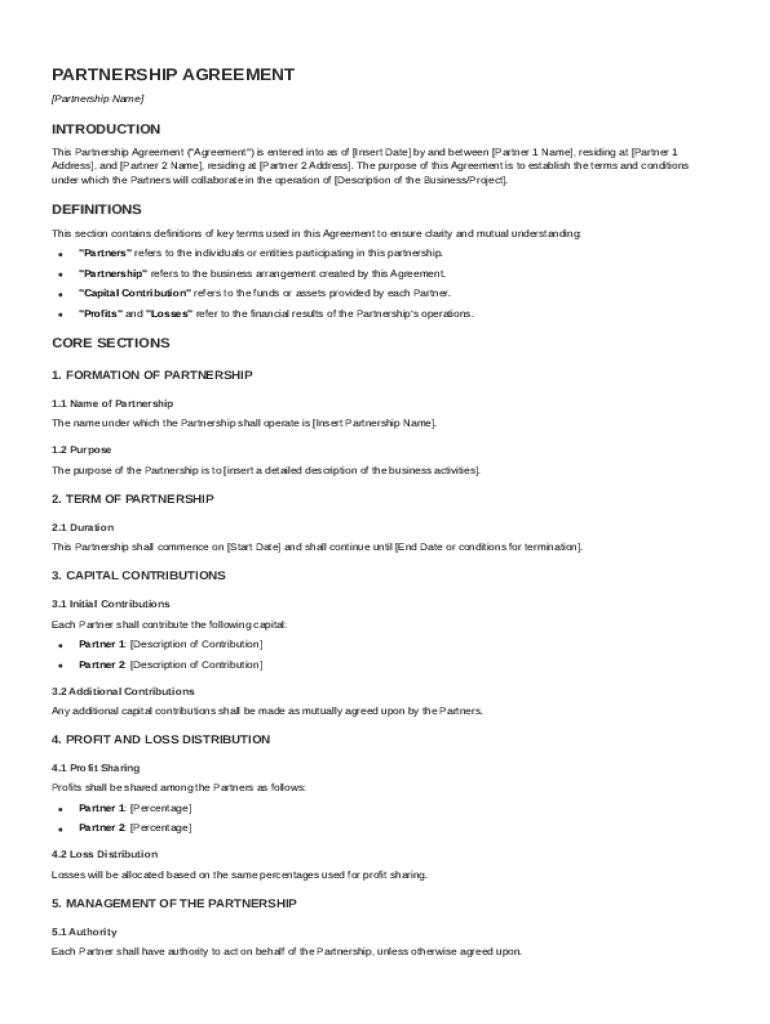
A Partnership Contract Template is a structured document used for outlining the terms and responsibilities between two or more parties involved in a business partnership. It aims to set clear expectations regarding financial contributions, profit-sharing, and management decisions. This template serves as a legal framework that governs the operation and administration of the partnership, ensuring that all partners are aware of and agree to their roles and obligations.
Key Features of a Partnership Contract
- Formation and Duration: Establishes how and when the partnership is formed and how long it will last.
- Capital Contributions: Details the financial investments each partner commits to the partnership.
- Profit and Loss Distribution: Specifies how profits and losses will be shared among partners.
- Authority and Management: Outlines who has decision-making power and the scope of their authority.
How to Use the Partnership Contract Template
Using the Partnership Contract Template involves several steps to personalize the document according to the specific needs and conditions agreed upon by all parties.
Steps to Customize the Template
- Identify Partners: Begin by listing all partners involved in the business, including their full legal names and roles.
- Define Objectives: Clearly outline the purpose and goals of the partnership.
- Detail Contributions: Specify the capital, properties, or services each partner will contribute.
- Agree on Terms: Discuss and document terms for profit-sharing, decision-making processes, and dispute resolution.
Best Practices for Effective Use
- Regular Reviews: Amend the contract periodically to reflect changes in partnership dynamics or external conditions.
- Clear Language: Use straightforward legal language to avoid ambiguity.
- Legal Consultation: Consider consulting an attorney to ensure the contract complies with state laws and accurately reflects the intentions of all partners.
Key Elements of the Partnership Contract Template
The template contains essential sections that ensure comprehensive coverage of partnership agreements.
Critical Sections to Include
- Partner Responsibilities: Detailed breakdown of each partner's duties within the business.
- Operational Management: Guidelines on how daily operations will be managed and by whom.
- Withdrawal or Addition of Partners: Procedures for introducing a new partner or the exit of an existing one.
- Dispute Resolution: Mechanism for addressing conflicts among partners.
Importance of Each Section
- Clarity and Protection: Provides clarity on each partner's role and protects individual interests.
- Flexibility and Structure: Allows flexibility in management while maintaining a structured approach.
Legal Use of the Partnership Contract Template
Using a partnership contract template legally binds partners to the terms outlined within.
Legal Considerations and Compliance
- Alignment with State Laws: Ensure the contract complies with local partnership laws.
- Legally Binding Nature: Makes the obligations and rights legally enforceable.
- Document Storage: Maintain copies of the signed document for legal reference and compliance.
Ensuring Legal Validity
- Legal Expertise: Engage legal professionals to verify the validity and enforceability of the document.
- Signature Requirements: Ensure all partners sign the document to acknowledge their agreement.
Steps to Complete the Partnership Contract Template
Completing a partnership contract template involves following a structured process to ensure all necessary elements are covered.
Step-by-Step Instructions
- Gather Information: Collect all necessary data from partners, such as names, contributions, and intended roles.
- Draft Initial Agreement: Use the template to draft the initial version of the partnership agreement.
- Review Terms Collectively: Hold a meeting where all partners review the terms collectively and make necessary edits.
- Finalize and Sign: Once finalized, obtain signatures from all partners to signify agreement and intention.
Additional Considerations
- Document Changes: Record any changes made during the collective review process.
- Use of Legal Tools: Leverage document management tools to track revisions and obtain secure e-signatures.
State-Specific Rules for the Partnership Contract Template
Different U.S. states may have specific regulations affecting partnership contracts, influencing certain contract terms.
State Variations and Compliance
- Registration Requirements: Some states require partnership agreements to be registered with a state agency.
- Tax Implications: State-specific tax regulations can affect profits and loss sharing terms.
- Filing Obligations: Be aware of any state-specific filing obligations that may arise from entering into a partnership.
Adjusting the Template for State Laws
- Research Local Laws: Research the partnership laws applicable in your state.
- Customize Terms Accordingly: Modify sections of the template to meet state-specific legal requirements.
Examples of Using the Partnership Contract Template
Practical examples illustrate how the Partnership Contract Template can be applied effectively.
Real-World Scenarios
- Startup Ventures: Two entrepreneurs starting a tech company decide on roles, revenue sharing, and intellectual property rights.
- Professional Services: A group of lawyers forming a new practice outlines management duties, billing processes, and dispute resolution.
- Retail Business Partnership: Retail store co-founders define the capital investments, inventory management, and profit distribution.
Lessons from Case Studies
- Transparency and Communication: Successful partnerships often result from clear communication and transparent terms.
- Structured Dispute Handling: Efficient dispute resolution clauses prevent disruptions in operations.
Business Entity Types
Partnerships can take various legal forms, each with unique features and implications.
Common Partnership Structures
- General Partnership: All partners actively manage the business and share liability.
- Limited Partnership: Designed for investors who want limited liability while still contributing capital.
- Limited Liability Partnership (LLP): Offers liability protection for partners, common in professional services.
Choosing the Right Entity
- Assess Goals and Risk: Evaluate business goals and risk tolerance before selecting a partnership structure.
- Consult Legal Advisors: Seek advice from legal experts to understand the implications of each structure.