
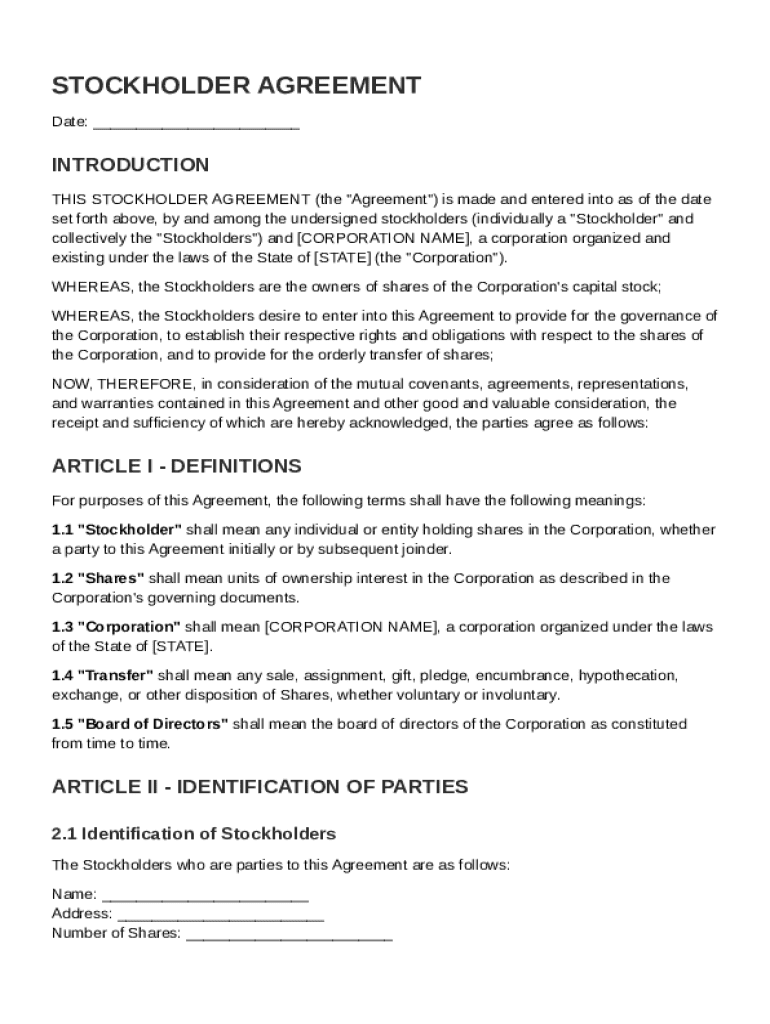







Definition and Purpose of a Stockholder Agreement
A Stockholder Agreement, also known as a Shareholders' Agreement, is a legal document that outlines the rights and obligations of the stockholders in a corporation. This agreement is crucial as it defines the governance structure of the corporation, detailing how shares can be transferred, the voting rights of shareholders, and the procedures for dividend distribution. It also establishes mechanisms for dispute resolution, ensuring that any conflicts between shareholders can be managed effectively. The document aims to protect the interests of all stockholders and maintain the order and continuity of the corporation. For example, it might specify the conditions under which a shareholder can sell their shares, preventing the entry of unwanted parties into the corporation.
Key Elements of the Stockholder Agreement Template
The Stockholder Agreement typically includes several critical components designed to comprehensively cover the interests of shareholders. Important sections typically include:
- Share Transfer Restrictions: Outline the rules governing how and when shareholders may transfer or sell their shares.
- Voting Rights: Define how voting rights are allocated among shareholders and the procedures for shareholder meetings.
- Dividend Distribution: Detail the rules regarding the distribution of dividends, ensuring fairness and transparency.
- Management Structure: Specify the organization of the board of directors and the process for making significant corporate decisions.
- Dispute Resolution: Provide mechanisms for resolving disputes, which may include mediation or arbitration clauses.
- Buy-Sell Provisions: Establish terms under which stockholders may be required to sell their shares, protecting against involuntary loss of control.
These elements are essential to ensure that all shareholders are aware of their rights and responsibilities and that the corporation operates smoothly.
Steps to Complete the Stockholder Agreement Template
Completing a Stockholder Agreement Template involves several important steps to ensure it accurately reflects the needs of the corporation and its shareholders:
- Identify the Parties: Clearly detail the names and backgrounds of all parties involved.
- Define Share Classes and Rights: Specify the different classes of shares, if applicable, and the respective rights associated with each class.
- Outline Key Provisions: Ensure that all relevant provisions such as transfer restrictions, voting rights, and dividend procedures are clearly articulated.
- Consult Legal Counsel: Work with legal professionals to ensure compliance with applicable state laws and to refine clauses that might be subject to interpretation.
- Review and Amend: Allow all involved parties to review the document and suggest amendments to ensure mutual understanding and agreement.
- Finalize and Sign: Ensure all parties sign the agreement, making it legally binding, and distribute copies to all stakeholders.
This process requires careful consideration and attention to detail to avoid future disputes.
Legal Use and Compliance of the Stockholder Agreement
Stockholder Agreements must be legally compliant and enforceable. This involves adhering to specific state laws and regulations that govern such agreements. Legal compliance ensures that the agreement is binding and protects the organization and its shareholders under various circumstances. For instance, the agreement should align with corporate governance laws, be clear in its language, and be equitable to all parties involved. Legal counsel is often necessary to draft the agreement appropriately, considering factors such as minority shareholder rights and fiduciary responsibilities.
Who Typically Uses the Stockholder Agreement Template
The Stockholder Agreement Template is used by a variety of entities, primarily including corporations that have multiple shareholders. It is particularly relevant for:
- New Startups: Establishing clear rules and expectations from the onset.
- Family Businesses: Ensuring future generations can transition smoothly into leadership roles without conflict.
- Publicly Traded Companies: Protecting against hostile takeovers and ensuring alignment among major stakeholders.
- Joint Ventures: When two or more companies collaborate, this template helps define the terms of the partnership.
This template is invaluable in any situation where shareholder relationships need to be clearly defined and managed to protect their interests.

Important Terms Related to the Stockholder Agreement
Several key terms are frequently associated with Stockholder Agreements, and understanding them is crucial for proper implementation:
- Preemptive Rights: Rights that allow existing shareholders to purchase additional shares before new stock is offered to the public.
- Drag-Along Rights: Rights that enable majority shareholders to force minority shareholders to join in the sale of a company.
- Tag-Along Rights: Rights that protect minority shareholders by allowing them to sell their shares under the same conditions as a majority shareholder.
- Quorum: The minimum number of shares or shareholders required to be present at a meeting to make the proceedings of that meeting valid.
These terms are foundational to managing shareholder interactions and ensuring clear, operational governance.
Versions or Alternatives to the Stockholder Agreement Template
While the Stockholder Agreement Template is widely used, other variations and supplementary documents may be employed depending on the specific needs of the corporation. Alternatives include:
- Buy-Sell Agreements: Focus more specifically on conditions under which owners can buy out each other's interests.
- Founders Agreements: Tailored for startups, focusing on the roles and responsibilities of the founding team and initial equity splits.
- Partnership Agreements: Used in lieu of stockholder agreements when the entity is not structured as a corporation but as a partnership.
Choosing the correct document type helps ensure that all parties' interests are aligned and protected according to their specific context.
State-Specific Rules for Stockholder Agreements
Different states in the U.S. may have unique regulations governing Stockholder Agreements, impacting their formulation and enforceability. For instance:
- California: Emphasizes comprehensive disclosure and fairness in managing minority shareholder rights.
- Delaware: Offers more flexibility in creating agreements, which is why many corporations choose to incorporate there.
- New York: Requires certain clauses to be included to ensure minority shareholder protection and equitable business practices.
Understanding these state-specific nuances is crucial to drafting an enforceable and compliant Stockholder Agreement. Legal advice is often recommended to navigate these jurisdictional differences effectively.




