
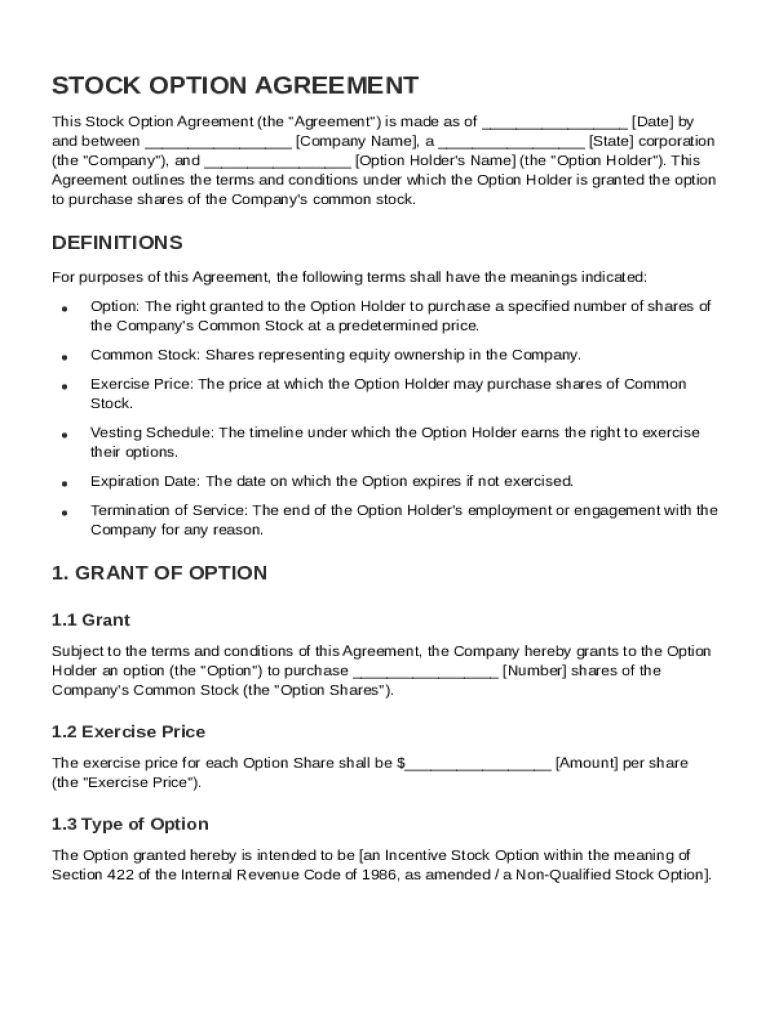







Definition & Meaning
The Stock Option Agreement Template is a detailed document designed to formalize the relationship and terms under which an individual or entity is granted the right to purchase shares of a company’s common stock. It serves as a crucial legal foundation for understanding the obligations and rights of the option holder. This template provides clarity on various components such as vesting schedules, exercise methods, and tax responsibilities. Companies often use this agreement when compensating employees, consultants, or board members with stock options, aligning their interests with the company's financial performance.
Key Elements of the Stock Option Agreement Template
Stock Option Agreements typically include several critical components:
- Grant of Options: Details regarding the number of shares that can be purchased, the type of stock option (incentive or non-qualified), and the exercise price.
- Vesting Schedule: Outlines when the option holder can exercise their rights. This schedule may be time-based or performance-based.
- Exercise Methods: Specifies the allowable methods for exercising the options, such as cash payment or stock swap.
- Option Holder Rights: Defines the holder's rights and limitations, including transferability and voting rights.
- Tax Responsibilities: Provides essential information regarding the tax implications of exercising stock options, focusing on both federal and state obligations.
Legal Use of the Stock Option Agreement Template
Using a Stock Option Agreement ensures compliance with relevant laws, including the Securities Act and IRS regulations. It establishes a legal contract between the company and the option holder, minimizing potential disputes. This agreement is particularly significant as it adheres to structured legal frameworks and provides enforceable terms that protect both parties. Companies must ensure that the template meets U.S. legal standards, addressing all necessary corporate governance issues.
How to use the Stock Option Agreement Template
To effectively utilize the Stock Option Agreement Template, follow these steps:
- Customization: Modify the template to reflect the specifics of your company, including the number of shares and the exercise price.
- Consultation: Engage legal counsel to ensure the template complies with legal requirements tailored to your jurisdiction.
- Completion: Fill out the template comprehensively, ensuring all required fields, such as vesting conditions and exercise terms, are accurately represented.
- Review: Conduct thorough reviews by stakeholders and legal advisors before finalizing.
- Execution: Obtain necessary signatures from authorized company representatives and the option holder to make the agreement legally binding.
Important Terms Related to Stock Option Agreement Template
Understanding the terminology within a Stock Option Agreement is vital:
- Incentive Stock Options (ISOs): A type of stock option with potential tax benefits, limited to employees.
- Non-Qualified Stock Options (NSOs): Options that do not qualify for special tax treatment and are available to various stakeholders, including consultants.
- Strike Price: The fixed price at which the option holder can purchase the stock.
- Expiration Date: The deadline by which options must be exercised; if passed, the option is forfeited.
- Cliff Vesting: A vesting schedule where options become exercisable after a specified period.
Steps to complete the Stock Option Agreement Template
The process of completing a Stock Option Agreement template can be broken down into the following steps:
- Drafting: Create a preliminary draft of the agreement using a standardized template.
- Detailing Terms: Include all relevant terms and conditions, such as vesting periods, exercise prices, and any performance conditions.
- Legal Review: Have the draft reviewed by legal professionals to ensure compliance with applicable laws and corporate policies.
- Finalization: Make necessary adjustments based on legal feedback and company requirements.
- Approval: Obtain approval from the company’s board of directors or relevant authority.
- Execution: Collect signatures from authorized parties, indicating acceptance of the terms.
Who Typically Uses the Stock Option Agreement Template
Stock Option Agreements are commonly used by different types of entities:
- Corporations: To incentivize employees and align their interests with corporate goals.
- Startups: To attract talent by offering potential future wealth sharing while conserving cash resources.
- Partnerships and LLCs: In some cases, to offer equity compensation to key contributors or advisors.
- Consultants: Businesses may grant options to external consultants as part of their compensation package.


Who Issues the Form
The issuance of a Stock Option Agreement is typically the responsibility of the company's board of directors or its compensation committee. They approve the terms and ensure that the option grants align with the company’s strategic compensation plans. Once approved, the company's legal team or human resources department often prepares and distributes the agreement to eligible option holders.
Examples of Using the Stock Option Agreement Template
Real-world scenarios highlight the practical use of Stock Option Agreements:
- Tech Startups: A Silicon Valley tech startup uses stock options to attract a seasoned software engineer by offering an attractive vesting schedule that encourages long-term tenure.
- Small to Medium Enterprises (SMEs): An SME grants options to a consultant overseeing a critical project, ensuring their vested interest in the project’s success.
- Established Corporations: A large corporation issues stock options to executives as part of a comprehensive compensation package, with performance benchmarks tied to key financial targets.
State-Specific Rules for the Stock Option Agreement Template
While the Stock Option Agreement Template generally follows a federal framework, there are state-specific regulations that can impact its provisions. Various states have additional securities laws and tax implications:
- California: Companies must adhere to strict disclosure requirements under the California Securities Law.
- New York: Offers guidance on tax treatment for stock options, differing slightly from federal laws.
- Illinois: Enforces specific labor laws that may affect the terms and enforceability of non-compete clauses within stock option agreements.
Each state may impose its nuances, ensuring that a thorough understanding of local laws is essential when drafting and implementing these agreements.
Digital vs. Paper Version
The Stock Option Agreement Template can be utilized both digitally and in paper form. Digital agreements afford greater flexibility and security:
- Electronic Signatures: Legally binding and convenient for both parties to sign and manage.
- Real-time Collaboration: Stakeholders can review and edit terms without the need for physical meetings.
- Security: Digital forms can incorporate encryption and access controls to protect sensitive information.
However, traditional paper agreements remain an option for organizations preferring physical documentation, particularly where digital infrastructure is limited.




