
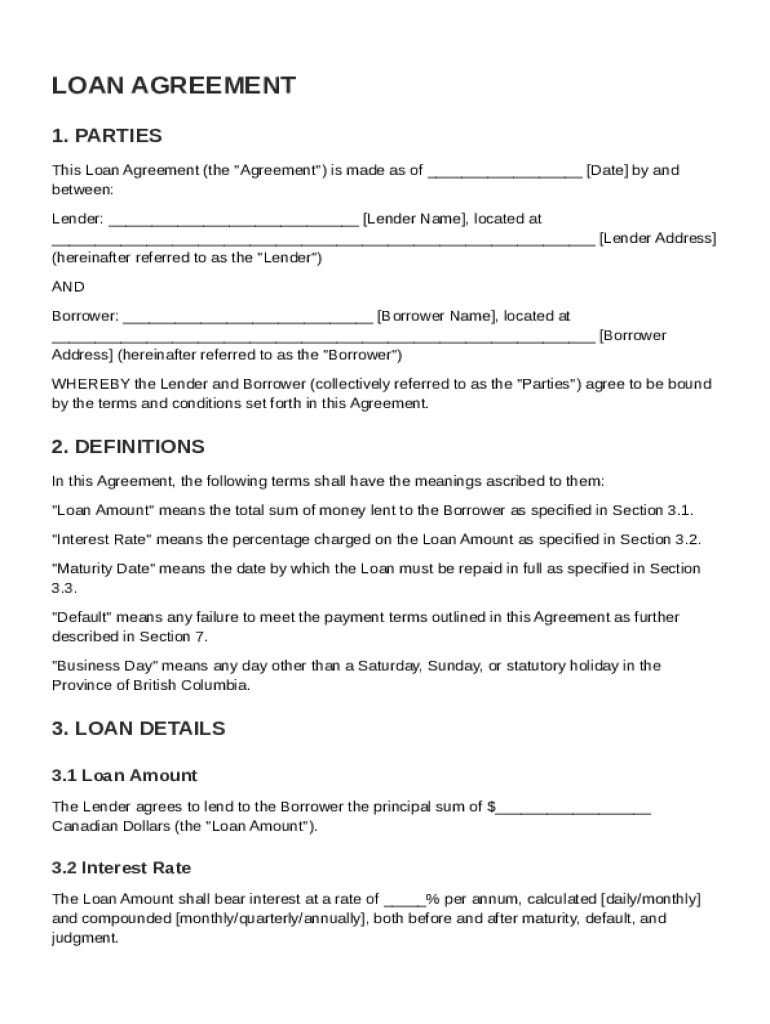







Definition & Meaning
A Loan British Columbia Agreement Template is a standardized document used to define the terms and conditions of a loan arrangement between a lender and a borrower in British Columbia. This agreement typically covers elements such as the loan amount, interest rate, repayment schedule, and conditions for default. It serves as a legally binding contract that ensures both parties understand their rights and responsibilities, providing clarity to the relationship and helping prevent disputes.
Key Elements of the Loan British Columbia Agreement Template
Loan Amount and Interest Rate
The template specifies the principal amount borrowed and the interest rate applied. The interest rate can be fixed or variable, and the agreement needs clarity on how it will be calculated and paid.
- Examples: A fixed interest rate might be set at 5% annually, whereas a variable rate might start at 4% and adjust based on market conditions.
Repayment Schedule
Repayment terms are crucial and detail how the borrower will pay back the loan. This includes the frequency of payments (e.g., monthly, bi-weekly), the amount of each payment, and the total number of payments required to fully satisfy the loan obligation.
- Scenarios: A borrower might choose a ten-year term with monthly payments, allowing for manageable, consistent budgeting.
Default Conditions and Remedies
The agreement outlines what constitutes a default (e.g., missed payments, bankruptcy) and the consequences for the borrower, such as accelerated repayment or legal action. This section is vital for protecting the lender's interests.
Legal Provisions
Security Interests
If the loan is secured, the agreement will detail the collateral used to secure the loan. This could be property, vehicles, or other personal assets, ensuring the lender has a claim in case of default.
How to Use the Loan British Columbia Agreement Template
Step-by-Step Instructions
-
Download the Template: The first step is obtaining the document from a reliable source, ensuring it's specific to British Columbia’s legal standards.
-
Customize with Specific Details: Fill in borrower and lender information, loan amount, interest rates, and other specifics like repayment schedule and collateral.
-
Review and Revise: Both parties should review the document carefully, possibly with legal counsel, to ensure all terms are understood and agreeable.
-
Sign and Finalize: Once finalized, both parties must sign the document. The use of electronic signatures can expedite this process and provide a legally binding agreement without in-person meetings.
Important Terms Related to Loan British Columbia Agreement Template
- Principal: The original sum of money borrowed or the outstanding balance.
- Amortization: The reduction of debt over time through scheduled payments.
- Prepayment: Early payment of a debt before it is due, often permissible without penalties.
- Default: Failure to meet the legal obligations of the loan.
Legal Use of the Loan British Columbia Agreement Template
Loan agreements must comply with local laws and regulations in British Columbia. The document should adhere to standards that ensure fairness and transparency. Legal counsel is often recommended to tailor the template to specific circumstances and ensure compliance with all legal obligations.
Steps to Complete the Loan British Columbia Agreement Template
-
Gather Necessary Information: Collect all relevant details including lender and borrower information, the loan amount, interest details, and payment schedule.
-
Input Data into Template: Using a platform like DocHub, input all gathered information accurately. This step often involves collaboration between both parties.
-
Conduct a Legal Review: Consult with a legal professional to confirm that all terms and conditions comply with current applicable law.
-
Finalize and Sign: Ensure both parties understand the obligations before signing. Electronic signing options streamline this process.
State-Specific Rules for the Loan British Columbia Agreement Template
Regulations in British Columbia may differ in terms of interest rate limits, allowable fees, and other borrower protections compared to other regions. Familiarity with these local laws is crucial to ensure both parties are protected and comply with provincial requirements.




