






Definition and Meaning
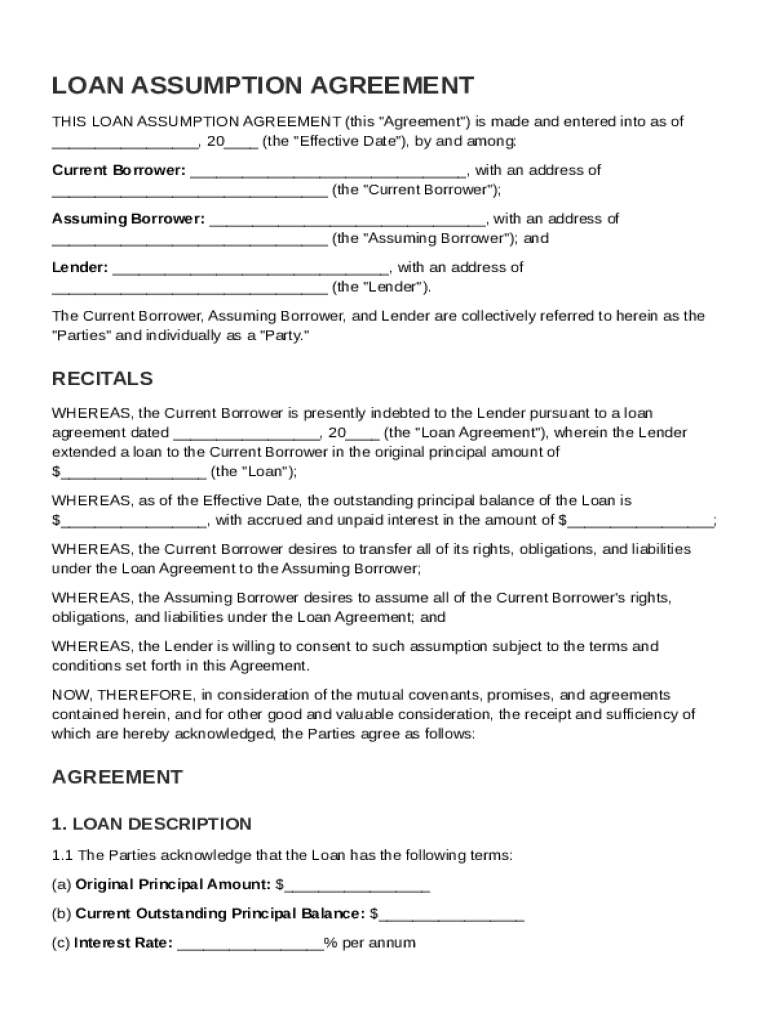
A Loan Assumption Agreement Template is an essential legal document used when a Current Borrower transfers the rights and responsibilities of an existing loan to an Assuming Borrower with the lender's consent. This agreement outlines the specific terms, including the loan’s principal amount, outstanding balance, interest rate, and payment schedule. It formalizes the Assuming Borrower’s acceptance of the liabilities associated with the loan, providing structure and clarity to the transaction. Key elements such as the representations and warranties from all parties, events of default, and remedies available to the lender are also included, ensuring legal enforceability and clarity for all parties involved.
How to Use the Loan Assumption Agreement Template
To effectively utilize a Loan Assumption Agreement Template, follow these clear steps:
-
Review the Template Structure: Familiarize yourself with the template's structure and ensure it contains sections for all necessary details, such as transfer terms, parties involved, and financial obligations.
-
Identify the Parties: Clearly define the Current Borrower, Assuming Borrower, and the lender. Ensure all contact and legal information is accurate.
-
Detail the Loan Terms: Insert precise loan details, including the principal amount, term length, interest rate, and any applicable fees or penalties.
-
Stipulate Conditions & Covenants: Outline any conditions that must be met for the assumption to proceed, and include any covenants that need to be adhered to by the Assuming Borrower.
-
Include Legal Protections: Incorporate representations, warranties, and default attributions to protect all parties, along with legal remedies for potential breaches.
-
Obtain Necessary Consents: Ensure that written consents from the lender and other relevant parties are acquired and attached to the agreement.
Steps to Complete the Loan Assumption Agreement Template
Completing a Loan Assumption Agreement Template involves several key steps:
-
Gather Required Information: Collect full and accurate details of the loan, involved parties, and lender agreements.
-
Customize the Template: Tailor the standard template to fit the specific terms of your agreement, ensuring the document reflects unique aspects of the loan transfer.
-
Insert Assumption Terms: Clearly articulate the terms under which the loan responsibilities are transferred, detailing any additional covenants or conditions.
-
Review with Legal Advisors: Have the draft reviewed by legal professionals from each party to ensure compliance with relevant laws and that interests are adequately protected.
-
Execute the Agreement: Arrange for all parties to sign the agreement, preferably with notarization to enhance its legal standing.
-
File and Distribute: Keep a secure copy of the executed document for each party and file it with any relevant financial or legal institutions as required.
Key Elements of the Loan Assumption Agreement Template
Key elements in a Loan Assumption Agreement Template include:
-
Identification of Parties: Clearly define who the Current Borrower, Assuming Borrower, and lender are, including full legal names and contact details.
-
Loan Details: Exact details of the loan including the original terms, outstanding principal balance, interest rates, and payment schedule.
-
Agreement Terms: The specific terms under which the loan transfer is agreed upon, including any covenants or conditions that are part of the assumption.
-
Representations and Warranties: Statements ensuring all parties have the authority to enter into the agreement without violating any previous agreements or legal regulations.
-
Defaults and Remedies: Specified conditions that constitute a breach of agreement with clearly outlined remedies for resolution.
-
Acknowledgment of Lender: Written consent and acknowledgment of the agreement by the lender, validating the transfer of obligations.
Legal Use of the Loan Assumption Agreement Template
The Loan Assumption Agreement ensures all parties involved in the loan transfer understand and agree to the new terms, serving as a legally binding contract. In particular, it protects lenders by clearly stipulating the conditions under which the loan obligations can be transferred. It also secures the rights of the Assuming Borrower by clarifying the new responsibilities and liabilities they assume. Legal counsel should review the agreement to ensure compliance with applicable state and federal laws, particularly focusing on how the agreement aligns with any existing financial regulations or lender requirements.
Who Typically Uses the Loan Assumption Agreement Template
The Loan Assumption Agreement Template is typically used by parties looking to transfer loan obligations, including but not limited to:
-
Real Estate Buyers and Sellers: To transfer mortgage responsibilities from the seller to the buyer with lender approval.
-
Businesses and Corporations: When acquiring another entity's assets or merging, it enables the smooth transfer of outstanding loan obligations.
-
Individuals in Personal Loan Transfers: For circumstances such as divorce settlements where one party assumes responsibility for a joint loan.


Software Compatibility and Integration
When using a platform like DocHub to manage Loan Assumption Agreement Templates, compatibility with software such as Google Workspace enhances efficiency. Users can:
-
Import and Export Files: Seamlessly share and store documents on cloud services like Google Drive without conversion hassles.
-
Edit and Sign: Fully edit and electronically sign documents within the platform, ensuring all changes and approvals are tracked and documented.
-
Collaborate in Real-Time: Multiple parties can work on a document simultaneously with their changes instantaneously updated across the DocHub interface.
This integration reduces the administrative burden, ensures accuracy, and keeps the process convenient and legally compliant.
Important Terms Related to Loan Assumption Agreement Template
Understanding the language used in a Loan Assumption Agreement Template is crucial. Important terms often include:
-
Principal Amount: The original sum of money borrowed.
-
Interest Rate: The percentage charged by the lender for the use of its money.
-
Outstanding Balance: The remaining amount owed on the loan at the time of the assumption.
-
Amortization Schedule: A detailed table of loan payments, showing principal and interest components over the term.
-
Default: Failure to meet the terms of the loan agreement, initiating potential legal action or asset claims by the lender.
Familiarity with these terms is critical for anyone drafting or reviewing a Loan Assumption Agreement Template to ensure accurate and compliant documentation.