






Definition & Meaning
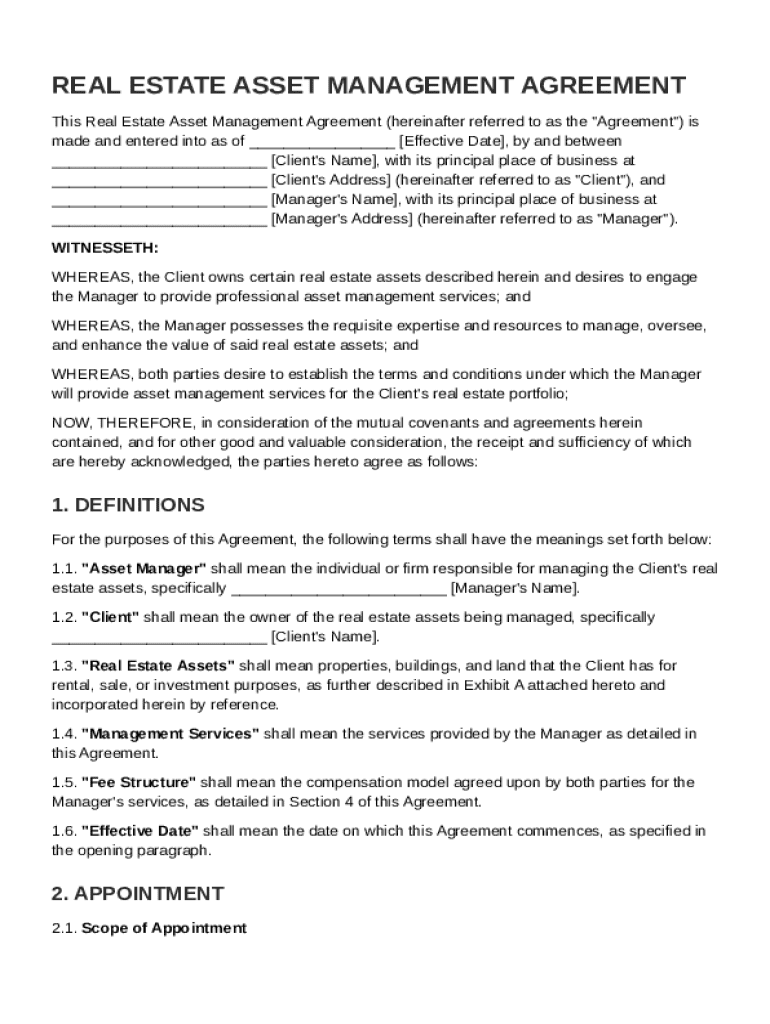
The Real Estate Asset Management Agreement Template is a structured document that outlines the agreement between a client and a manager for managing real estate assets. The template provides a clear framework for defining the roles, responsibilities, and expectations of both parties involved in real estate asset management. It details various aspects of the relationship, including property maintenance, tenant relations, and financial management, ensuring both the client and the manager understand their obligations.
Key Terms in the Agreement
- Client: The individual or entity owning the real estate assets.
- Manager: The professional or firm responsible for overseeing the management of these assets.
This template acts as a formal contract, ensuring that all parties are legally bound by the outlined terms, thereby reducing potential disputes and misunderstandings.
Key Elements of the Real Estate Asset Management Agreement Template
Property Maintenance and Tenant Relations
The agreement specifies the manager's responsibilities concerning property upkeep and tenant interactions. These include:
- Regular inspections and maintenance tasks to ensure properties remain in good condition.
- Addressing tenant inquiries and concerns promptly.
- Managing tenant turnover and lease agreements.
Financial Management and Reporting
Financial stewardship is a critical component of asset management. The agreement typically includes:
- Outline of budgeting and forecasting responsibilities.
- Requirements for periodic financial reporting to the client.
- Guidelines for managing rent collection and handling financial discrepancies.
Fee Structure and Obligations
The document details the financial arrangement between the client and manager, covering:
- The manager's compensation, whether through a fixed fee, percentage of revenue, or another structure.
- Reimbursable expenses and the process for approval.
- Specific obligations and deliverables expected from the manager, ensuring clarity in service provision.
Termination, Indemnification, and Dispute Resolution
To protect both parties, the agreement outlines:
- Conditions and processes allowing for contract termination by either party.
- Indemnification clauses to safeguard against specific liabilities or losses.
- Mechanisms for resolving disputes, which might include mediation or arbitration options.
Steps to Complete the Real Estate Asset Management Agreement Template
-
Input Client and Manager Information: Begin by filling in the names, addresses, and contact details of the involved parties.
-
Specify Property Details: Include all relevant information about the real estate assets under management, such as location, size, and type.
-
Define Responsibilities: Clearly outline what is expected from the manager, including property maintenance, tenant relations, and financial management tasks.
-
Establish Financial Terms: Specify the fee structure and any relevant financial obligations or expense reimbursements.
-
Detail Legal Provisions: Add clauses regarding termination conditions, indemnification, and dispute resolution methods.
-
Review and Finalize: Both parties should review all details carefully, negotiate if necessary, and agree upon the terms before signing.
Legal Use of the Real Estate Asset Management Agreement Template
Ensuring Compliance
The template is designed to meet legal standards and ensure compliance by including:
- Clear obligations that adhere to local, state, and federal laws.
- Confidentiality agreements to protect sensitive information.
- Acknowledgement of compliance with anti-discrimination laws in tenant relations.
Importance of Customization
While the template provides a foundational structure, it is crucial to customize it according to specific needs and legal requirements of the jurisdiction where the property is located. This personalization might cover local regulations, varying tenant laws, or specific business practices.
Use Cases and Examples
Real estate management firms often utilize this agreement when taking on new properties. For example, a property management company in New York might adapt the template to meet state-specific laws and client demands, thus ensuring robust asset management practices while complying with legal standards.
Software Compatibility and Integration
DocHub allows seamless creation and management of the Real Estate Asset Management Agreement Template. Its features include:
- Editing Tools: Add or modify text, insert images and annotations within the document effortlessly.
- Collaboration Features: Multiple users can access and make changes to a document, enhancing teamwork efficiency.
- Form Fields Creation: Add interactive elements like text boxes and signature fields to create a functional and fillable agreement.
By leveraging these capabilities, users can create comprehensive, legally binding agreements without needing extensive technical knowledge or additional software installations.
Business Types That Benefit Most
Real Estate Investment Trusts (REITs)
REITs often have diverse property portfolios requiring consistent management standards, making this template ideal for ensuring streamlined operations across multiple assets.
Property Management Firms
These firms can leverage the template for new and existing client contracts, ensuring clarity and legal compliance in service delivery.
Individual Property Owners
Owners with portfolios may use the agreement to establish clear relationships with independent managers, ensuring their properties are maintained and operated efficiently.
Commercial Real Estate Enterprises
Enterprises dealing with office buildings, malls, or industrial properties can adapt the template to fit complex operational and tenant management needs, ensuring thorough coverage of responsibilities and legal obligations.