






Definition & Meaning
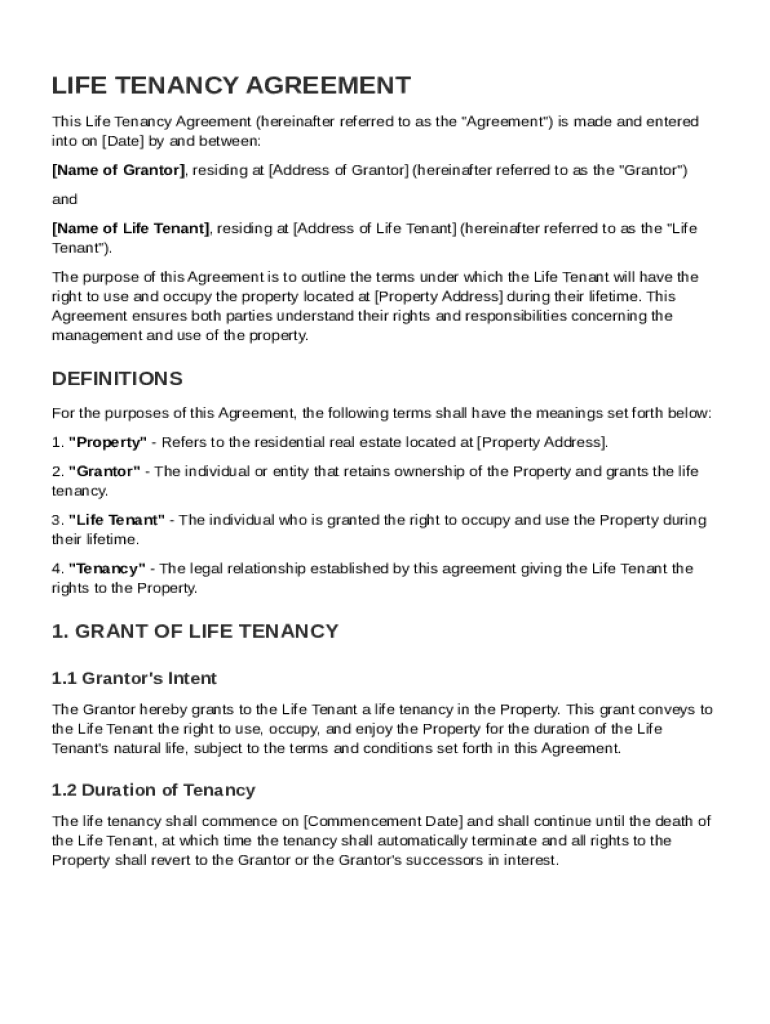
Life Tenancy Agreements are legal documents that outline the rights of a Life Tenant to use and occupy property for their lifetime while enabling the Grantor to retain ownership. This arrangement ensures that the Life Tenant can enjoy the property without fear of eviction, providing them with housing security for the duration of their life. These agreements define not only the living conditions but also the responsibilities for property upkeep and expenses.
Key Elements of the Life Tenancy Agreement Template
A Life Tenancy Agreement typically includes several essential components:
- Rights and Responsibilities: Details the rights of occupancy for the Life Tenant and the responsibilities for property maintenance and expense payments.
- Maintenance Obligations: Specifies who is responsible for property repairs and maintenance to prevent misunderstandings or disputes.
- Expense Payment: Lists the financial obligations of each party, such as taxes, utilities, and insurance.
- Termination Conditions: Describes the conditions under which the agreement may terminate, typically upon the death of the Life Tenant.
- Dispute Resolution: Outlines methods for resolving disputes that may arise during the tenancy, ensuring that conflicts are handled amicably.
How to Use the Life Tenancy Agreement Template
Utilizing a Life Tenancy Agreement Template involves a few simple but crucial steps:
- Download the Template: Obtain the template from a reliable source like a legal document provider to ensure accuracy and compliance.
- Customize the Document: Tailor the template to reflect the specific details of the agreement, including names, property details, and specific obligations.
- Review the Terms: Both parties should review the document to ensure mutual understanding and agreement on all terms.
- Sign the Agreement: Once both parties have reviewed the agreement, they should sign it to make it legally binding.
Legal Use of the Life Tenancy Agreement Template
Life Tenancy Agreements must comply with state and federal laws in the U.S. This includes observing state-specific regulations involving property rights and tenancy laws. Legal compliance ensures that the agreement will be enforceable in court if necessary. Consulting with a legal professional to ensure compliance is advisable.
Important Terms Related to the Life Tenancy Agreement Template
Understanding key terms is crucial for all parties involved:
- Life Tenant: The person who has the right to live in the property for their lifetime.
- Grantor: The property owner who grants the life tenancy.
- Reversion: The property right that reverts back to the Grantor or their designee upon the termination of the life tenancy.
- Remainderman: The person who receives the property after the life tenancy ends.
Examples of Using the Life Tenancy Agreement Template
- Elderly Care: A family might utilize a life tenancy agreement to allow an elderly parent to live in a family-owned home for their lifetime.
- Estate Planning: An individual may set up a life tenancy to ensure their property is occupied by a loved one while planning for eventual property transfer to heirs or other beneficiaries.
State-Specific Rules for the Life Tenancy Agreement Template
Each state in the U.S. may have specific rules governing life tenancy agreements. These can include unique requirements for property maintenance, tax implications, and tenant rights. It is essential to check with state laws to ensure that all obligations and rights are legally defined and protected.
Steps to Complete the Life Tenancy Agreement Template
- Gather Necessary Information: Collect details about the property, the Life Tenant, and the Grantor.
- Fill Out the Template: Complete sections based on gathered information, ensuring clarity in all details and terms.
- Review and Amend: Conduct a thorough review to ensure all agreements are captured accurately and legally.
- Sign and Notarize: Formalize the agreement with signatures and, where required, notarization to authenticate it.
Who Typically Uses the Life Tenancy Agreement Template
This template is used by individuals and entities involved in estate planning and property management:
- Property Owners: Who wish to provide housing security as part of a larger estate plan.
- Estate Planners: Who aim to structure assets and property transfers efficiently.
- Elderly Family Members: Seeking security in their living arrangements without transferring property ownership.