






Definition and Purpose of the General Partnership Agreement
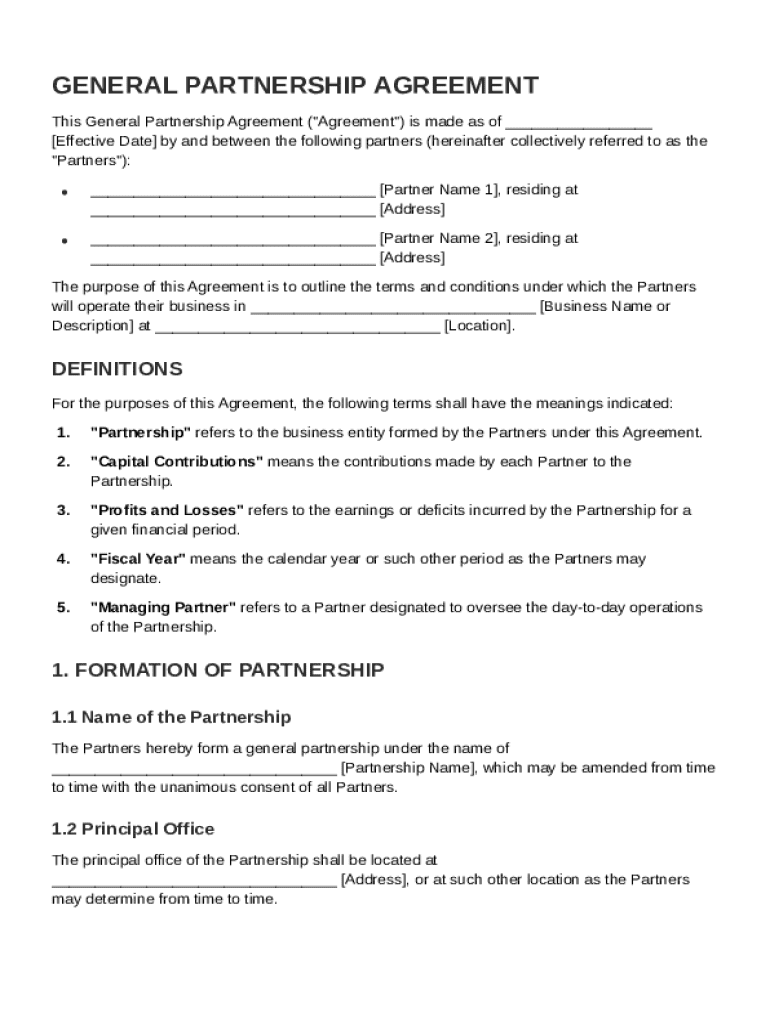
The General Partnership Agreement is a legal document that establishes the terms and conditions for a partnership formed between two or more partners. It defines the operational framework, including aspects such as the formation, purpose, capital contributions, ownership interests, profit sharing, and management structure. This agreement is essential for delineating the responsibilities and rights of each partner, ensuring clarity and mutual understanding to prevent future disputes. The document also addresses how partners can withdraw or be admitted into the partnership, which is crucial for maintaining stability within the business.
Key Elements of the Agreement
- Formation and Purpose: The agreement sets out the intention behind the partnership and the nature of the business to be conducted.
- Capital Contributions: It specifies the amount of money and resources each partner will contribute.
- Ownership Interests and Profit Sharing: Details how profits and losses will be distributed among partners based on their ownership stakes.
- Management and Decision-Making Structure: Defines how decisions will be made, who has decision-making authority, and how disputes are resolved.
How to Use the General Partnership Agreement Template
To effectively use a General Partnership Agreement Template, partners must first review all sections of the template to ensure it aligns with their business needs. Each partner should agree on all terms before signing. This template typically includes fillable fields for key elements such as partner names, business type, contributions, profit-sharing ratios, and management roles. Carefully filling out this template encourages transparency and fosters a strong foundation for the partnership.
Steps for Completing the Template
- Gather Partner Information: Collect identification and contact information for all partners involved.
- Define Business Structure: Specify the roles, contributions, and responsibilities of each partner.
- Financial Details: Clearly outline capital contributions and profit-sharing arrangements.
- Terms of Operation: Detail the management structure and decision-making processes.
- Review and Agree: All partners should review every detail for clarity and consensus.
- Sign and Date: Obtain the signatures of all partners to finalize the agreement.
Who Typically Uses the General Partnership Agreement Template
This template is widely used by entrepreneurs and small business owners who wish to formalize their partnerships. It is particularly beneficial for partners who are setting up a new business venture together. Service-oriented businesses, family enterprises, and farming operations often rely on this document to define roles and lay a clear financial foundation. Legal and financial advisors may assist in tailoring the agreement to specific partnership needs, ensuring compliance with local laws.


Important Terms Related to the General Partnership Agreement
Several key terms are central to understanding a General Partnership Agreement. These include:
- General Partner: An individual who actively manages and has liability within the partnership.
- Limited Partner: A partner whose liability is limited to their investment in the partnership.
- Dissolution: The formal closing or termination of the partnership.
- Fiduciary Duty: The obligation to act in the partnership's best interest.
- Indemnification: Protection for partners against certain legal obligations and losses.
Legal Use of the General Partnership Agreement Template
Using the General Partnership Agreement Template ensures legal clarity and protection for all partners involved. This document holds legal weight, functioning as a binding agreement enforceable in court, should disputes arise. It outlines the partnership's business operations and specifies the distribution of liabilities and assets. Partners are advised to consult a legal professional when drafting their agreement to ensure the document adheres to state laws and regulations, minimizing legal risks.
State-Specific Rules for Partnership Agreements
While partnerships are generally governed by federal and state laws, individual states may impose specific regulations on partnership agreements:
- California: Requires filing a Statement of Partnership Authority for additional public acknowledgment.
- Texas: Adheres to unique rules regarding profit distribution and partner liability.
- New York: Demands particular compliance with publication requirements for new partnerships.
Partners should familiarize themselves with their state’s regulations and adjust their agreement accordingly.
Penalties for Non-Compliance with Partnership Agreements
Failure to comply with the terms outlined in a General Partnership Agreement can result in significant penalties:
- Legal Action: Partners may face lawsuits if the agreement terms are breached.
- Financial Liabilities: Mismanagement of shared resources could lead to personal financial liability.
- Dissolution Risks: Persistent non-compliance might result in forced termination of the partnership.
To prevent such outcomes, it is crucial for partners to regularly review and adhere to the agreement.
Digital vs. Paper Version of the Partnership Agreement
The modern business environment offers flexibility in how partnership agreements are managed:
- Digital Version: Allows for easier edits, sharing, and secure electronic signatures. Platforms like DocHub enhance accessibility and collaboration.
- Paper Version: Offers a tactile, traditional approach that some may prefer for record-keeping.
The choice between digital and paper will depend on partner preferences and the need for mobility and access. Digital solutions often provide greater convenience for ongoing edits and authorized sharing.