






Understanding the Site Agreement Template
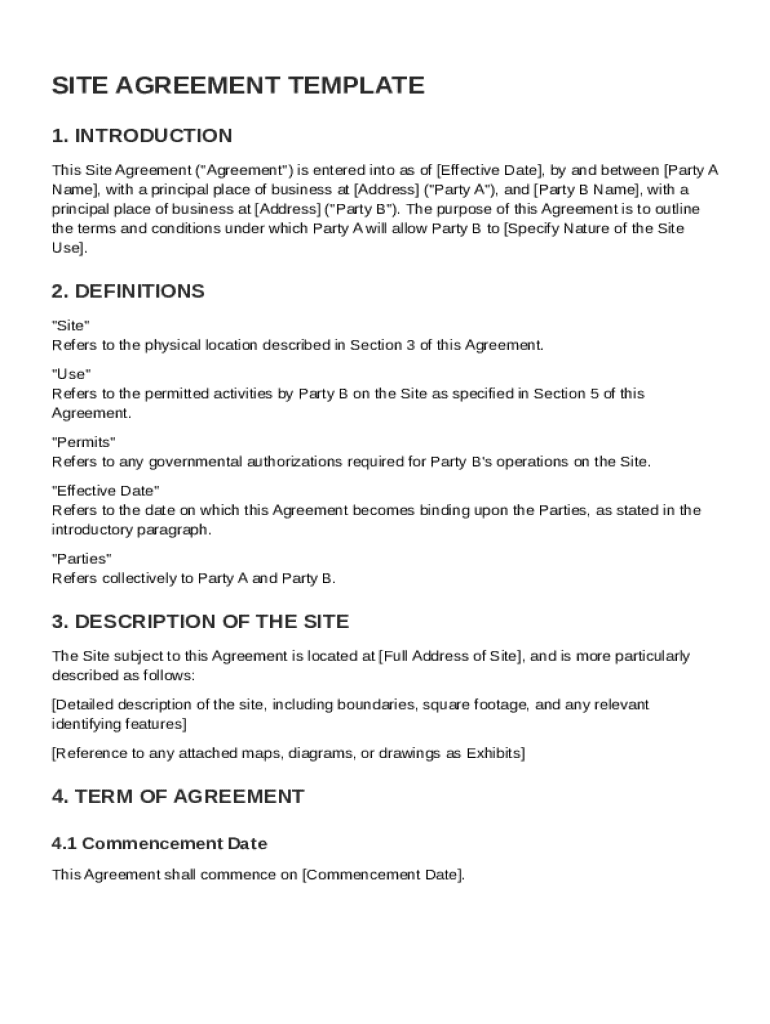
The Site Agreement Template serves as a legal document outlining the terms and conditions for using a specific site or property. This document delineates responsibilities for each involved party, usually referred to as Party A and Party B, and establishes the framework governing their relationship. It is vital for the site agreement to clearly articulate the permitted and prohibited activities, financial obligations, indemnification, confidentiality, and processes for dispute resolution. A comprehensive understanding of this template ensures all parties are aligned with their rights and responsibilities.
Key Elements of the Site Agreement Template
A thorough Site Agreement Template should encompass several critical components to ensure clarity and legal soundness. These elements include:
- Terms and Conditions: Clearly defined clauses detailing what is expected from both parties.
- Responsibilities: Outlines the roles and duties of each party concerning site usage.
- Permitted and Prohibited Activities: Specifies what actions are allowed and what are forbidden on the site.
- Financial Obligations: Details payment terms, including any fees, dues, or penalties.
- Indemnification: Provides conditions under which each party may be held liable for damages or losses.
- Confidentiality: Establishes the expectations for maintaining privacy and handling sensitive information.
- Dispute Resolution: Describes the process for addressing disagreements, including mediation or arbitration options.
Steps to Complete the Site Agreement Template
Completing the Site Agreement Template involves several steps, ensuring that the agreement is comprehensive and binding:
- Review Template Content: Thoroughly read through the template to understand each clause.
- Personalize Information: Enter the specific details for Party A and Party B, including names and addresses.
- Define Terms and Activities: Clearly outline the permitted uses and any activities that are prohibited.
- Specify Financial Obligations: Detail any fees, payment schedules, and financial responsibilities.
- Add Indemnification Clauses: Ensure clauses cover potential liabilities and responsibilities for damages.
- Include Confidentiality Agreements: Specify the extent and limits of confidentiality, if applicable.
- Outline Dispute Resolution Procedures: Describe the steps both sides will take to resolve any disputes or disagreements.
Legal Use of the Site Agreement Template
The legal validity of the Site Agreement Template is paramount. It must comply with relevant legal standards and be enforceable in court. This necessitates:
- Ensuring all parties have the legal capacity and authority to enter into the agreement.
- The agreement must be drafted without coercion or fraud.
- Each party must provide informed consent.
- All necessary legal compliance boxes are checked, including any state-specific requirements or local ordinances.
Who Typically Uses the Site Agreement Template
Various individuals and businesses may utilize a Site Agreement Template. Common users include:
- Property Owners: To detail leasing terms with tenants.
- Site Managers: To set expectations for groups using their facilities.
- Event Organizers: For defining terms with vendors or exhibitors using designated spaces.
- Construction Companies: For agreements on access and use of shared sites.
Different sectors may tailor the template to fit their unique needs while maintaining baseline legal protections.


State-Specific Rules for the Site Agreement Template
Site agreements may be subject to state laws that influence their creation and enforcement. Important considerations include:
- Understanding if a state requires specific disclosure or formatting.
- Ensuring compliance with local property or rental laws.
- Recognizing potential variations in dispute resolution options supported by state law.
- Consulting legal professionals familiar with state regulations for tailored advice.
Why Use a Site Agreement Template
Utilizing a Site Agreement Template offers numerous benefits:
- Clarity: Clearly defined terms prevent misunderstandings.
- Security: Legal documentation provides a safety net in case of disputes.
- Efficiency: Templates streamline the setup of agreements by providing a ready-made structure.
- Professionalism: Using a formal agreement lends credibility and professionalism to transactions.
Important Terms Related to the Site Agreement Template
Numerous terms are essential within the context of a Site Agreement Template. These terms help delineate expectations and processes:
- Tenancy and Licensing: Differentiating between different forms of site usage rights.
- Force Majeure: Provisions that release parties from liability in extraordinary circumstances.
- Hold Harmless Clause: Shields one party from liability incurred by the other.
- Sublicensing: Permitting a third party to assume license rights or responsibilities.
Examples of Using the Site Agreement Template
To illustrate practical application, here are a few scenarios where the site agreement template proves invaluable:
- Community Events: The organizers of a public fair use this template to manage space usage by vendors, ensuring they adhere to site-specific rules.
- Corporate Rentals: A company leasing space for a temporary pop-up shop sets out financial obligations and constraints using the template.
- Shared Workplaces: Coworking spaces use these agreements to manage multiple tenants occupying a communal area, defining workspace usage and billing structures.
These examples demonstrate the many ways these templates can be adapted across various scenarios to facilitate smooth operations and clear communication.