01. Edit your form online
Type text, add images, blackout confidential details, add comments, highlights and more.

Type text, add images, blackout confidential details, add comments, highlights and more.

Draw your signature, type it, upload its image, or use your mobile device as a signature pad.

Send it via email, link, or fax. You can also download it, export it or print it out.
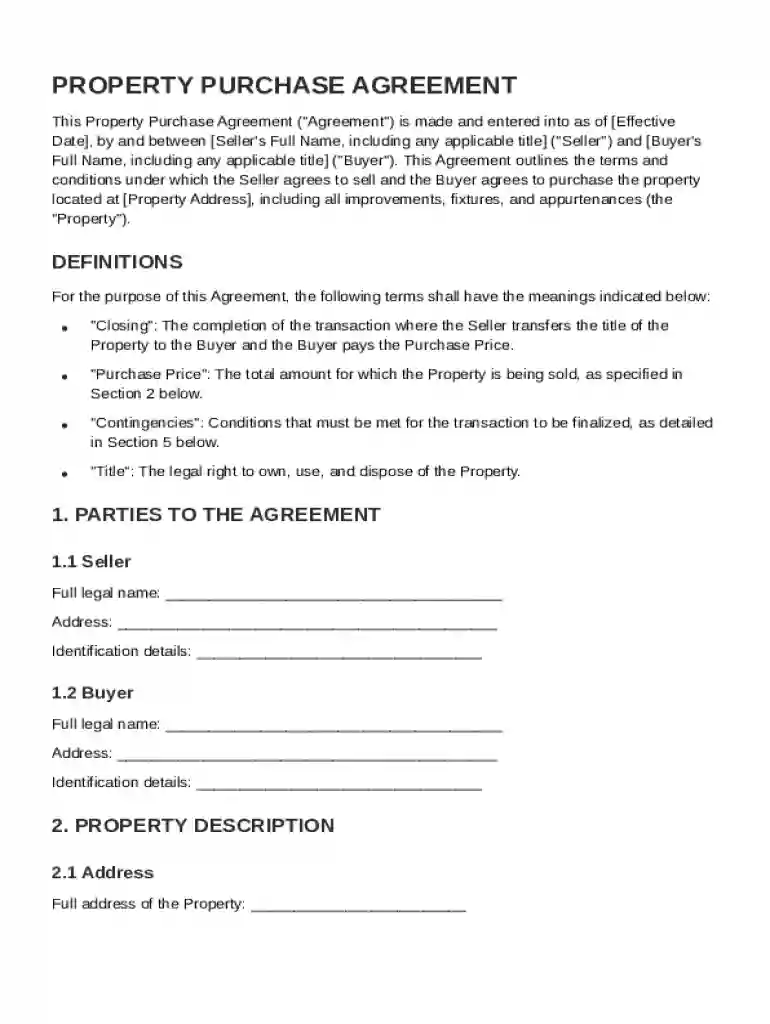
A Property Purchase Agreement is a legally binding document that establishes the terms and conditions for the sale of real estate between a buyer and a seller. This agreement includes crucial details such as the property description, purchase price, and associated contingencies. It is designed to provide clarity and protect the interests of both parties by outlining responsibilities and timelines critical to the transaction. This agreement serves as a safeguard for both parties by legally detailing the expectations and requirements surrounding the purchase process.
The agreement comprises several essential components:
Understanding the terminology within the Property Purchase Agreement is crucial for both parties:
The Property Purchase Agreement is governed by state-specific real estate laws, ensuring the contract's enforceability. It is vital for both parties to comply with local and federal legal standards to avoid potential disputes and legal challenges. Buyers and sellers should familiarize themselves with these laws or consult legal professionals to understand their rights and obligations fully. Crucial legal aspects include adherence to the statute of frauds, which requires real estate contracts to be written to be enforceable.
Each state in the United States may have unique mandates or customs affecting real estate transactions. This can include specific disclosures, cooling-off periods, or particular wording required for the agreement. For instance, in California, sellers must provide a Natural Hazard Disclosure Statement. Thus, it is essential to consult state-specific guidelines or a local real estate attorney to ensure compliance and accuracy.
Fill in Parties' Details: Start by entering both the buyer's and seller's full legal names and contact information.
Describe the Property: Provide a detailed description of the property being sold, including legal address information.
Set the Purchase Price and Deposit: Clearly state the agreed purchase price, earnest money deposit details, and payment methods.
Outline Financing Terms: If applicable, describe buyer financing terms and conditions, including loan types and amounts.
Define Contingencies: Specify all inspection, appraisal, and financing contingencies, including timelines for resolution.
Detail Closing Process: Indicate proposed closing date, location, and responsibilities of both parties.
Include Legal Disclosures: Attach any required property disclosures or surveys as stipulated by state law.
Sign and Date the Agreement: Both parties must sign and date the document for it to become legally binding.
In scenarios where a buyer faces difficulty securing a favorable loan, the financing contingency can protect the buyer from losing their deposit. Similarly, if an inspection reveals significant structural issues, the inspection contingency allows the buyer to negotiate repairs or adjust the purchase price accordingly. These protective measures ensure that both buyers and sellers are securely positioned without unforeseen losses or liabilities during the transaction process.
While the Property Purchase Agreement template facilitates manual completion, DocHub provides a digital platform for editing, sharing, and signing documents online. Compatible with various formats, DocHub allows users to import documents from cloud storage services or directly from their devices. Once finalized, agreements can be securely stored, shared, or exported, streamlining the real estate transaction process in a secure and accessible manner.
At DocHub, your data security is our priority. We follow HIPAA, SOC2, GDPR, and other standards, so you can work on your documents with confidence.