
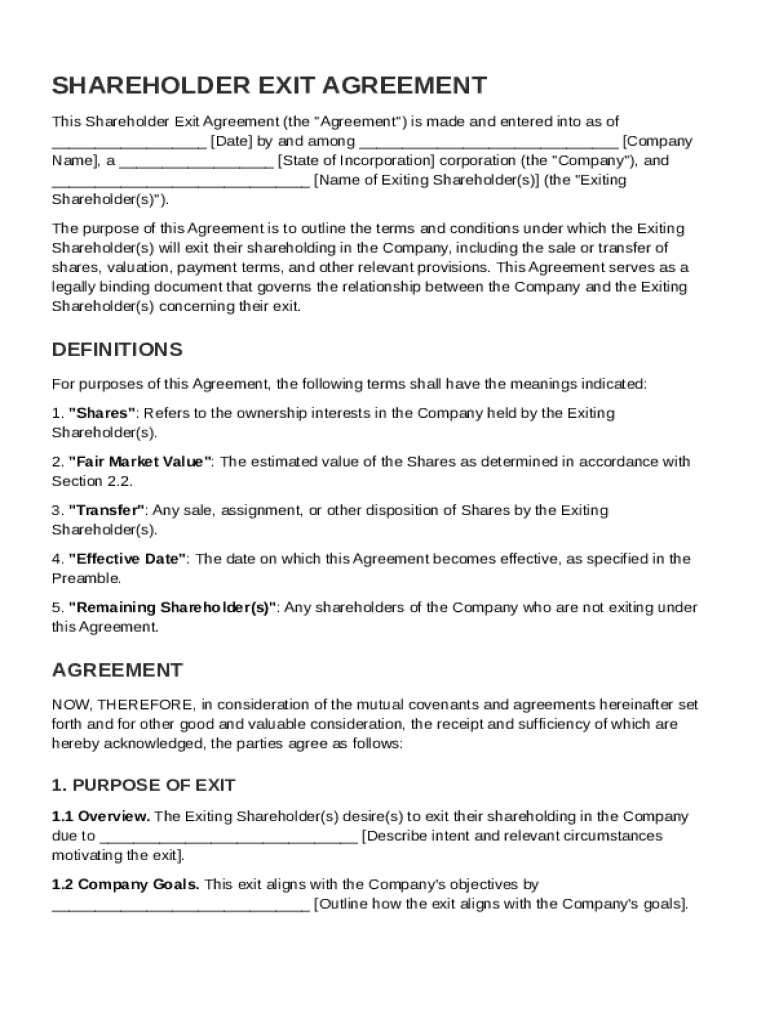







Definition & Purpose of the Shareholder Exit Agreement Template
The Shareholder Exit Agreement Template is a formal document that stipulates the conditions under which a shareholder can exit a company by selling or transferring shares. It details essential terms like share valuation, payment methods, and any confidentiality requirements. The template serves as a legally binding agreement that helps both the shareholder and the company understand their obligations and rights during this process. By setting clear expectations, it aims to prevent disputes and facilitate a smooth transition for all involved parties.
Key Provisions Included
- Share Valuation: Outlines the method for determining the value of the shares at the time of exit.
- Payment Terms: Clarifies how and when payment will be made to the exiting shareholder.
- Confidentiality: Includes clauses to protect sensitive company information.
- Indemnification: Details responsibilities and liabilities after the shareholder's exit.
- Dispute Resolution: Specifies ways to resolve any conflicts that may arise during or after the exit.
How to Use the Shareholder Exit Agreement Template
The Shareholder Exit Agreement Template can be used by companies and shareholders to formalize the process of withdrawing from ownership.
- Customization: The template should be customized to reflect the specific circumstances of the exit, including the number of shares and valuation method.
- Consultation: Involvement of legal advisors to ensure compliance with applicable laws and fair representation of all parties.
- Review & Approve: All parties need to review the provisions and agree on terms before signing.
- Finalization: Once all elements are agreed upon, the document is executed, making it enforceable.
Practical Steps for Implementation
- Gather all necessary information, including shareholder details and share valuation metrics.
- Modify the template to include any unique terms relevant to the parties involved.
- Review the document with legal and financial professionals to avoid loopholes.
- Obtain signatures from all parties to legitimize the document.
Key Elements of the Shareholder Exit Agreement Template
The template consists of several important elements designed to cover various legal and financial aspects of a shareholder's exit:
Essential Clauses
- Introduction Section: Identifies the parties involved and recognizes their intention to enter into the agreement.
- Definitions: Key terms used throughout the document are clearly defined to avoid ambiguity.
- Rights and Obligations: Details the rights of the exiting shareholder and the obligations of the company and remaining shareholders.
Additional Provisions
- Confidential Information: Protects the company's proprietary data even after the shareholder exits.
- Conditions Precedent: Lists any preconditions required for the agreement to take effect.
- Termination Conditions: Outlines circumstances in which the agreement may be terminated or revised.
Legal Use and Compliance
Ensuring the template is legally compliant is a critical part of its effectiveness:
- Legal Review: It is advisable to have legal professionals review the template for compliance with state law and federal regulations.
- Binding Nature: Once signed, the document is legally binding, meaning any breach could result in legal action.
- Adherence to ESIGN Act: When signed electronically, the agreement remains legally binding, adhering to the Electronic Signatures in Global and National Commerce Act.
Importance of Compliance
- Ensures that all parties understand their rights and responsibilities under the law.
- Helps avoid potential litigation by clearly laying out the terms and conditions.
- Maintains the company's reputation by following a structured and legal exit process.
Steps to Complete the Shareholder Exit Agreement Template
Completing this agreement involves a sequence of organized steps:
- Gathering Information: Start by collecting all necessary information regarding the shareholder's holdings and the company's current valuation.
- Reviewing Template: Thoroughly read through the template to understand its provisions.
- Filling Out the Document: Enter required data such as names, addresses, and specific terms regarding the exit.
- Legal Compliance Check: Ensure the template is in compliance with relevant laws specific to the state where the company operates.
- Finalize Signatures: Collect signatures from all relevant parties, including legal counsels, to finalize the agreement.
Checklist for Completion
- Verify all details before entering them.
- Confirm that all relevant clauses and provisions applicable to your situation have been included.
- Ensure that all parties understand their obligations under the agreement before signing.
State-Specific Rules for the Shareholder Exit Agreement Template
Understanding state-specific legal requirements is crucial:
- Different states may have unique regulations regarding shareholder rights, notification periods, and valuation methods.
- Some states may require additional disclosures or tax documentation during the exit process.
Addressing State Differences
- Review state legislation or consult a local attorney to understand if there are specific clauses needed for your jurisdiction.
- Adjust the template accordingly to reflect these differences and ensure full legal compliance.
Examples and Scenarios of Using the Shareholder Exit Agreement Template
Considering practical examples can provide clarity and enhance understanding:
Example Scenarios
- Small Private Company: A minority shareholder in a family business decides to exit. They use the template to outline a fair valuation and ensure confidentiality of business operations post-exit.
- Startup Environment: An early investor in a tech startup participates actively in the company and decides to exit as the company reaches maturity and fulfills investment goals. The template facilitates a seamless transition by clearly specifying payout and non-compete clauses.
Benefits of Using Scenarios
- Illustrate how the template can be adapted to various business models.
- Show the flexibility of the template in accommodating different exit strategies.
- Emphasize real-world applicability thereby enhancing comprehension.
Versions or Alternatives to the Shareholder Exit Agreement Template
Companies may encounter different versions or adaptations of this template to suit their specific needs:
Variability and Alternatives
- Customized Agreement: Some companies may require a more tailored agreement that accounts for unique shareholder restrictions or special circumstances.
- Industry-Specific Templates: Certain industries might have specialized templates that include clauses specific to industry regulations or intellectual property considerations.
Benefits of Exploring Alternatives
- Finding a version that closely aligns with your specific business needs ensures a smoother exit process.
- Reducing the likelihood of future disputes by proactively addressing potential issues unique to your operations.




