






Definition and Purpose
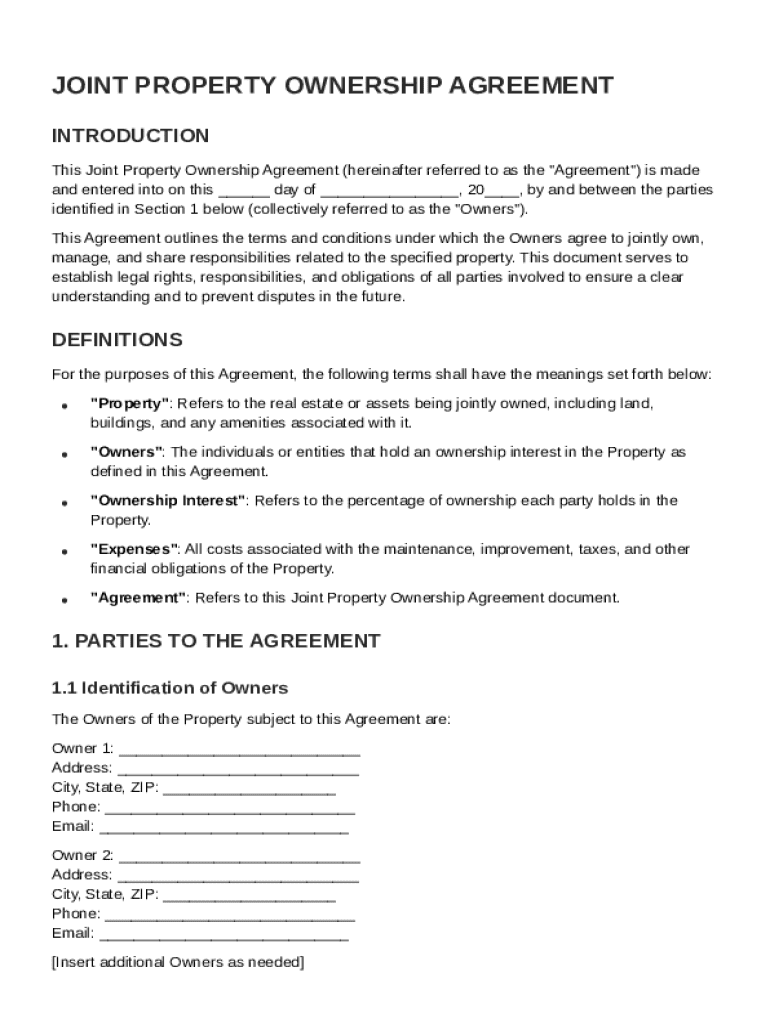
A Joint Property Ownership Agreement Template is a valuable document designed to clearly outline the terms and conditions under which two or more parties share ownership of a property. This template serves to identify the parties involved, detail their respective ownership interests, and establish key guidelines for managing the property. It helps define each owner's rights, financial responsibilities, and usage privileges. By ensuring all parties have a shared understanding, the agreement minimizes potential conflicts and fosters cooperation in property-related decisions.
Key Elements of the Agreement
The template typically includes several critical sections that address different aspects of joint ownership. Key elements generally covered are:
- Identification of Owners: Lists all involved parties, detailing their ownership share in the property.
- Property Description: Provides a detailed description of the property being jointly owned, including precise legal descriptions to avoid ambiguity.
- Management Responsibilities: Allocates specific management duties to each owner, ensuring effective property upkeep and decision-making processes.
- Financial Contributions: Details each party’s financial obligations, including mortgage payments, property taxes, maintenance costs, and insurance premiums.
How to Use the Joint Property Ownership Agreement Template
Using this template involves a systematic approach:
- Download and Open the Template: Obtain the Joint Property Ownership Agreement Template from a reliable source, like an online document service or legal form repository, and access it in a compatible format such as PDF or DOC.
- Complete Owner Information: Fill in personal details for each owner, including names and contact information, ensuring accuracy throughout.
- Describe the Property: Provide detailed descriptions, pulling from the property’s title deed or mortgage documents, to ensure clarity.
- Define Ownership Interests and Responsibilities: Clearly articulate each party’s investment in the property and their financial responsibilities.
Steps to Complete the Agreement Template
Completing the Joint Property Ownership Agreement Template requires attention to detail:
- Prepare Required Information: Gather all necessary documentation and details about the property and each owner’s financial contributions.
- Fill in the Template: Methodically input all relevant data into the template, paying close attention to detail to ensure comprehensiveness and accuracy.
- Review the Agreement: Once filled, thoroughly review the agreement, preferably with legal counsel, to confirm all terms are fair and correct.
- Sign and Finalize: Once reviewed and agreed upon by all parties, sign the document. Legalization may be necessary, involving notarization or additional witness signatures, depending on state laws.
Who Typically Uses This Template
This template is commonly used by:
- Co-purchasers of Property: Individuals or entities purchasing property jointly for investment or residential purposes.
- Business Partners: Entities or individuals with a business interest in jointly owning a property, such as rental or commercial ventures.
- Family Members: Siblings, parent-child duos, or extended relatives who jointly own inherited or purchased property.
Legal Validity and Compliance
The Joint Property Ownership Agreement Template must adhere to legal standards to be enforceable:
- Compliance with State Laws: As property laws vary by state, the agreement should be reviewed for compatibility with local statutes.
- Inclusion of Essential Clauses: Ensures the template includes vital clauses concerning dispute resolution, decision-making protocols, and amendments.
- Notarization and Witnesses: Depending on jurisdiction, the agreement may need notarization or additional signing by witnesses to be considered legal.
Examples of Use in Real-World Scenarios
Practical applications of this agreement template include:
- Investment Property: When several investors pool resources to purchase a commercial property, using the agreement helps define roles and profit-sharing metrics.
- Inheriting Families: Siblings inheriting a family home can use the template to delineate rights and responsibilities.
- Joint Ventures: Startup companies sharing office space utilize this agreement to manage rent and utility responsibilities comprehensively.
Important Terms and Definitions
Understanding key terms is essential for effective use:
- Tenancy in Common: Each owner holds an individual interest in the property which can be sold or passed on to heirs.
- Joint Tenancy: Ownership interests are equal and inherently include rights of survivorship, passing interest to surviving owners upon death.
- Right of Survivorship: Automatically transfers an owner's share to the surviving owners, applicable in joint tenancies.
Examples of Using the Template
To illustrate its utility, consider scenarios like:
- Post-Divorce Agreements: Former spouses opting to retain joint ownership of a family residence may use this template to formalize their arrangements.
- Shared Vacation Homes: A group of friends purchasing a vacation property relies on the template to allocate usage times, maintenance duties, and expense sharing.
With these insights and guidance on usage, the Joint Property Ownership Agreement Template proves to be an indispensable tool for managing and delineating the intricacies of shared property ownership in an organized, legal, and efficient manner.