






Definition & Meaning
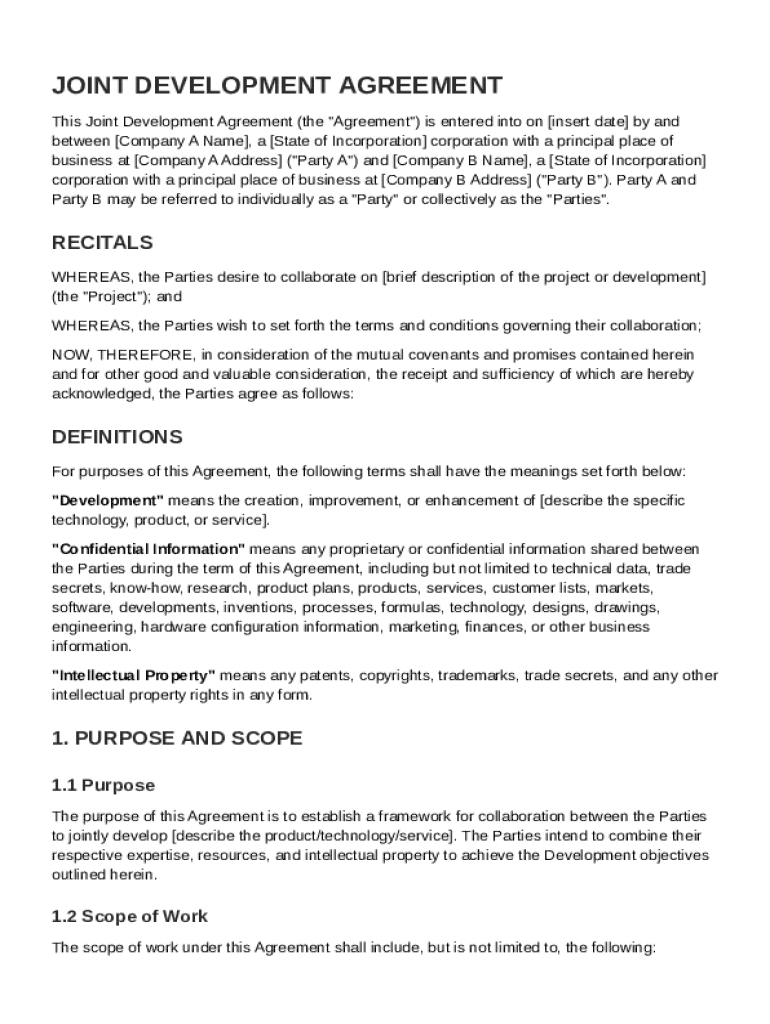
The Joint Development Agreement Template serves as a formal contract between two or more entities, typically companies, that agree to collaboratively work on a specific development project. This agreement is crucial in clearly outlining each party's role, responsibilities, and expectations, ensuring a smooth partnership. Key aspects of such agreements include scope of work, financial terms, profit-sharing arrangements, confidentiality clauses, and intellectual property rights. By having these elements detailed in the agreement, involved parties can protect their interests and avoid misunderstandings or disputes throughout the project lifecycle.
Key Elements of the Joint Development Agreement Template
Key features of the Joint Development Agreement Template typically include:
- Project Scope: Detailed outline of the project, including timelines and deliverables.
- Roles and Responsibilities: Clearly defined roles for each party, specifying tasks and management responsibilities.
- Financial Terms: Explanation of budget allocations, cost-sharing, and payment schedules.
- Intellectual Property Rights: Guidelines for ownership and use of any developed IP during and after the project.
- Confidentiality Obligations: Clauses ensuring that proprietary information remains private.
- Dispute Resolution: Procedures for resolving disagreements, such as mediation or arbitration.
These components ensure both parties understand the project's framework and the expectations for their involvement.
Steps to Complete the Joint Development Agreement Template
When filling out a Joint Development Agreement Template, consider the following detailed steps:
- Gather Information: Ensure you have all necessary details regarding the project, including financial information, timelines, and stakeholder details.
- Define the Scope: Clearly describe the project objectives, deliverables, and any milestones.
- Allocate Roles: Assign specific responsibilities and roles to involved parties, ensuring clarity in task management.
- Detail Financial Arrangements: Outline the financial plan, including contributions, payment terms, and profit-sharing.
- Address IP Rights: Specify ownership of intellectual property created during the project.
- Set Confidentiality Clauses: Develop terms to secure private information.
- Plan for Dispute Resolution: Include procedures for handling conflicts amicably.
- Review and Finalize: Have both parties review the agreement thoroughly before signing to ensure all aspects have been covered and understood.
These steps provide a comprehensive guide for drafting a complete and effective joint development agreement.
Important Terms Related to Joint Development Agreement Template
Understanding specific terminology within the Joint Development Agreement is essential:
- Licensor: The party granting access or ownership of developed technology or IP.
- Licensee: The entity receiving rights to use certain technologies or IP.
- Milestones: Set objectives that must be achieved within the project timeline.
- Royalties: Payments made to the licensor for continued use of developed IP, usually based on revenue.
- Force Majeure: Clauses that relieve parties from liability due to unforeseeable events leading to project delays or changes.
Recognizing these terms will aid in comprehension and execution of the agreement effectively between parties.
Legal Use of the Joint Development Agreement Template
In the United States, the legal framework around Joint Development Agreements emphasizes:
- Legality: Parties must ensure the agreement complies with state and federal laws.
- Binding Nature: A properly executed agreement is legally binding and enforceable in court.
- Amendments: Any changes to the contract must be documented and agreed upon by all parties involved.
- Governing Law: Specification of which state’s law will govern the agreement, crucial in case of disputes.
Understanding these legal essentials ensures the joint development agreement is valid and applicable in a court of law.
State-Specific Rules for Joint Development Agreements
Given the diverse legal landscape across the United States, attention must be paid to state-specific regulations:
- Intellectual Property Laws: Vary significantly, affecting how IP is managed and protected.
- Contractual Law Variations: States may have different rules about contract execution and breach consequences.
- Dispute Resolution Mechanisms: Options like arbitration might be encouraged differently based on jurisdiction.
Thus, customizing the agreement according to local laws is critical to safeguard interests and maintain legal compliance.
Who Typically Uses the Joint Development Agreement Template
This template is primarily used by:
- Tech Companies: Collaborating on software or hardware development.
- Pharmaceutical Firms: Joint research and development projects for new drugs.
- Engineering Firms: Working together on complex infrastructural projects.
Each of these sectors frequently engages in joint development to leverage expertise, share resources, and expedite project timelines, making the template invaluable for formalizing such collaborations.


Business Types That Benefit Most from a Joint Development Agreement Template
Business sectors that gain the most from using these templates include:
- Startups: Need clear agreements to collaborate effectively with larger enterprises.
- Multinational Corporations: Engage in cross-border development, requiring formalized agreements.
- R&D Institutions: Regularly partner with commercial entities to bring innovations to market.
These associations capitalize on joint expertise, enhanced innovation, and shared financial resources, thus achieving mutual growth and development objectives effectively.