




01. Edit your form online
Type text, add images, blackout confidential details, add comments, highlights and more.

Type text, add images, blackout confidential details, add comments, highlights and more.

Draw your signature, type it, upload its image, or use your mobile device as a signature pad.

Send it via email, link, or fax. You can also download it, export it or print it out.
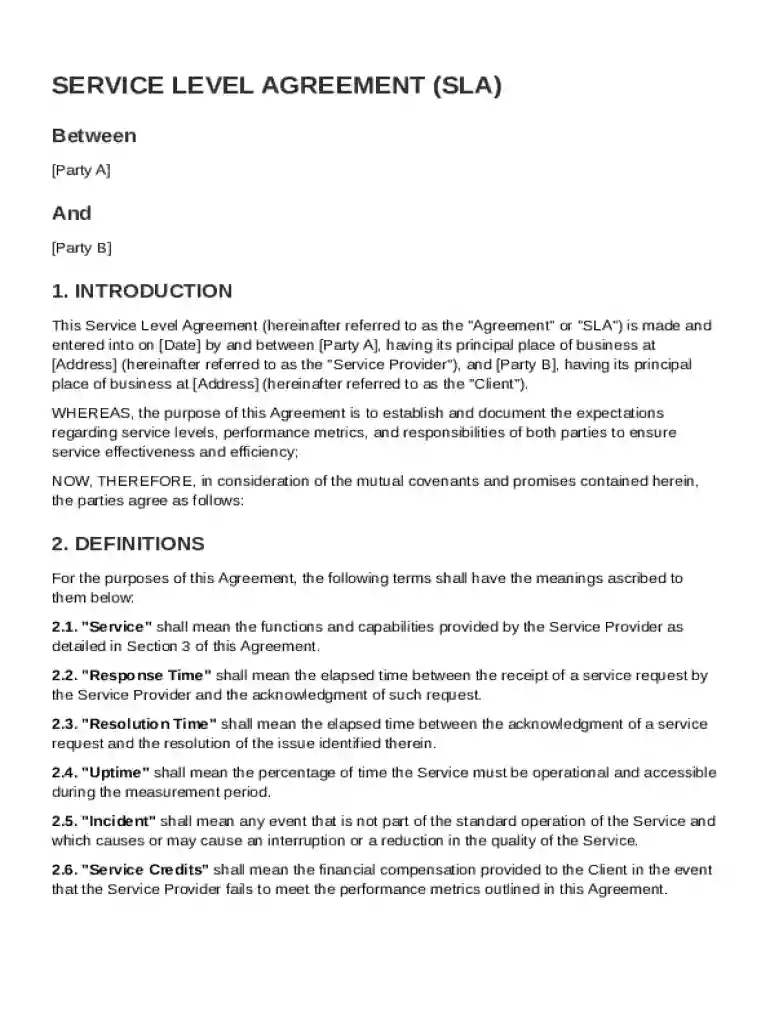
A Service Level Agreement (SLA) Template is a formal document that outlines the terms and conditions agreed upon by a service provider and a client. This template serves as a blueprint for establishing clear service expectations, performance metrics, and responsibilities. An SLA typically includes critical elements such as service levels, which define the quality and speed of services provided, response and resolution times that detail how quickly issues will be addressed, and penalties for failure to meet agreed targets. By using an SLA template, both parties ensure a mutual understanding of service delivery standards and establish accountability mechanisms for any service disruptions or failures.
Utilizing a Service Level Agreement Template involves several key steps to customize it to your specific needs. Begin by reviewing the template to understand its structure and content fully. Identify and modify sections to reflect the particular services and commitments relevant to your agreement. Ensure that all the service levels, response times, and resolution times match your business operations or service objectives. Each section should be adapted to include the appropriate legal, technical, and performance terminology related to your industry. Once adjustments are made, review the document with legal counsel or a contract specialist to guarantee its enforceability.
The critical components of a Service Level Agreement Template focus on measurable performance and service delivery expectations:
These elements work together to ensure that there is a clear, agreed-upon methodology for monitoring and managing service expectations.
When finalizing the Service Level Agreement Template, follow these essential steps:
Completing these steps ensures a comprehensive and legally sound SLA that meets the needs of both parties.
SLAs must adhere to legal standards to be valid and enforceable. Ensure that the template complies with relevant laws and regulations, often specific to the jurisdiction in which the services will be provided. It’s essential to incorporate clauses that address liability, dispute resolution, and compliance to protect both parties from legal issues. Consulting an attorney with expertise in contract law is recommended to validate that the SLA conforms with applicable legal standards and industry requirements.
A variety of terms are critical to understanding and fulfilling a Service Level Agreement effectively:
These terms provide a foundational understanding of SLA operations and clauses, aiding in more informed negotiations and modifications.
SLA requirements can vary significantly based on state regulations, especially regarding dispute resolution and enforcement terms. Some states may have specific statutes defining acceptable parameters for penalty clauses or communication protocols. It is crucial to familiarize yourself with any state-specific laws that may impact your SLA and integrate these rules into the agreement. Engaging with legal professionals familiar with regional laws will help ensure compliance and reduce the risk of contractual disputes.
Various businesses find SLAs invaluable for maintaining service quality and holding parties accountable. IT service providers, business process outsourcing firms, telecommunications companies, and cloud service vendors particularly benefit, as their operations depend on consistent service delivery. These businesses utilize SLAs to guarantee clients' assurance that their services will meet specified standards. By implementing SLAs, they can manage expectations, provide transparency, and strengthen customer relationships.
At DocHub, your data security is our priority. We follow HIPAA, SOC2, GDPR, and other standards, so you can work on your documents with confidence.




By using the Service provided by COMPANY, CLIENT agrees to be bound by the following Terms of Service. In addition, by using the Software, CLIENT fullyRead more
Jul 1, 2026 This Service Level Agreement (SLA) is intended to identify the basic services, and any agreed upon optional services provided by RutgersRead more


