
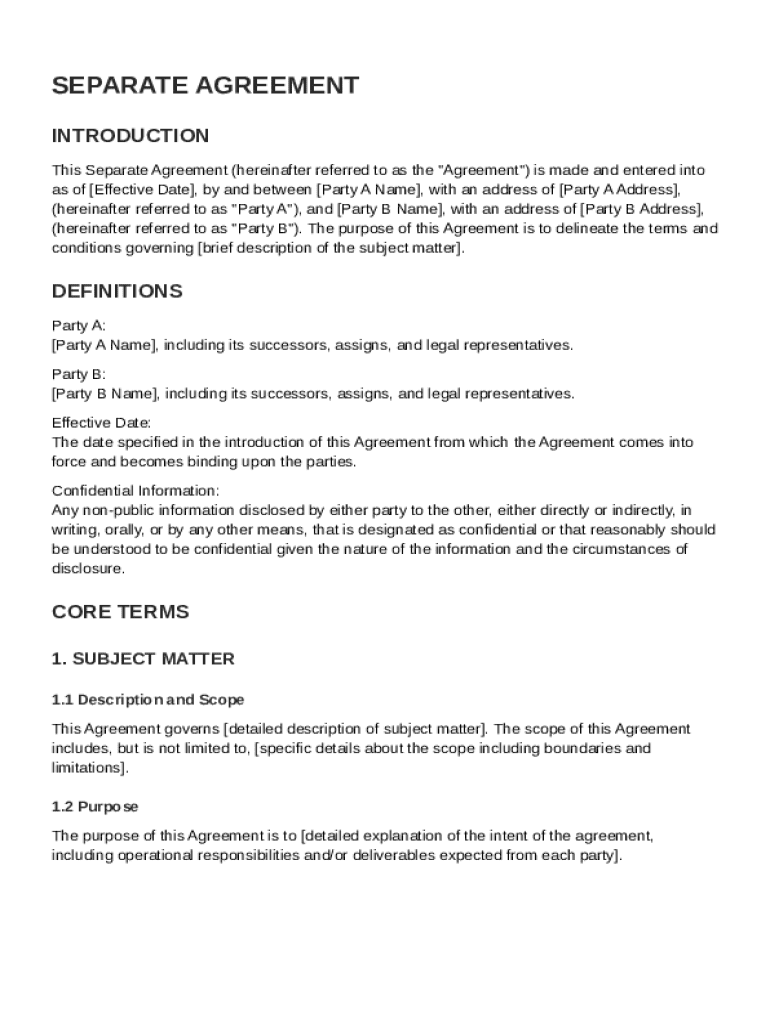







Definition & Meaning
A Separate Agreement Template is a document that outlines specific terms and conditions between two parties regarding a particular agreement, separate from any overarching contract they may have. This template serves a pivotal role in detailing the respective responsibilities, expectations, and obligations of involved parties. Separate agreements are commonly used when elements such as project timelines, payment terms, or confidentiality obligations need discrete clarification beyond the main contract. For instance, two businesses entering a joint venture might outline the specifics of their collaboration in a separate agreement to avoid ambiguity and ensure mutual understanding.
Core Components
- Definitions: Clarifies specific terms used within the agreement to avoid misinterpretation.
- Responsibilities: Outlines each party’s duties and tasks in fulfilling the agreement’s objective.
- Payment Terms: Describes how and when payments will be made, including methods and timelines.
- Confidentiality Obligations: Specifies the handling of sensitive information to protect business interests.
- Dispute Resolution: Provides mechanisms for resolving disagreements, which may include mediation or arbitration.
- General Provisions: Covers miscellaneous terms such as amendments, notices, and governing law.
How to Use the Separate Agreement Template
To effectively utilize a Separate Agreement Template, one must understand its fundamental structure and purpose. The template serves as a foundational document, allowing parties to specify and agree upon detailed terms pertinent to a particular aspect of their relationship. Here are practical steps to follow:
-
Review and Customize: Begin by reviewing the template to ensure it aligns with the intended agreement. Customize sections as needed, tailoring terms and conditions to fit the specifics of the situation.
-
Negotiate Terms: Engage in discussions with the other party to negotiate terms. This includes addressing any concerns or conditions that may need adjustment for mutual satisfaction.
-
Add Contextual Clarity: Ensure all terms are clearly defined and unambiguous. This might involve adding specific definitions or context to complex clauses.
-
Legal Consultation: Involve legal advisors to review the drafted template to mitigate any legal risks and assure compliance with relevant laws and regulations.
-
Finalization and Signatures: Once both parties are satisfied, finalize the document and obtain signatures to render the agreement legally binding.
Practical Examples
- Consulting Projects: Specifying deliverables and milestones for a consultant hired by a company.
- Supplier Contracts: Detailing shipment schedules and pricing structures unique to a specific transaction.
- Partnerships: Clarifying profit-sharing ratios or investment contributions in a business partnership.
Steps to Complete the Separate Agreement Template
Completing a Separate Agreement Template involves several meticulous steps to ensure accuracy and enforceability. It is crucial to approach this process with a methodical mindset:
- Gather Required Information: Collect all pertinent details from both parties, including names, addresses, and roles.
- Detail Terms and Conditions: Clearly outline the terms each party will adhere to, and ensure that conditions are both realistic and achievable.
- Identify and Allocate Risks: Discuss potential risks and implement risk management strategies within the agreement.
- Ensure Compliance: Verify that the agreement adheres to all applicable legal and industry standards.
- Edit for Clarity and Precision: Language should be straightforward and precise to prevent misunderstandings.
- Review with Legal Professionals: Obtain a comprehensive review from a legal professional to ensure the document is legally sound.
- Finalize and Sign: With both parties in agreement, finalize the template and each party should provide their signature.
Key Elements of the Separate Agreement Template
The Separate Agreement Template consists of several key elements that serve to clarify the terms and ensure mutual understanding. These elements include:
- Parties Involved: Identifies all parties to the agreement to establish clear accountability.
- Objective: Defines the purpose or goal of the agreement.
- Scope of Work: Details the tasks, duties, and responsibilities each party undertakes.
- Terms of Performance: Specifies standards and deadlines for completing obligations.
- Termination Clause: Describes conditions under which the agreement can be ended prematurely.
- Amendment Procedure: Outlines how changes to the agreement will be managed and documented.
- Confidential Information: Lists what information is considered confidential and how it should be handled post-termination of the agreement.
Legal Use of the Separate Agreement Template
Legal use of a Separate Agreement Template is critical in defining expectations and recourse in case of disputes. The agreement often incorporates:
- Compliance with Laws: Ensures all actions stipulated in the agreement adhere to state and federal laws.
- Liability Limitations: Limits the extent to which parties can be held liable for breaches or failures.
- Indemnity Provisions: Establishes responsibility for compensating parties for certain losses or damages.
- Significant Precedents: References relevant legal precedents that might influence interpretations or applications of the agreement.
Contextual Importance
These legal considerations are crucial for maintaining good standing in business relationships and preventing avoidable legal conflicts. Companies often rely on the robustness of these agreements to protect their interests proactively.
Examples of Using the Separate Agreement Template
There are numerous scenarios in which the Separate Agreement Template proves indispensable:
- Real Estate Transactions: Separate agreements can specify the terms under which property renovations must be completed.
- Employment Contracts: Individual agreements may detail unique bonuses or compensation structures.
- Independent Contractors: Defines project-specific scopes and deliverable timelines for freelancers.
- Technology Licensing: Specifies terms of use and royalties for licensed technology components within collaborative projects.
These examples illustrate the adaptability of the Separate Agreement Template to various business requirements.
Software Compatibility (TurboTax, QuickBooks, etc.)
While Separate Agreement Templates are primarily legal documents, ensuring software compatibility, especially for accounting and project management, can be beneficial. Several platforms such as QuickBooks and document management systems can integrate with templates to:
- Track Compliance and Milestones: Monitor adherence to contractual obligations and track key project milestones automatically.
- Financial Reporting: Link payment terms to accounting software for real-time financial reporting and analysis.
- Collate Data Efficiently: Gather necessary documentation and data through integrated systems to ease compliance efforts.
Integration Benefits
Integration with accounting and project management software enhances efficiency by automating various compliance and reporting tasks, reducing manual tasks, and minimizing human error.
Business Types that Benefit Most from Separate Agreement Template
Certain business entities can leverage the Separate Agreement Template more effectively due to the nature of their operations:
- Partnerships and Joint Ventures: For these entities, separate agreements can clearly delineate roles and responsibilities among partners.
- Tech Startups: Startups often use this template to define terms with developers and contractors.
- Manufacturers and Suppliers: They use separate agreements to specify order quantities, delivery schedules, and payment terms.
- Consultancy Firms: Consultants employ separate agreements to detail the scope of work, timelines, and payment schedules for their clients.
Each of these business types benefits from the clarity and structure that a separate agreement provides, allowing them to manage their relationships effectively while focusing on growth and innovation.




