






Definition and Meaning
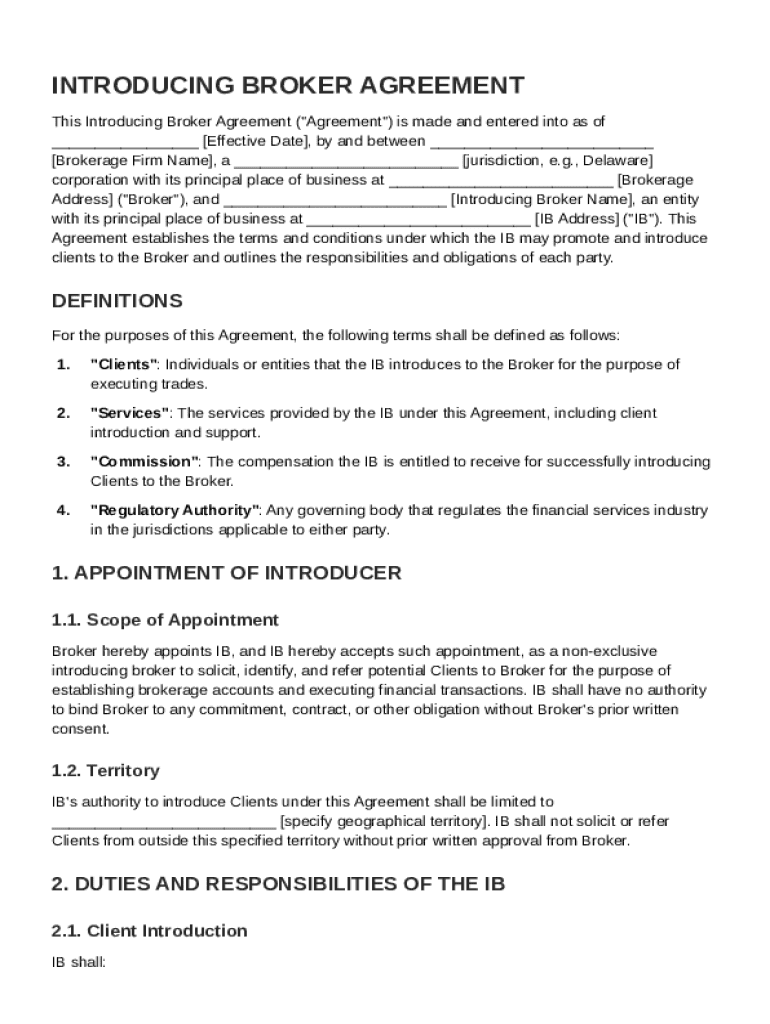
The Introducing Broker Agreement Template serves as a formal document outlining the terms under which an Introducing Broker (IB) connects potential clients with a Brokerage Firm. This agreement specifies roles, responsibilities, and obligations, ensuring mutual understanding and compliance. It serves to protect both parties by defining commission structures, payment terms, and confidentiality obligations.
Key Components
- IB Duties: Details the responsibilities of the IB in promoting and introducing clients to the brokerage firm.
- Commission Structure: Clarifies how and when commissions are paid to the IB.
- Compliance Requirements: Enumerates regulatory and compliance standards that the IB must adhere to.
How to Use the Introducing Broker Agreement Template
The Introducing Broker Agreement Template is designed to streamline the contractual process between an IB and a Brokerage Firm. Using this template involves filling out sections tailored to the specific arrangement between the parties, including:
- Inputting Party Details: Include the full names and contact information of both the Introducing Broker and the Brokerage Firm.
- Outlining Specific Terms: Customize areas related to the commission structure and duration of the agreement.
- Incorporating Regulatory Information: Ensure that all relevant regulatory and compliance information is included, especially those required by the SEC or other financial authorities.
Practical Use Cases
- New Partnerships: Ideal for firms looking to formalize new brokerage relationships.
- Regulatory Compliance: Ensures all parties are aware of and agree to abide by industry standards.
- Commission Clarity: Provides clear terms on how commissions are calculated and paid.
Key Elements of the Introducing Broker Agreement Template
Central to the effectiveness of an Introducing Broker Agreement are its core elements which ensure clarity and legal soundness. These include:
Essential Clauses
- Duties and Responsibilities: Defines what each party is expected to do and the scope of their responsibilities.
- Termination Conditions: Outlines how and under what conditions the agreement can be terminated.
- Confidentiality Agreements: Protects sensitive information shared during the partnership.
Real-World Examples
- Commission-Based Relationships: Outlines clear commission terms that prevent misunderstandings.
- Regulatory Provisions: Ensures adherence to financial regulations, reducing the risk of legal issues.
Legal Use of the Introducing Broker Agreement Template
Ensuring legal compliance is critical when implementing the Introducing Broker Agreement Template. This document needs to meet current legal standards and regulations.
Legal Requirements
- ESIGN Act Compliance: The agreement, when digitally signed, must comply with the Electronic Signatures in Global and National Commerce Act.
- Standard Contract Law: Must be drafted in accordance with standard contract law to ensure enforceability.
Important Terms Related to the Introducing Broker Agreement Template
Understanding the terminology used within the agreement is vital to accurately applying its terms. Here are some crucial terms:
Definitions
- Indemnification: A clause that shields one party from potential losses or damages.
- Non-Exclusive Relationship: Specifies that the IB may engage with multiple brokerage firms simultaneously.
Application
- Role of Indemnification: Provides a legal safety net for the IB against claims arising from actions taken on behalf of the brokerage firm.
- Non-Exclusive Benefits: Allows IB greater freedom and flexibility to partner with multiple firms.
Steps to Complete the Introducing Broker Agreement Template
Filling out the Introducing Broker Agreement Template is a systematic process that ensures all necessary details are included. Follow these steps:
- Gather Information: Collect all relevant information from both parties, including contact details and firm identifiers.
- Define Terms: Clearly articulate commission structures, compliance requirements, and confidentiality protocols.
- Review Legal Clauses: Consult with a legal expert to review the terms and conditions for compliance and enforceability.
- Digital Signature: Ensure the digital signing process complies with applicable electronic signature laws.
State-Specific Rules for the Introducing Broker Agreement Template
Although the Introducing Broker Agreement operates under federal financial regulations, state-specific laws can influence certain aspects:
State Variations
- Tax Implications: States may impose different tax requirements affecting brokerage commissions.
- Regulatory Compliance: Some states might have additional compliance mandates regarding financial agreements.
Examples of Using the Introducing Broker Agreement Template
Exploring realistic scenarios can provide insight into maximizing the utility of this template:
Case Studies
- Successful Partnerships: Highlight a scenario where clear communication and defined terms led to mutual profitability.
- Dispute Prevention: Showcase an example where the indemnification and termination clauses helped resolve potential conflicts efficiently.
By understanding and applying the Introducing Broker Agreement Template accurately, businesses can ensure seamless broker-client introductions, clear expectations, and robust legal protections.