






Definition & Meaning
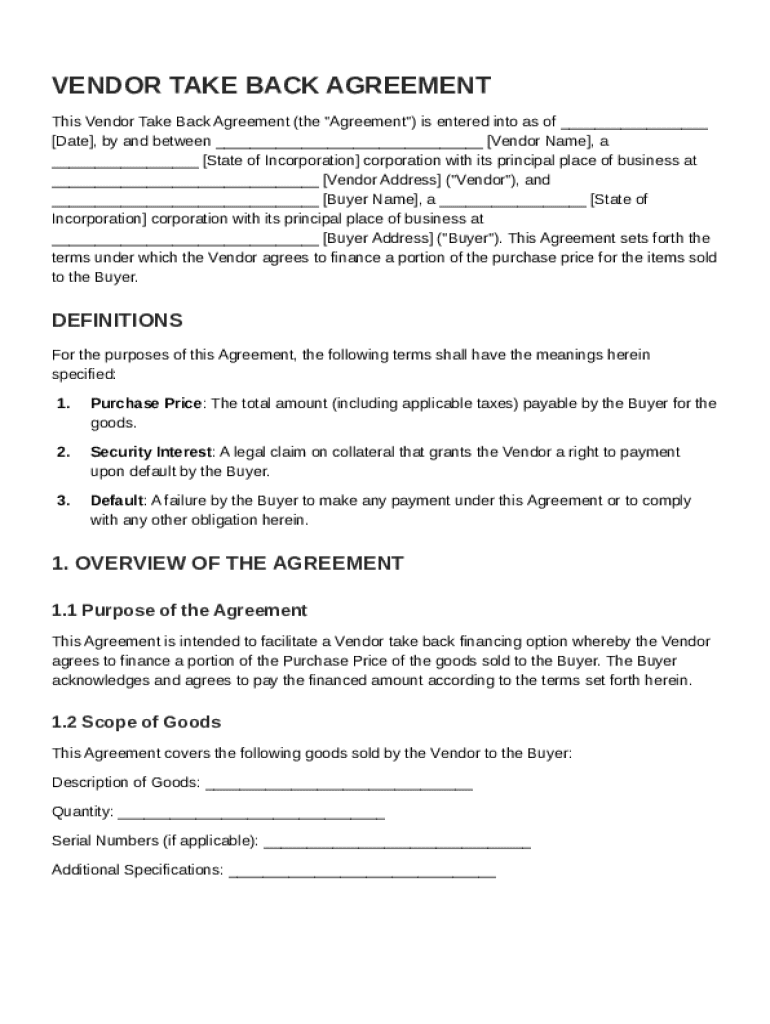
A Vendor Take Back Agreement (VTB) is a financial arrangement used primarily in real estate and some business transactions where a vendor, or seller, provides financing to the buyer for a portion of the purchase price. This agreement creates a promissory note or loan between the two parties, generally documented through a Vendor Take Back Agreement Template. The core concept involves the vendor acting as a lender to the buyer for part of the transaction, securing the loan against the property or assets being sold. This arrangement can facilitate deals when buyers face difficulty securing traditional financing or when sellers prefer to expedite the transaction.
Key Features of Vendor Take Back Agreements
- Financing Arrangement: The seller provides a loan covering part of the purchase price, reducing the buyer's need for third-party financing.
- Promissory Note: Buyers usually sign a promissory note agreeing to repay the vendor over a specified period.
- Security Interests: Often, a lien is placed on the property or goods, ensuring vendors can reclaim their investment if the buyer defaults.
- Negotiable Terms: Interest rates, repayment schedules, and other terms can be customized based on the parties' preferences.
Key Elements of the Vendor Take Back Agreement Template
The Vendor Take Back Agreement Template consists of several essential elements ensuring clarity and protection for both parties involved. These components cover crucial financial and legal aspects, making them indispensable for drafting a comprehensive agreement.
Fundamental Components
- Parties Involved: Identifies the vendor and buyer, detailing contact information and roles.
- Purchase Price: Documents the total price with specifics on the financed amount versus any initial payments made or pending.
- Payment Terms: Outlines installment arrangements, including frequency, amount, and interest rate if applicable.
- Security and Collateral: Describes any collateral securing the agreement, often the property itself, along with additional security agreements if used.
- Default Conditions: Specifies scenarios under which the agreement is breached, such as late payments, along with subsequent repercussions.
- Termination Clauses: Details procedures and rights each party has should the agreement need to be terminated before full repayment.
How to Use the Vendor Take Back Agreement Template
Using the Vendor Take Back Agreement Template simplifies the process of setting up such a financial agreement. It helps to pre-define terms, guide negotiations, and ensure all necessary legal aspects are covered, reducing the likelihood of disputes.
Steps for Effective Use
- Gather Essential Information: Both vendor and buyer must prepare relevant details including identification, financial capabilities, and property valuations.
- Customize the Template: Modify the template sections pertaining to names, pricing, interest rates, and repayment terms as agreed upon during early negotiations.
- Review Security Agreements: Ensure that all security interests and collateral arrangements are clearly specified and understood.
- Consult Professionals: Involving legal or financial advisors can provide additional layers of assurance, ensuring compliance with relevant laws and financial prudence.
- Finalize and Execute: Both parties must sign the finalized document, often with the oversight of a notary to authenticate the agreement legally.
Important Terms Related to Vendor Take Back Agreement Template
Several critical legal and financial terms are frequently associated with Vendor Take Back Agreements and understanding these can enhance clarity in negotiations and execution.
Common Terms
- Amortization: The process of gradually paying off debt over time in regular installments.
- Lien: A legal claim or hold on a property as security for a debt.
- Equity: The value an owner has in a property after debts against it are subtracted.
- Interest Rate: The percentage charged on the loan amount, reflecting the cost of borrowing from the vendor.
- Balloon Payment: A larger-than-usual final payment required to clear the remaining loan balance.
State-Specific Rules for the Vendor Take Back Agreement Template
Certain legal nuances can vary significantly by state when dealing with Vendor Take Back Agreements, impacting aspects such as interest rates, documentation requirements, and enforcement of security interests.
Key Considerations by State
- Regulated Interest Rates: Some states cap interest rates; understanding state usury laws is essential.
- Lien Registration: Requirements for registering liens or security instruments differ, potentially affecting enforceability.
- Consumer Protection Laws: States like California or New York may have additional consumer protection statutes influencing agreement terms.
- Foreclosure Procedures: The legal processes for recovering secured property can vary, affecting how defaults are handled.
Steps to Complete the Vendor Take Back Agreement Template
Drafting a Vendor Take Back Agreement is a systematic process that ensures both parties have a clear understanding of their rights and obligations.
Step-by-Step Guide
- Define Parties: Clearly list the names and addresses of both the vendor and the buyer.
- Specify Terms and Conditions: Include details such as payment schedule, interest rate, and any conditions that trigger payment acceleration.
- Clarify Security Agreements: Detail what serves as collateral, documenting any liens or additional security interests.
- Outline Default Remedies: Define what constitutes default and the steps that will follow, including potential legal actions.
- Review and Adjust Clauses: Allow for negotiations and adjustments before finalizing the agreement.
- Finalize the Document: Ensure all sections are accurately completed and understood by both parties before signing.
Why Should You Use a Vendor Take Back Agreement Template
Using a Vendor Take Back Agreement Template offers structured, standardized guidance, which is beneficial for avoiding common pitfalls during the creation of complex financial arrangements.
Benefits of Using the Template
- Clarity: Provides clear definitions and a framework that assists in transparent communication between parties.
- Efficiency: Saves time by offering a ready-made structure that requires minimal modifications to align with specific needs.
- Legal Compliance: Helps ensure the agreement adheres to relevant state laws and financial regulations.
- Protection: Establishes clear documentation of terms, creating robust legal protection in potential disputes.
Legal Use of the Vendor Take Back Agreement Template
Ensuring the Vendor Take Back Agreement Template is used correctly within the legal framework is fundamental to maintaining the legality and enforceability of the agreement.
Legal Considerations
- Due Diligence: Conduct thorough checks on the buyer's creditworthiness and ability to repay.
- Privacy and Data Security: Adhere to confidentiality agreements and data protection laws concerning personal and financial information.
- Professional Review: Engage legal counsel to review the document, ensuring alignment with jurisdictional legal requirements.
- Audits and Compliance Checks: Regularly verify the agreement's adherence to current laws, adjusting for any legislative updates.
Examples of Using the Vendor Take Back Agreement Template
Applying the Vendor Take Back Agreement Template in various scenarios illustrates its practicality and versatility across different situations and markets.
Practical Applications
- Real Estate Transactions: Often used in property sales where traditional mortgage financing is challenging, allowing sellers to quickly facilitate transactions.
- Commercial Property Sales: Benefits dynamic business environments where purchasing entities may prefer seller financing to maintain liquidity.
- Business Acquisitions: Vendor financing becomes crucial when purchasing businesses, enabling buyers to sidestep conventional loan systems.
By comprehensively covering these aspects, you gain a broad and detailed understanding of the Vendor Take Back Agreement Template's practical, legal, and financial dimensions, supplying you with the requisite knowledge to use this tool effectively in various real-world scenarios.