
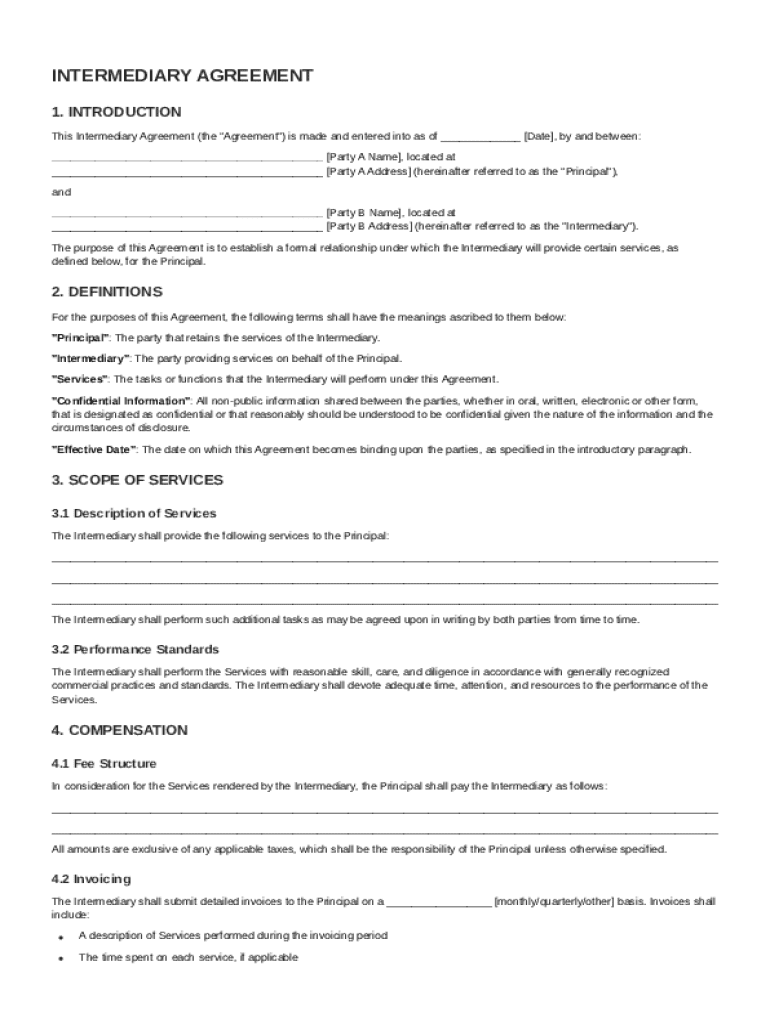







Definition and Meaning
An Intermediary Agreement Template serves as a formal arrangement between a Principal and an Intermediary, clearly outlining the scope of services that the Intermediary is expected to provide. This agreement details the compensation structure and lays down confidentiality obligations, ensuring that proprietary information is safeguarded. It also specifies liability limits for the Intermediary, governing responsibilities under circumstances of non-compliance or breach. Furthermore, the agreement covers termination conditions, providing a structured approach for ending the contractual relationship.
How to Use the Intermediary Agreement Template
Using an Intermediary Agreement Template involves several key steps to ensure a fair and comprehensive document. Start by reviewing the template to understand each section's relevance to your specific needs. Personalize the agreement by filling in details such as the identities of the Principal and the Intermediary, a detailed description of services, and the agreed compensation structure. Ensure that all confidentiality and indemnification terms are suitable for both parties. Once completed, review the document together with the other party for any amendments before proceeding to signatures.
Step-by-Step Process
- Review Sections: Familiarize yourself with each section.
- Customize Fields: Input relevant details such as names, services, and compensation.
- Address Legal Terms: Ensure confidentiality and indemnification terms meet expectations.
- Collaborate and Amend: Discuss any necessary changes with the other party.
- Finalize and Sign: Both parties sign to formalize the agreement.
Key Elements of the Intermediary Agreement Template
This template includes several key elements that safeguard the interests of both parties. Firstly, it sets clear performance standards for the Intermediary to ensure service quality. It also details how notices and amendments are to be handled throughout the term of the agreement. Execution clauses outline the legal enforceability once signed. Finally, jurisdiction and governing laws specify the legal framework within which the agreement falls.
Essential Components
- Performance Standards: Outlines service level expectations.
- Notices and Amendments: Dictate the protocol for changes.
- Execution Clauses: Ensure legal enforceability.
- Jurisdiction and Governing Laws: Define applicable legal framework.
Important Terms Related to the Intermediary Agreement Template
Familiarity with significant terms is crucial for understanding the template thoroughly. Terms such as “Principal”, “Intermediary”, “Compensation”, and “Confidentiality” carry specific implications within the context of this agreement. “Liability” and “Indemnification” address responsibilities for any breach or damages. “Termination Conditions” dictate scenarios under which the agreement may be dissolved. Understanding these enhances comprehension and compliance.
Legal Use of the Intermediary Agreement Template
The Intermediary Agreement Template is designed to comply with U.S. legal standards, providing a legally binding framework for business relationships between Principals and Intermediaries. It ensures that all included clauses are enforceable under specified laws, providing a solid legal basis for each party. Careful attention is paid to confidentiality and liability clauses to prevent disputes and protect parties' interests.
Examples of Using the Intermediary Agreement Template
An Intermediary Agreement can be utilized in various scenarios, such as in marketing where a company hires an agency to manage its advertising. Another use is in sales, where a broker represents a real estate company to sell properties. These examples illustrate the template's flexibility and how it ensures clarity and fairness in diverse business dealings.
Real-World Scenarios
- Marketing: Engaging an agency for promotional services.
- Sales: Employing a broker to facilitate property transactions.
Business Types That Benefit Most from Intermediary Agreement Template
Certain businesses gain particular advantage from using an Intermediary Agreement Template. This includes companies in the sales sector, where intermediaries are commonly used to reach new markets, and in consultancy, where firms engage external experts for specialized advice. Start-ups also leverage these agreements to manage relationships efficiently during growth phases.
Software Compatibility
The Intermediary Agreement Template can be managed using various document editing platforms. It's compatible with tools like DocHub, which supports seamless editing, collaboration, and signing. It can be easily integrated into suites like Google Workspace for straightforward document handling, ensuring that your workflow remains uninterrupted and efficient.
Compatible Platforms
- DocHub: Comprehensive editing and signing capabilities.
- Google Workspace: Easy integration for collaborative work.
State-Specific Rules for the Intermediary Agreement Template
Different states may have unique legal requirements that could affect how an Intermediary Agreement is applied. These differences might dictate specific clauses such as termination conditions or liability limitations. Therefore, it is imperative to adjust the template to comply with local statutes, ensuring full legal validity and protection under state laws.




