
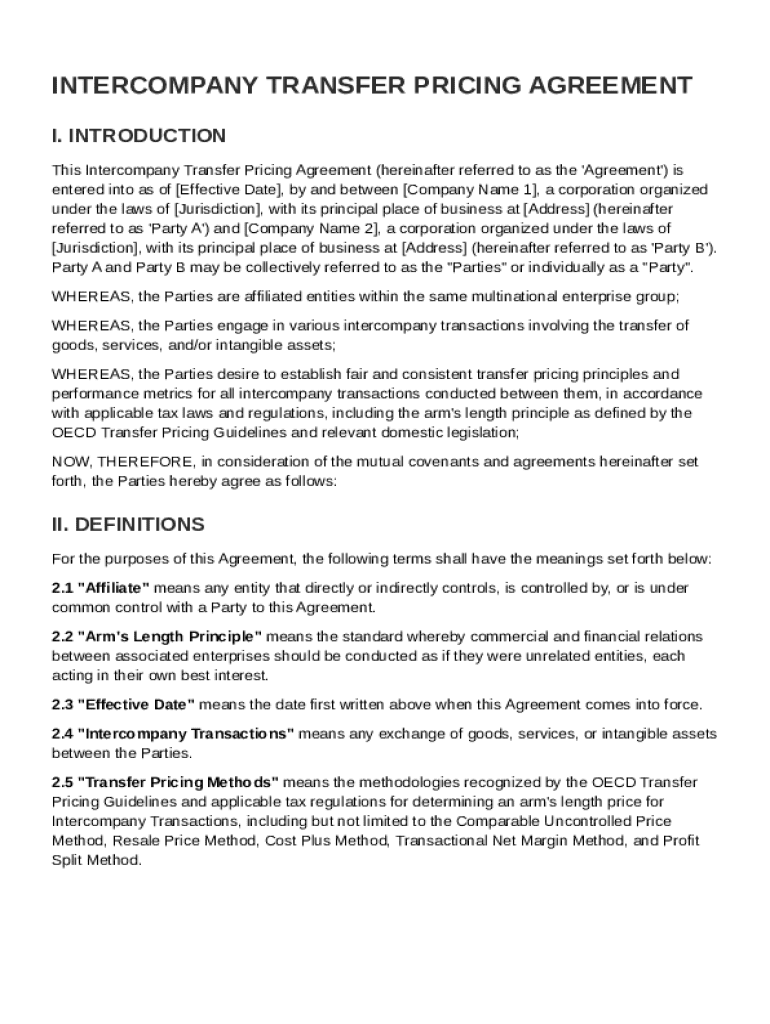







Definition and Meaning
The Intercompany Transfer Pricing Agreement Template is a structured framework set to formalize pricing arrangements between affiliated companies during intercompany transactions. This template is crucial in ensuring that the transactions comply with the tax laws and the Arm's Length Principle. Common transactions covered include sales of goods, service provisions, licensing of intangible assets, and financing arrangements. By adhering to the guidelines, companies can avoid disputes and potential penalties from tax authorities.
Key Elements of the Intercompany Transfer Pricing Agreement Template
- Transfer Pricing Methods: Details the methods applied in determining the prices at which goods and services are exchanged between related entities.
- Compliance Obligations: Outlines the documentation and reporting requirements necessary to meet regulatory standards and demonstrate compliance with international and domestic laws.
- Dispute Resolution Mechanisms: Provides procedures for resolving pricing disagreements between the affiliated corporations.
- Governing Law and Amendments: Specifies the legal framework governing the agreement and the procedures required for any amendments.
- Confidentiality: Ensures that all parties involved adhere to confidentiality terms regarding shared financial information.
How to Use the Intercompany Transfer Pricing Agreement Template
- Review Template Structure: Familiarize yourself with the overall layout and sections of the template.
- Collect Necessary Information: Gather data on the nature of transactions, involved parties, and required terms.
- Customize the Agreement: Adapt the template to reflect specific needs and ensure it addresses all relevant transactions.
- Consult with Legal and Tax Professionals: It is recommended to seek advice from professionals to ensure compliance with legal and tax obligations.
- Finalize and Sign: Once customized and validated, finalize the agreement by obtaining signatures from all relevant parties.
Important Terms Related to Intercompany Transfer Pricing Agreement Template
- Arm's Length Principle: Fundamental guideline ensuring that transactions between related companies are conducted as if they were between independent parties.
- Documentation Requirements: Mandatory records to support the determined transfer pricing methods, including economic analysis and benchmarking studies.
- Pricing Determination Process: Steps involved in setting the prices for intercompany transactions, compliant with tax regulations.
- Termination Clause: Conditions under which the agreement can be prematurely ended by either party.
Who Typically Uses the Intercompany Transfer Pricing Agreement Template
- Multinational Corporations: Large entities operating across various countries that require standardized agreements for internal transactions.
- Legal and Tax Advisors: Professionals assisting businesses in crafting compliant agreements.
- Financial Officers: Company officials responsible for overseeing financial transactions to ensure accuracy and legality.
- Corporate Accountants: Specialists who manage financial records and reports, ensuring compliance with transfer pricing regulations.


Legal Use of the Intercompany Transfer Pricing Agreement Template
Complying with legal use involves aligning with guidelines provided by international and domestic governing bodies, such as the IRS in the United States. The template serves to document compliance with the Arm's Length Principle, mitigating legal risks related to incorrect or unfair pricing among affiliated companies.
IRS Guidelines
The IRS guidelines on intercompany transactions emphasize the necessity to adhere to transfer pricing rules and maintain adequate documentation supporting the applied pricing strategies. The Intercompany Transfer Pricing Agreement Template aids in facilitating this compliance through structured and detailed agreements.
Required Documents
- Economic Analysis Reports: Documents detailing market conditions and the financial rationale behind chosen pricing methods.
- Transaction Records: Details of the goods, services, or intangible assets involved in the transaction.
- Legal Agreements: Contracts between the affiliated entities involved, formalized through an Intercompany Transfer Pricing Agreement.
Examples of Using the Intercompany Transfer Pricing Agreement Template
- Manufacturing Entities: When a parent company supplies raw materials to its subsidiary, the agreement template helps establish fair pricing terms.
- Service Providers: Affiliates offering services such as IT or consultancy can use the template to document intercompany charges accurately.
- Intellectual Property: Companies licensing patents or trademarks to affiliates utilize the agreement to ensure fair valuation and licensing fees.




