



01. Edit your form online
Type text, add images, blackout confidential details, add comments, highlights and more.

Type text, add images, blackout confidential details, add comments, highlights and more.

Draw your signature, type it, upload its image, or use your mobile device as a signature pad.

Send it via email, link, or fax. You can also download it, export it or print it out.
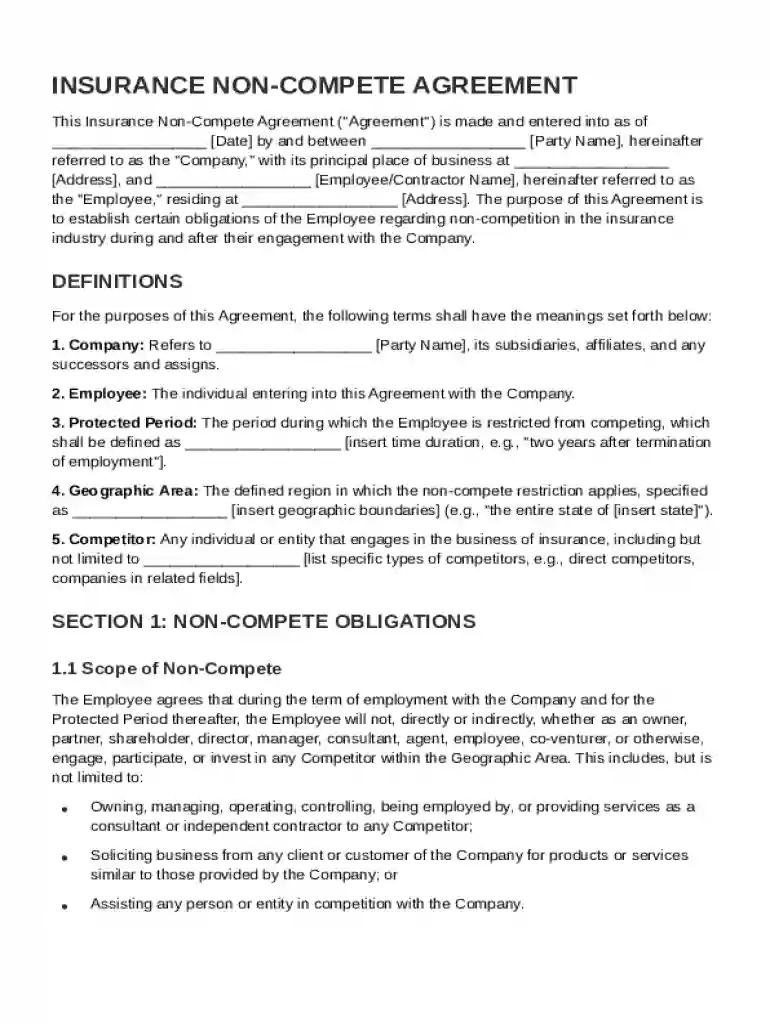
An Insurance Non-Compete Agreement Template is a contractual document designed to restrict an employee from engaging in competing activities within the insurance industry during and after their employment with a company. This agreement is crucial for protecting the business interests of insurance firms by ensuring that employees do not leverage confidential information or client relationships for personal or competitive gain after leaving the company.
The template outlines specific terms and conditions, including the scope, geographic area, and duration of the non-compete obligations. For instance, an employee might be prohibited from working for competitors within a 50-mile radius for one year post-employment. Understanding these elements is essential for both employers and employees to ensure fair and enforceable restrictions that align with legal standards.
This template typically includes several critical components designed to clearly outline the expectations and obligations of both parties:
Scope of Restriction: Specifies the types of competitive activities that are prohibited. This may include working for direct competitors, starting a competing business, or soliciting clients.
Geographic Limitations: Details the areas where the employee is restricted from working in similar roles. This is typically tailored to where the employer operates or has business interests.
Duration: Defines how long the non-compete conditions will be enforced after termination of employment. Standard durations range from six months to two years, depending on the industry and jurisdiction.
Consideration: Outlines any compensation or benefits provided to the employee in exchange for agreeing to the non-compete terms. This could include bonuses, stock options, or severance packages.
Governing Law: Identifies which state’s laws will govern the agreement, which is important as non-compete laws can vary significantly by state.
Utilizing the Insurance Non-Compete Agreement Template involves several key steps to ensure that it is enforceable and tailored to the specific needs of the business:
Select and Customize: Choose a template that aligns with the company’s operational jurisdiction and customize it to reflect the specific conditions under which the agreement will apply.
Define Key Terms: Clearly outline all prohibitive actions and conditions, ensuring that the language is precise and easy to understand. Avoid overly broad or ambiguous terms that could render the agreement unenforceable.
Consult Legal Counsel: Given the complex legal implications, it is advisable to consult with legal professionals to ensure that the agreement complies with state law and industry standards.
Discuss with Employee: Before finalizing, discuss the agreement with the prospective or current employee, clarifying any queries they might have and ensuring that they understand their obligations.
Finalize and Sign: Once both parties agree to the terms, sign the document. Ensure that it is readily accessible for future reference or modifications.
Understanding specific terminology related to non-compete agreements is crucial for anyone involved in drafting, negotiating, or complying with these contracts:
State laws influence the enforceability and terms of non-compete agreements significantly, reflecting regional attitudes toward employee mobility and business protection:
Employers must tailor the template according to the laws of the state under which the agreement will be governed, recognizing that what is enforceable in one state may not be in another.
A well-drafted Insurance Non-Compete Agreement Template serves multiple legal purposes:
Legal consultation is vital to align the template’s terms with state-specific regulations, ensuring enforceability and reducing the risk of legal challenges.
This template is typically employed by:

Completing the Insurance Non-Compete Agreement Template involves a structured process to ensure compliance and clarity:
Review Terms and Conditions: Begin by thoroughly reviewing the agreement’s terms to understand its scope and purpose.
Fill in Customizable Sections: Enter specific details such as employee information, company name, and applicable restrictions.
Seek Legal Review: Before finalizing, have a legal expert review the document to ensure it conforms with state laws and adequately protects business interests.
Agree and Sign: Once both parties agree, sign the document to solidify the commitments and obligations outlined in the agreement.
Store and Maintain: Keep a record of the signed agreement in an accessible yet secure location for future reference or in case of legal disputes.
At DocHub, your data security is our priority. We follow HIPAA, SOC2, GDPR, and other standards, so you can work on your documents with confidence.



Jul 4, 2026 Find your signed offer letter, appointment letter, employee handbook, and any separate confidentiality or non-compete agreement you signed.Read more
A covenant not to compete, also called a noncompete agreement or non-compete clause - is an agreement where one party promises not to engage in conduct


