






Definition & Meaning
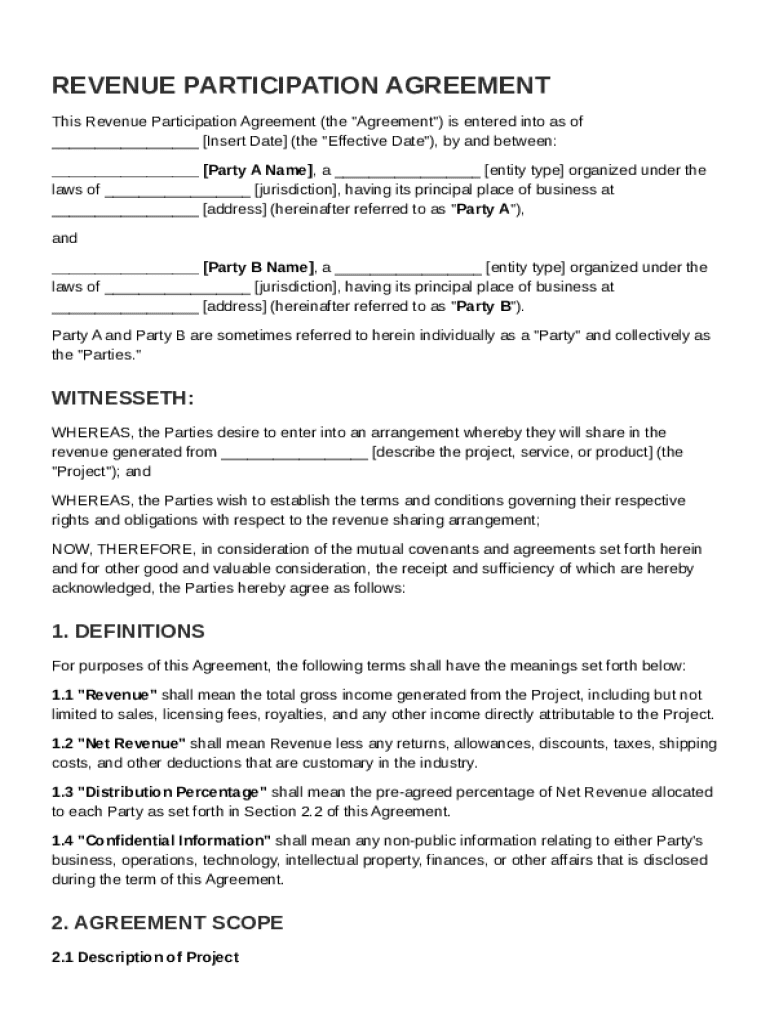
A Revenue Participation Agreement Template is a legal document that defines how two parties, typically referred to as Party A and Party B, will share revenue generated from a particular project. The agreement establishes a framework for collaboration and ensures both parties understand their rights and obligations. It includes critical definitions of terms, detailed explanations of revenue calculations, and distribution percentages. This agreement serves to protect both parties and provide clarity in revenue-sharing arrangements, promoting a mutually beneficial partnership.
How to Use the Revenue Participation Agreement Template
To utilize the template effectively, begin by identifying the parties involved and the project in question. Follow these steps:
- Identify Parties: Clearly define Party A and Party B, ensuring both parties are legally recognized entities.
- Project Specification: Detail the scope of the project and the specific revenue streams applicable to the agreement.
- Revenue Calculation: Outline how revenue will be calculated, including the metrics and processes in use.
- Distribution Percentages: Specify the exact percentage of revenue each party will receive.
- Obligations and Roles: Assign specific roles and responsibilities to each party concerning the project.
Follow these steps to ensure the agreement template covers all necessary components and is applicable to both parties' expectations.
Key Elements of the Revenue Participation Agreement Template
The template is comprised of several essential elements that facilitate a complete understanding of the obligations and expectations of both parties involved in a revenue-sharing arrangement:
- Revenue Allocation: Details how revenue will be divided between parties, incorporating any threshold or capped amounts.
- Obligations: Lists each party’s responsibilities in generating and managing revenue.
- Reporting Requirements: Establishes the frequency and format of financial reports that must be shared between parties.
- Confidentiality Clauses: Ensures that all shared revenue and financial information remains confidential.
- Termination Conditions: Outlines scenarios that would lead to the termination of the agreement and the procedures thereafter.
- Dispute Resolution: Provides mechanisms for resolving any disputes that arise related to revenue participation or agreement terms.
Each element serves as a building block for a comprehensive understanding between parties on how revenue-sharing will be managed and upheld.
Important Terms Related to Revenue Participation Agreement Template
Understanding pivotal terms within the agreement ensures clarity and reduces potential disputes. Key terms often included are:
- Gross Revenue: Total income generated by the project before any deductions.
- Net Revenue: Income remaining after all permissible expenses have been deducted from the gross revenue.
- Royalty Fee: A payment made by one party to another based on percentage of revenue earned.
- Escrow Account: A neutral account where funds are held until certain conditions are met.
- Milestone Payments: Pre-determined payments made when specific project goals or timelines are achieved.
Awareness of these terms ensures both parties are aligned in their interpretations of the agreement.
Legal Use of the Revenue Participation Agreement Template
The template must comply with legal standards to be enforceable:
- Compliance with ESIGN Act: Ensure any electronic signature used is valid and legally binding.
- State-Specific Regulations: Adhere to specific state laws governing revenue-sharing agreements.
- Disclosure Requirements: Fulfill any necessary statutory disclosure obligations applicable to revenue-sharing.
Ensuring legal compliance is crucial for the enforceability and legitimacy of the agreement.
Steps to Complete the Revenue Participation Agreement Template
Completing the template requires meticulous attention to detail and an understanding of the legal and financial complexities involved:
- Enter Party Information: Fill out all identifying information for Party A and Party B, including contact details.
- Revenue Definitions: Clearly define all relevant revenue types and sources that apply.
- Outline Obligations: Detail the responsibilities each party will undertake for the project's success.
- Inclusion of Terms: Include any essential terms, such as confidentiality and dispute resolution protocols.
- Review and Sign: Ensure both parties review the terms, then sign and date the document.
A comprehensive review ensures that all relevant sections have been addressed and agreed upon by both parties.
Examples of Using the Revenue Participation Agreement Template
Utilizing the template in real-world scenarios illustrates its practicality:
- Film Production: An agreement between a studio and a distributor, sharing box office revenue.
- Technology Partnership: Two tech companies collaborating on a product, detailing revenue from sales.
- Publishing Agreement: An author and publisher sharing proceeds from book sales.
These examples highlight diverse application contexts for a Revenue Participation Agreement, enabling users to apply similar structures in various industries.
State-Specific Rules for the Revenue Participation Agreement Template
State laws can affect the terms and execution of a Revenue Participation Agreement:
- California: Requires full disclosure of all revenue streams in entertainment industry agreements.
- New York: Enforces strict penalties for non-compliance with disclosure requirements.
- Texas: Allows for specific modifications that accommodate oil and energy-related revenue sharing.
Understanding state-specific rules ensures that the agreement is legally valid and comprehensive for the location it will be executed in.
Who Typically Uses the Revenue Participation Agreement Template
The template is utilized by a variety of professionals and businesses:
- Entertainment Industry: Producers, studios, and artists sharing revenue from films or music.
- Tech Partnerships: Companies collaborating on software developments or digital products.
- Publishing: Authors and publishers outlining revenue from book sales.
These users leverage the template for its structured approach to formalizing revenue-sharing agreements and minimizing potential conflicts.