
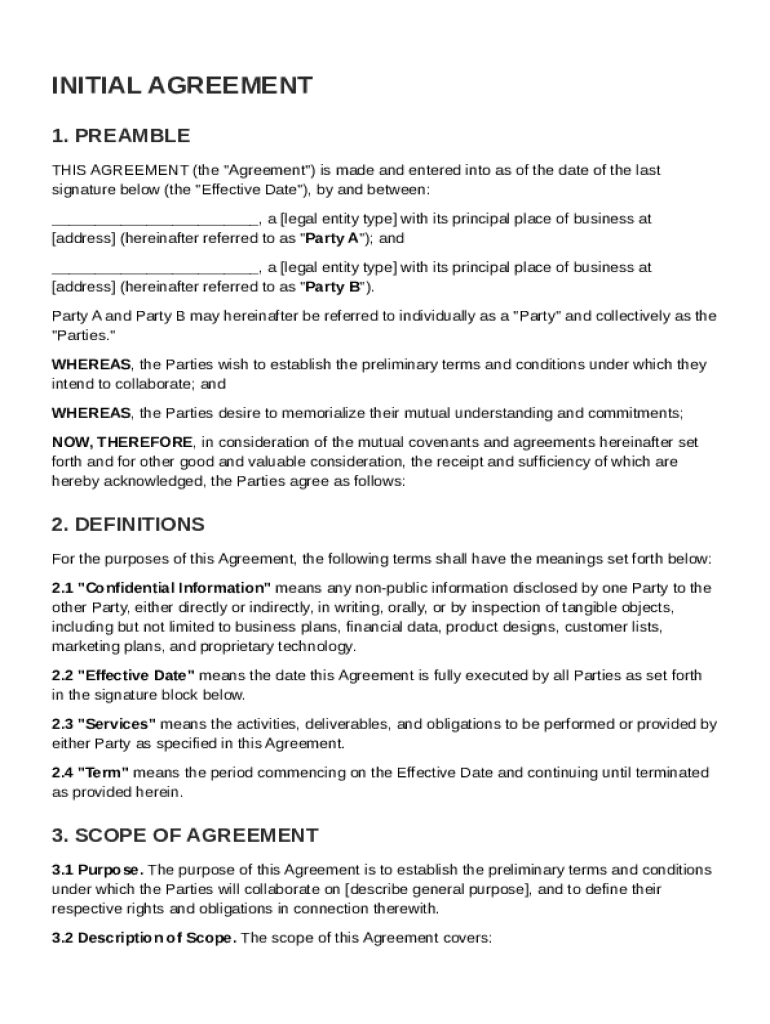







Definition and Purpose of the Initial Agreement Template
The Initial Agreement Template serves as a foundational document between two parties entering into a collaboration. It outlines preliminary terms and sets the stage for further negotiation and formalization of a partnership. The template typically includes components such as definitions of key terms, stated objectives, and the scope of collaboration, ensuring both parties understand their responsibilities and expectations. This template lays the groundwork for formal agreements while protecting the interests of the involved entities.
Components of the Initial Agreement Template
- Definitions: Clear definitions of crucial terms to avoid ambiguity.
- Scope of Work: A detailed description of the tasks and responsibilities of both parties.
- Compensation: Outlines payment structures and schedules.
- Confidentiality: Specifies obligations to protect sensitive information.
- Governing Law: Indicates the jurisdiction under which any disputes will be resolved.
Key Elements in Using the Initial Agreement Template
Understanding how to effectively use the Initial Agreement Template is crucial for successful implementation. The template acts as a guide for initial discussions, offering a structured framework for formal negotiations. Each section of the template is crafted to capture the most pertinent information, facilitating smooth communication.
Steps to Utilize the Template
- Identify Parties: Clearly list the names and roles of Party A and Party B.
- Define Objectives: Ensure both parties agree on the goals and outcomes.
- Assign Responsibilities: Outline the specific duties of each party.
- Establish Payment Terms: Detail how and when compensation will be rendered.
- Detail Confidentiality Terms: Set parameters for handling sensitive information.
Steps to Complete the Initial Agreement Template
Filling out the Initial Agreement Template requires careful attention to detail to ensure completeness and accuracy. Here are the steps to guide you through the process:
- Gather Information: Obtain all relevant details from both parties.
- Fill Out the Template: Enter all information accurately, considering the template's sections.
- Review Each Section: Carefully go over the completed sections to ensure no data is missing.
- Consult Legal Counsel: Have an attorney review the draft to ensure legal compliance.
Common Mistakes to Avoid
- Incomplete Information: Ensure all fields are completed to avoid misunderstandings.
- Vague Terms: Use precise language to eliminate ambiguity.
- Ignoring Legal Protocols: Always verify that the document complies with relevant laws.
Who Typically Uses the Initial Agreement Template
The Initial Agreement Template is utilized by a broad range of individuals and organizations. It is particularly beneficial for businesses that are entering new partnerships, startups seeking collaboration with more established entities, and professionals in industries that rely on timely, accurate collaborations.


Examples of Users
- Small Business Owners: Use the template to formalize collaborations.
- Corporate Entities: Employ the template to streamline partnership development.
- Independent Contractors: Benefit by clearly outlining scopes of work and payment terms.
Legal Applications and Considerations
When implementing an Initial Agreement Template, understanding its legal ramifications is essential. The agreements often involve clauses that can impact both parties in significant ways. Legal review ensures compliance and secures enforceability.
Critical Legal Sections
- Dispute Resolution: Offers methods to handle conflicts without litigation.
- Governing Law: Designates applicable legal jurisdiction.
- Binding Nature: Clarifies which elements are enforceable.
Ensuring Compliance
- Consultation with Attorneys: Ensures the document is legally sound.
- Adherence to Regulatory Standards: Guarantees the template meets industry-specific regulations.
Digital vs. Paper Version of the Initial Agreement Template
There is a choice between utilizing a digital or paper version of the Initial Agreement Template. Each option offers specific advantages that cater to different needs.
Advantages of Digital Versions
- Ease of Access: Can be easily shared and modified.
- Integration with Software: Compatible with document management systems.
- Efficiency: Reduces the time required for completion and review.
Benefits of Paper Versions
- Tangible Record: Provides a physical document for archival purposes.
- Traditional Uses: Preferred in situations requiring hard copies for legal validation.
Integration with Document Management Tools
Modern applications such as DocHub offer enhanced functionalities for working with the Initial Agreement Template, providing seamless integration tools.
Features of Document Management Tools
- Collaboration: Multiple users can edit documents in real-time.
- Security: Encrypts documents to safeguard against breaches.
- Accessibility: Ensures templates can be edited on various devices and platforms, supporting remote work scenarios.
Important Terms Related to the Initial Agreement Template
An understanding of the key terms associated with the Initial Agreement Template is vital for clear communication. These terms help define the expectations and outcomes of the agreement.
Glossary of Common Terms
- Parties: The individuals or entities entering the agreement.
- Scope: The extent and limitations of work to be performed.
- Compensation: Payment terms agreed upon by the parties.
- Confidentiality: Measures to protect private information shared during collaboration.
By adhering to these guidelines, users can ensure that their Initial Agreement Template is comprehensive, legally sound, and effective in establishing productive and secure business relationships.




