
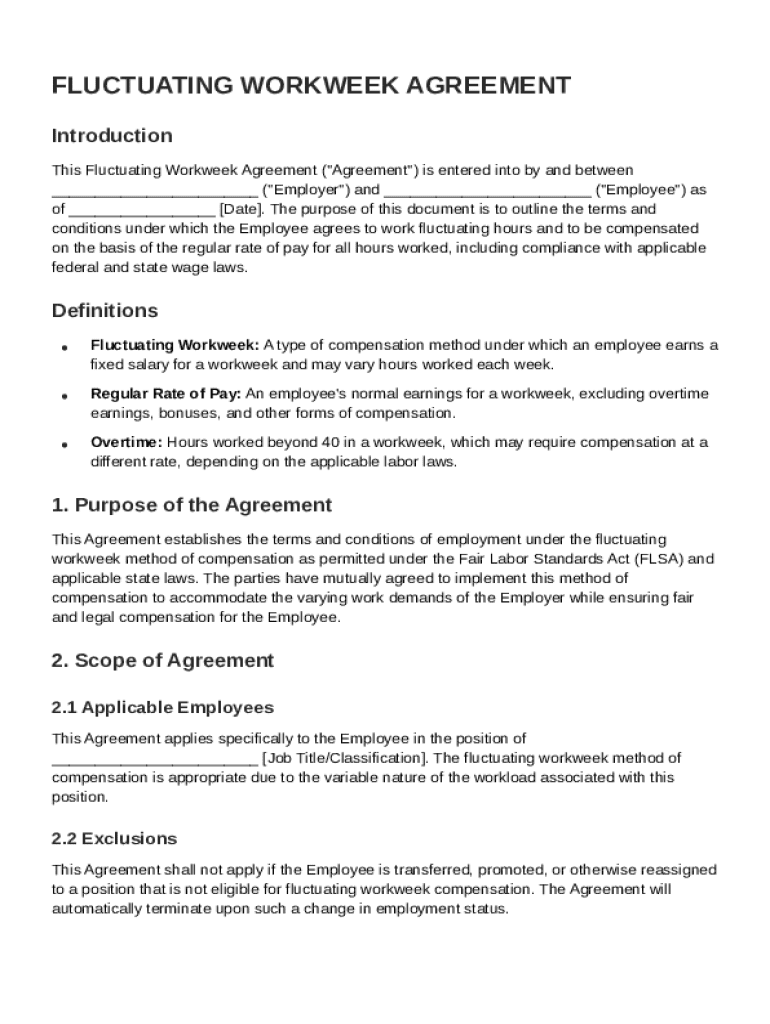







Definition & Meaning
The Fluctuating Workweek Agreement Template is a legal document used in employment settings where an employee's scheduled hours vary week to week but their salary remains constant. This agreement outlines terms including how overtime is calculated, describes what constitutes a fluctuating workweek, and defines the regular rate of pay. The document ensures compliance with both federal and state wage laws while providing clarity about employment terms. Such a template is crucial for maintaining clear communication between employers and employees regarding variable work schedules and compensation practices.
Key Elements of the Fluctuating Workweek Agreement Template
A comprehensive Fluctuating Workweek Agreement Template includes several critical components that should be detailed clearly:
- Fixed Salary: Employees receive a guaranteed salary regardless of hours worked, ensuring wage stability despite fluctuating schedules.
- Overtime Compensation: Explains how overtime is calculated at a rate of at least one-half times the regular rate of pay for hours worked beyond forty in a week.
- Recording Work Hours: Details the requirements for documenting hours worked, which is essential for accurate overtime calculations.
- Confidentiality Provisions: Often included to protect sensitive business and employee information shared during employment.
- Modification and Termination Clauses: Specify how the agreement can be altered or terminated, providing both parties with transparent expectations for future changes.
How to Use the Fluctuating Workweek Agreement Template
Effectively using the Fluctuating Workweek Agreement Template involves several key steps:
- Customize the Template: Tailor the document to reflect specific employment practices and adherence to relevant laws. Include employer and employee information, job position details, and specific terms concerning the workweek.
- Discuss Terms with Employee: Employers should ensure the employee understands all terms, particularly how salary, hours, and overtime are managed.
- Signatures and Dates: Both parties should sign and date the document, confirming mutual agreement to the outlined terms.
- Regular Reviews: As employment or legal requirements change, periodically review and possibly revise the agreement to remain compliant and relevant.
Legal Use of the Fluctuating Workweek Agreement Template
This template is crafted to align with the Fair Labor Standards Act (FLSA), ensuring legal compliance for employers and protection for employees. It is imperative that employers remain updated on federal and state modifications to wage laws to avoid unintentional legal violations. Ensuring that the agreement only applies to non-exempt employees who fit the criteria outlined by FLSA for fluctuating workweeks is critical for legal adherence.
Important Terms Related to Fluctuating Workweek Agreement Template
Understanding the following key terms is vital when dealing with the Fluctuating Workweek Agreement:
- Fluctuating Workweek: A schedule where the number of working hours per week changes, but salary stays constant.
- Regular Rate of Pay: The salary divided by all the hours worked in a workweek to determine the employee's base pay rate.
- Non-exempt Employee: Workers who are entitled to overtime pay under FLSA regulations, differentiated from exempt workers who typically do not receive overtime.
Steps to Complete the Fluctuating Workweek Agreement Template
Filling out this agreement involves several detailed steps:
- Enter Basic Information: Include the employee's and employer's names, contact information, and employment dates.
- Detail Work Hours and Salary: Specify the agreed-upon annual salary and how it is apportioned across varying work hours.
- Outline Overtime Calculation Method: Clearly state how overtime is calculated, referencing the regular rate of pay and legal requirements.
- Set Additional Provisions: Like amendments or confidentiality, which the parties have agreed upon.
- Finalize the Document: Secure signatures from both employer and employee along with their agreement dates.
Examples of Using the Fluctuating Workweek Agreement Template
Employers across different industries utilize this template when:
- Retail and Service Industries: Where work hours vary due to customer demand fluctuations.
- Seasonal Businesses: Such as agriculture or tourism, where peak times require more flexible scheduling.
- Manufacturing Companies: Experiencing production swings based on order volumes, needing adaptable work schedules.
Business Types that Benefit Most from Fluctuating Workweek Agreement Template
Certain business models see more advantages using this type of agreement, primarily those in adaptable, dynamic work environments:
- Small Businesses: Needing the flexibility to adjust work hours without altering payroll significantly.
- Companies with Variable Demand: Those in e-commerce or client-based service sectors often experience shifts in activity levels.
- Startups: Frequently engage in project-based work with shifting required labor, benefiting from such an adaptable agreement structure.




