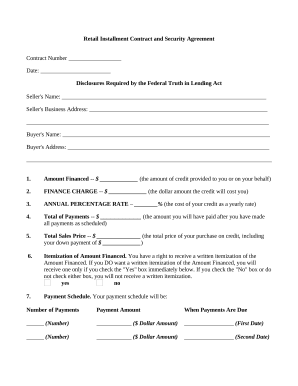
Key Elements of the Flat Rate Agreement Template
The Flat Rate Agreement Template is a critical document in defining the relationship between a service provider and a client, focusing on offering services at a fixed cost. Its core set of components ensures clarity and legal protection for both parties involved.
Scope of Services
The template clearly outlines the services that will be offered, detailing the specific tasks, goals, and deliverables expected from the service provider. By defining the service scope, both parties can avoid misunderstandings and ensure the provider meets the client's needs and expectations.
- Detailed descriptions of services provided
- Milestone timelines for task completion
- Exclusions that specify what services are not included
Payment Structure
A transparent payment structure is crucial in a flat rate agreement. The template should specify the total fixed cost for the services, payment terms, and any potential additional fees that may occur under certain conditions.
- Fixed total cost for the entire project
- Payment schedule including any deposit requirements
- Fees for additional services beyond the agreed scope
Responsibilities and Obligations
Both parties have distinct responsibilities that are critical for the successful execution of the agreement. The template defines these roles to ensure that duties do not overlap or conflict.
- Client responsibilities such as providing materials or information
- Service provider duties ensuring adherence to agreed quality and timelines
- Mutual obligations for maintaining communication and collaboration
Practical Uses of the Flat Rate Agreement Template
Understanding how to effectively use the Flat Rate Agreement Template can streamline contract creation and negotiation processes, ensuring all parties are on the same page.
Step-by-Step Instructions
Following a structured approach when using the template ensures accuracy and completeness in the agreement formulation.
- Identify the Services: Clearly define what services will be provided and ensure they align with client expectations.
- Set the Payment Terms: Agree on a fixed price and outline when and how payments will be made.
- Draft Responsibility Clauses: Detail the obligations for both provider and client, ensuring clarity.
- Finalize the Document: Review the document with all stakeholders to confirm all terms are clear and acceptable.
Common Scenarios
Most commonly, small businesses, freelancers, and professionals like consultants use the Flat Rate Agreement Template to establish a straightforward pricing model with their clients.
- Freelancers offering creative or technical services
- Consultants providing strategic advice
- Businesses needing regular services like maintenance or support
Legal Considerations
Governing Law and Jurisdiction
The agreement must specify which state laws will govern the contract, especially important for interstate transactions where laws may differ significantly from one state to another.
- State-specific legislation and any applicable federal laws
- Dispute resolution procedures such as mediation or arbitration
Confidentiality and Security
For sensitive projects, confidentiality clauses are essential to protect both parties' proprietary information.
- Non-disclosure agreements (NDAs) as part of the contract
- Data protection measures to safeguard client information
Variations and Alternatives
While the Flat Rate Agreement Template is widely used, alternative contract forms are available, accommodating different pricing models and client needs.
Versions or Alternatives
Evaluating alternative contract formats can be beneficial for businesses that might require flexibility in payment terms or task assignments.
- Hourly rate agreements for projects with variable scopes
- Retainer agreements allowing ongoing services over a set period
- Time and materials contracts where cost varies with project demands
State-by-State Differences
Adapting the template to meet state-specific legal requirements may involve modifications to clauses related to jurisdiction, taxation, and service fulfillment.
- Regional business registration rules
- State-imposed service taxes and how they impact fixed pricing
Software Compatibility
The Flat Rate Agreement Template is often utilized digitally, leveraging modern software and technological conveniences for increased efficiency.
Integration with Document Platforms
Editing and managing the template through platforms like DocHub can streamline the process, allowing for seamless collaboration and secure storage.
- Document editing features enable real-time modifications
- E-signature capabilities for efficient and legally binding signatures
- Cloud storage integration with services like Google Drive
Digital vs. Paper Versions
While digital versions offer ease of access and modification, paper versions still hold value in formal or traditional business settings requiring physical signatures.
- Digital advantages: Portability, instant sharing, and remote access
- Paper advantages: Tangibility for official submissions or record keeping
Businesses and individuals can select either format based on their specific operational needs and preferences, ensuring they meet both legal and practical requirements effectively.