






Definition & Meaning
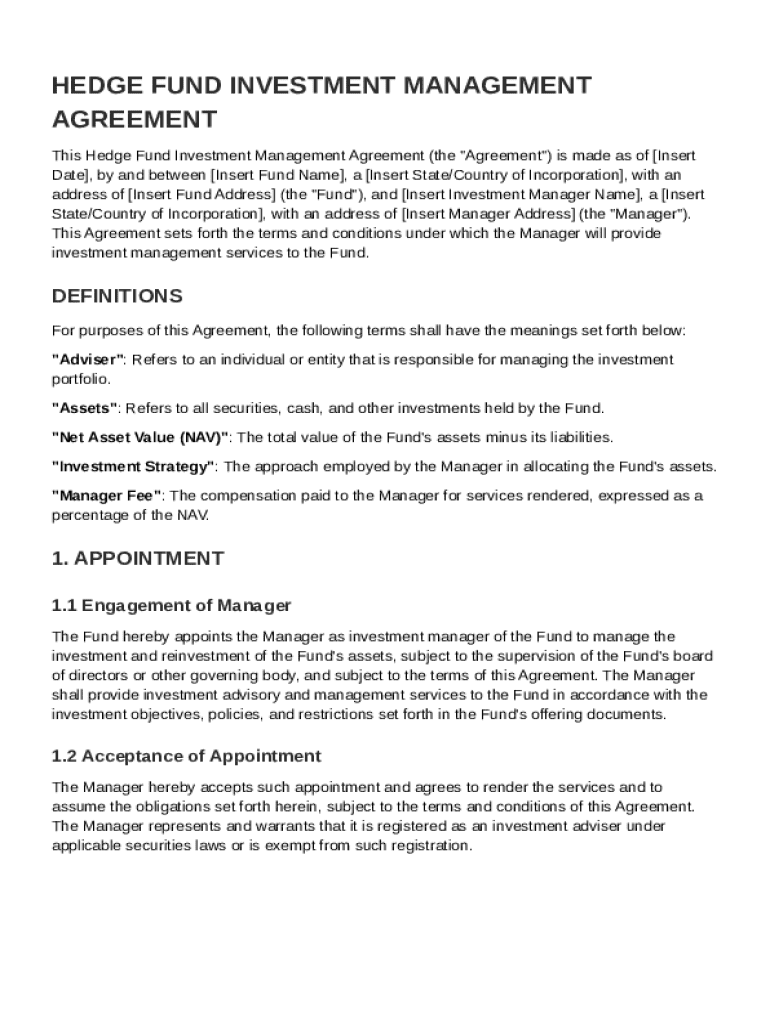
The Hedge Fund Agreement Template is a foundational legal document outlining the terms under which a hedge fund's assets will be managed by an investment manager. It sets the scope of services, defines the managerial authority, establishes compensation structures such as management and performance fees, and lays down reporting protocols. This template serves as a crucial framework for the legal relationship between the investment manager and the fund, ensuring that both parties clearly understand their rights and responsibilities.
Key Elements of the Hedge Fund Agreement Template
Compensation and Fees
- Management Fees: These are typically a fixed percentage of the fund's net assets, compensating the manager for their services.
- Performance Fees: Often based on the fund’s profits, these incentivize the manager to achieve strong performance.
Terms of Termination
- Defines conditions under which the agreement can be terminated by either party.
- Details any fees or penalties associated with the early termination of the agreement.
Liability and Indemnification
- Indemnity Clauses: Protect the manager from certain legal liabilities, except in cases of fraud or gross negligence.
- Liability Limits: Specify the manager's responsibility for losses under various scenarios.
Steps to Complete the Hedge Fund Agreement Template
- Review Existing Terms: Start by carefully reading the standard terms within the template.
- Customizing Terms: Modify sections such as management fees, termination clauses, and liability terms to fit the specific needs of both parties involved.
- Consulting Legal Experts: Seek the expertise of legal professionals who specialize in hedge fund agreements to ensure that all aspects of the template comply with current laws and regulations.
- Incorporating Specific Provisions: Add any unique stipulations required by either the fund or the manager, such as specific reporting requirements or confidentiality agreements.
- Final Review: Ensure that all parties review the final draft for accuracy and fairness before proceeding to signatures.
Who Typically Uses the Hedge Fund Agreement Template
This template is predominantly utilized by:
- Hedge Fund Managers: Who are tasked with managing the assets of the fund and require a clear framework to define their roles and responsibilities.
- Investors: To understand the terms under which their investments are being managed and their rights within the fund.
- Legal Advisors: Who are required to review and ensure the agreement complies with relevant laws and protects the interests of their clients.


Legal Use of the Hedge Fund Agreement Template
Compliance with Regulatory Standards
- Ensures that the terms of the agreement adhere to applicable laws such as the Investment Advisers Act and other securities regulations within the United States.
Dispute Resolution
- Details methods for resolving disputes between the manager and the fund, such as arbitration or mediation, to avoid costly litigation.
Confidentiality Clauses
- Protects sensitive information pertaining to the fund’s operations and strategies, ensuring that proprietary information is not disclosed without authorization.
Important Terms Related to Hedge Fund Agreement Template
Scope of Management
- Defines the investment strategies and asset classes that the manager will pursue on behalf of the hedge fund.
Reporting Requirements
- Establishes the frequency and format of performance reports that the manager must provide to the fund.
Amendments
- Outlines the process for making changes to the agreement after it has been executed, requiring formal consent from all parties.
Software Compatibility for the Hedge Fund Agreement Template
DocHub and similar platforms offer seamless compatibility with a variety of document management applications and cloud services. This flexibility allows users to:
- Edit and Manage Templates: Directly in software like Microsoft Word or Google Docs, ensuring broad accessibility and ease of use.
- Digital Signing: Utilize electronic signature services compatible with DocHub for secure and efficient execution of agreements.
Business Types that Benefit Most from Hedge Fund Agreement Template
Limited Partnerships (LPs)
- These business entities often use hedge fund agreements to delineate roles between general partners (who manage the business) and limited partners (who invest capital).
Corporations and Investment Firms
- Larger financial institutions use these templates to streamline their investment operations and formalize partnerships with hedge fund managers.
State-Specific Rules for the Hedge Fund Agreement Template
Although the Hedge Fund Agreement Template offers broad applicability, its terms must be adjusted to comply with specific state laws where the fund is based. These may include:
- Registration Requirements: Some states have specific registration and disclosure obligations for hedge fund managers.
- Tax Considerations: State-specific tax implications that may affect how fees and earnings are reported and taxed.