




01. Edit your form online
Type text, add images, blackout confidential details, add comments, highlights and more.

Type text, add images, blackout confidential details, add comments, highlights and more.

Draw your signature, type it, upload its image, or use your mobile device as a signature pad.

Send it via email, link, or fax. You can also download it, export it or print it out.
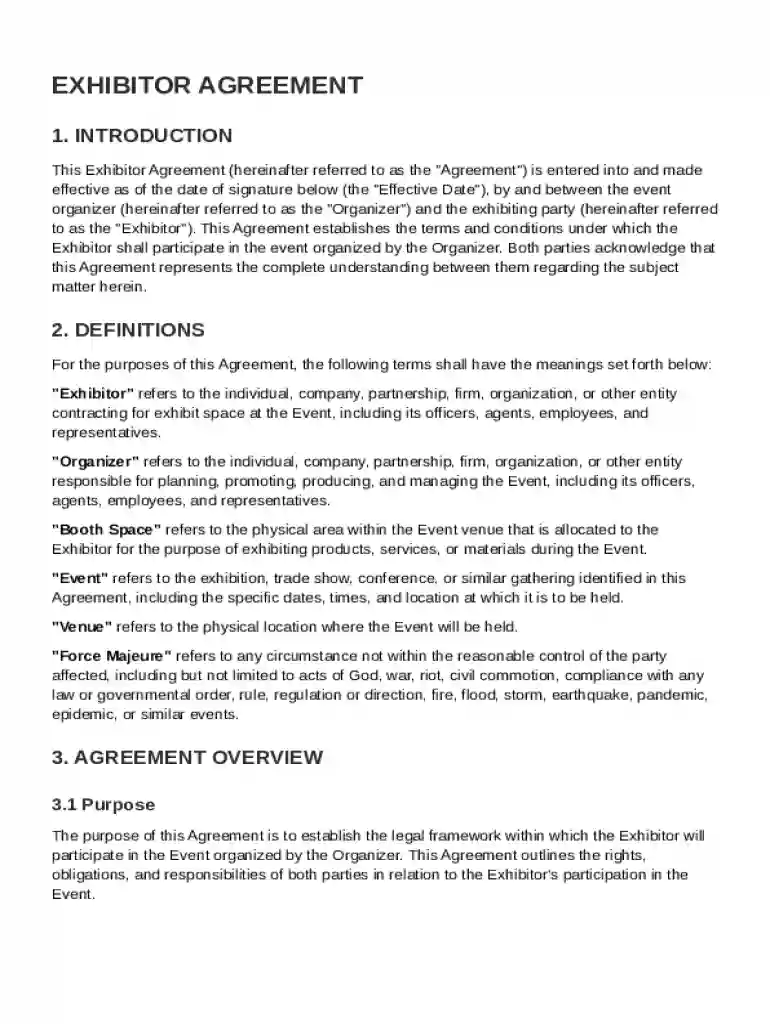
An Exhibitor Agreement Template serves as a crucial document for outlining the terms and conditions between an event organizer and an exhibitor. This template ensures both parties clearly understand their responsibilities and rights, creating a legally binding framework for participation in events such as trade shows, exhibitions, and fairs.
Purpose and Scope: The template details essential aspects like booth allocation, payment terms, and cancellation policies. It also addresses liability issues, intellectual property rights, and security requirements. By using this template, disputes can be minimized as expectations are clearly set.
Components of the Agreement: The document typically includes sections on terms of participation, insurance requirements, limitations of liability, and compliance with event regulations. This ensures all parties are well-prepared and aligned towards a successful collaboration.
Utilizing the Exhibitor Agreement Template effectively involves several steps, ensuring both comprehensive coverage and ease of understanding for all involved parties.
Review Standard Terms: Start by examining the provided standard terms to ensure they align with the event’s expectations and requirements. Customize these terms based on specific needs.
Customize Specific Clauses: Modify sections to fit specific scenarios, such as adjustments in payment schedules or specific booth requirements. This flexibility accommodates any unique conditions of the exhibition or participants.
Include Additional Provisions: If necessary, add clauses relevant to your event, such as internet data usage regulations or additional exhibitor obligations.
Get Legal Advice: Before finalizing, seek legal counsel to validate compliance with relevant laws and regulations.
The agreement is composed of several key sections that ensure clarity and enforceability across various scenarios:
Booth Allocation: Defines space allocation, setup procedures, and any restrictions about booth construction or visual elements.
Payment Terms: Details payment schedules, methods, and any associated fees or deposits required prior to the event.
Cancellation and Refund Policy: Specifies conditions under which refunds are applicable, as well as notice periods for cancellations.
Insurance and Liability: Outlines the required insurance coverage for exhibitors and limits of liability for both parties to mitigate risk.
Intellectual Property Rights: Addresses the use and protection of logos, trademarks, and creations displayed during the event.
Governing Law and Dispute Resolution: Provides the legal jurisdiction applicable to the agreement and outlines steps for resolving any disagreements.
Filling out the Exhibitor Agreement Template systematically increases its effectiveness.
Enter Exhibitor Information: Include details such as the name of the exhibitor, contact information, and business address.
Define Event Details: Clearly specify the event name, location, dates, and times.
Specify Booth Details: Indicate the booth size, location within the venue, and any provided utilities.
Outline Financial Terms: Enter the agreed-upon fees, due dates, and preferred payment methods.
Include Special Conditions: Add any event-specific conditions or clauses agreed upon by both parties.
Obtain Signatures: Ensure both the exhibitor and organizer provide signatures to make the document legally binding.
The Exhibitor Agreement Template is widely utilized by a variety of parties within the events industry:
Event Organizers: Use the template to streamline exhibitor onboarding while ensuring compliance with all necessary legal and logistical regulations.
Exhibitors: Businesses or individuals participating in an event utilize the template to understand their rights, obligations, and limitations.
Legal Teams: Legal advisors for both parties often review and amend templates to ensure they meet all necessary legal standards and business-specific needs.


Ensuring legal compliance in the use of the template is critical for all parties involved. The template should serve as a legally binding contract fully enforceable in a court of law.
Adherence to State and Federal Law: The agreement should comply with relevant state laws where the event is held, alongside federal regulations to prevent potential legal challenges.
Confidentiality Clauses: When applicable, these clauses protect sensitive information shared between parties.
Compliance with Privacy Laws: If the agreement involves the collection of personal data, it should comply with applicable privacy legislation such as the U.S. data protection laws.
The benefits of employing an Exhibitor Agreement Template are manifold:
Clarity and Consistency: The template provides a consistent framework across different events, reducing the need for drafting new agreements each time.
Risk Reduction: It helps in minimizing legal risks by clearly outlining each party’s responsibilities.
Efficiency in Planning: With a standardized template, organizers can expedite the onboarding process, focusing more on event execution.
In summary, the Exhibitor Agreement Template is an indispensable tool for ensuring smooth collaboration between organizers and exhibitors, facilitating successful event participation by setting clear expectations and safeguarding both parties’ interests.
At DocHub, your data security is our priority. We follow HIPAA, SOC2, GDPR, and other standards, so you can work on your documents with confidence.


Download your free professional RFP template with 18+ expert questions. Save 20+ hours on procurement, start evaluating Event Management vendors today.
Jul 14, 2022 Example Exhibitor Written Agreement Contract. Close. Spencer Fox Revised 1/10/2006-1-Exhibitor ContractCompany/Organization NamePhoneRead more


