






Key Elements of the Oil and Gas Purchase Sale Agreement Template
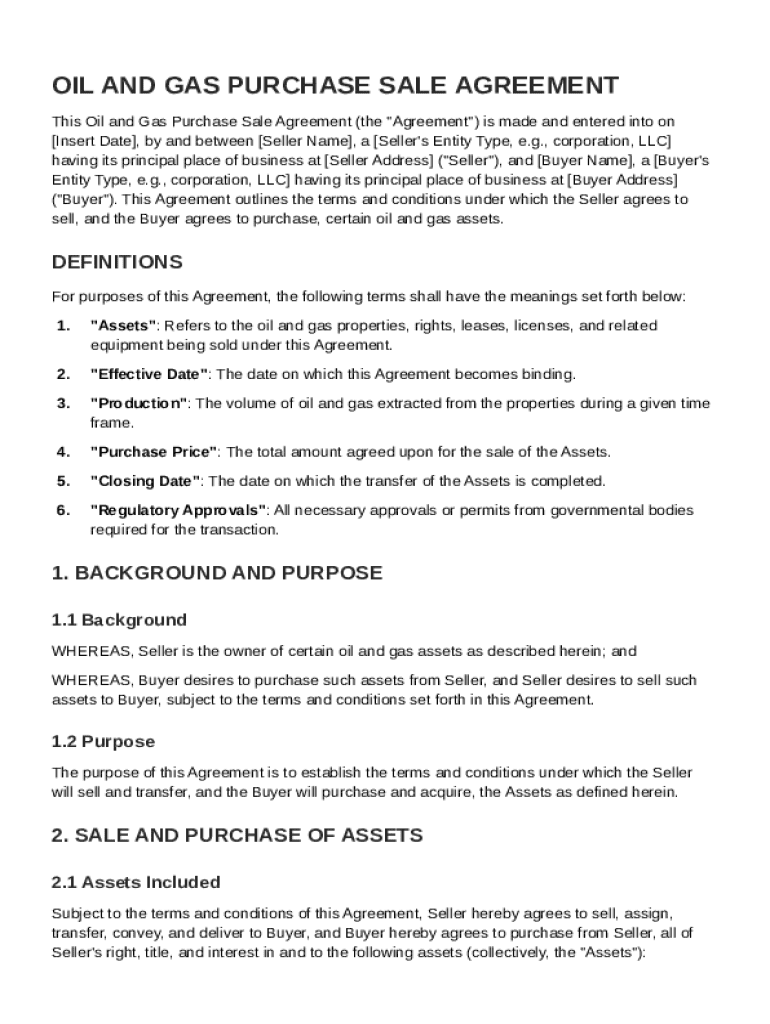
The Oil and Gas Purchase Sale Agreement Template serves as a comprehensive document designed to outline the specific terms and conditions under which oil and gas assets are bought and sold. This template is crucial for ensuring clear communication and agreement between the Seller and Buyer regarding the transaction details. Key elements of this agreement typically include:
-
Definitions of Key Terms: To avoid ambiguity, the agreement includes precise definitions for terms such as "Assets," "Effective Date," and "Closing Date." These definitions help ensure clarity and consistency throughout the document.
-
Sale and Purchase Terms: This section provides a detailed description of the assets being transferred, specifying the nature, quantity, and location of the oil and gas properties included in the sale.
-
Payment Terms and Conditions: Details regarding the total purchase price, payment schedule, and any contingencies or escrow requirements are outlined. This ensures both parties understand the financial obligations involved.
-
Closing Conditions: Lists the conditions that must be met before the transaction is finalized, such as due diligence, regulatory approvals, and any other necessary prerequisites for closing.
-
Representations and Warranties: Both parties make certain assurances about their authority, rights, and the status of the assets being transferred to protect each party against unforeseen liabilities.
How to Use the Oil and Gas Purchase Sale Agreement Template
Using the Oil and Gas Purchase Sale Agreement Template effectively requires a step-by-step approach to ensure all necessary components are customized appropriately for your transaction. Here is a general guide on how to utilize this template:
-
Review Standard Clauses: Begin by understanding the standard clauses included in the template, such as payment obligations and asset descriptions. Ensure these meet your transaction's needs.
-
Customize Definitions: Tailor the definitions to reflect the specific nuances of your deal. This might include adjustments for regional terms or project-specific jargon.
-
Input Transaction-Specific Data: Populate the template with specifics about the transaction, such as the names and addresses of the entities involved, detailed descriptions of the assets, and the agreed purchase price.
-
Verify Legal Compliance: Ensure the agreement complies with relevant federal, state, and local laws governing oil and gas transactions, including obtaining any necessary permits or approvals.
-
Consult Legal Counsel: It is highly recommended to engage with legal professionals who specialize in oil and gas law to review the finalized document to safeguard your interests.
Steps to Complete the Oil and Gas Purchase Sale Agreement Template
Completing the Oil and Gas Purchase Sale Agreement Template involves a sequence of steps that must be meticulously followed to ensure all components of the transaction are comprehensively covered:
-
Initial Asset Assessment: Conduct a thorough assessment of the oil and gas assets involved in the transaction to confirm their status, quality, and value.
-
Drafting the Agreement: Utilize the template to draft an initial version of the agreement, ensuring all key elements such as asset descriptions, payment terms, and warranties are included.
-
Negotiation: Engage with the counterparty to negotiate terms within the agreement that may need adjustment, such as purchase price or specific closing conditions.
-
Final Review and Revisions: Conduct a final review of the document, incorporating any agreed-upon changes and ensuring accuracy and completeness in all sections.
-
Execution of the Agreement: Once both parties are satisfied with the terms, the final document should be executed with signatures from authorized representatives.
-
Record Keeping: Maintain a copy of the finalized agreement, as well as any supplemental documents or correspondences for future reference.
Legal Use of the Oil and Gas Purchase Sale Agreement Template
The legal use of the Oil and Gas Purchase Sale Agreement Template is governed by statutory requirements and industry standards that mandate specific stipulations to be included within the agreement. Here are key legal aspects to consider:
-
Compliance with Regulatory Standards: Ensure the agreement adheres to applicable federal and state laws regulating the sale of oil and gas properties, including environmental considerations and land use regulations.
-
Binding Contractual Terms: The agreement must explicitly state that it is legally binding upon execution, providing enforceable rights and obligations for both parties.
-
Dispute Resolution Mechanisms: Include clauses that address methods for resolving disputes, such as arbitration or mediation, to facilitate an efficient resolution process if disagreements occur.
Important Terms Related to the Oil and Gas Purchase Sale Agreement Template
Understanding the vocabulary specific to this legal document is essential to effectively navigate and implement the template. Here are some important terms typically encountered:
-
Assignment Clause: Specifies conditions under which one party may transfer its rights or obligations under the contract to another entity.
-
Force Majeure: A clause that absolves parties from liability or obligations if an extraordinary event, such as a natural disaster, prevents one or both parties from fulfilling their contractual duties.
-
Indemnification: An agreement between parties to compensate for any losses or damages incurred, usually related to breaches of contract or third-party claims.
-
Covenants: Legally enforceable promises within the contract, including assurances that certain conditions or actions will or will not occur.
Each of these terms plays a vital role in shaping the contract's legal landscape, ensuring each party’s interests are protected throughout the transaction process.