






Key Elements of the Non-Equity Strategic Alliance Agreement Template
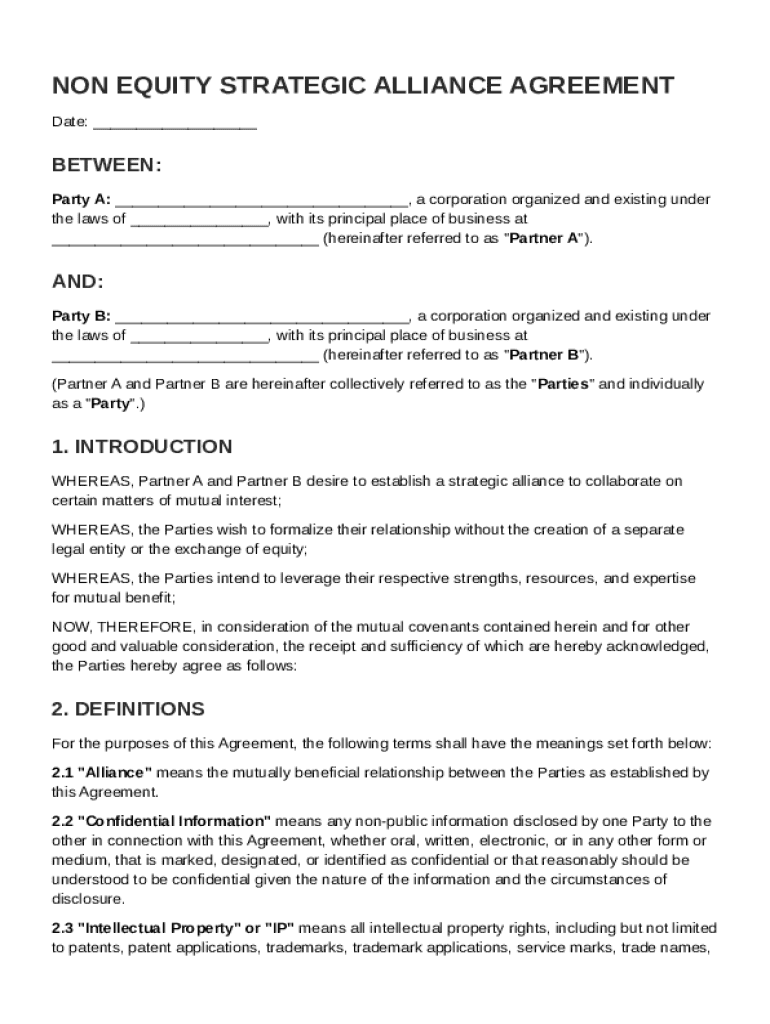
The Non-Equity Strategic Alliance Agreement Template is a crucial document for formalizing collaboration between two parties without establishing a separate legal entity or exchanging equity. Key components of this agreement include:
- Purpose and Scope: Clearly outlines the objectives and the extent of the alliance. This provides a roadmap to ensure both parties are aligned in their strategic goals.
- Roles and Responsibilities: Defines the specific duties and obligations of each party. This ensures accountability and clarity, reducing the risk of misunderstandings.
- Contributions: Details the resources or assets each party will bring to the alliance. This can include technology, intellectual property, market access, or expertise.
- Confidentiality Obligations: Protects sensitive information shared between the parties. Confidentiality clauses are crucial to maintaining competitive advantage and trust.
- Dispute Resolution Mechanisms: Provides a framework for addressing conflicts. This may include mediation, arbitration, or other dispute resolution methods aimed at preventing litigation.
- Termination Rights: Specifies the conditions under which the agreement can be terminated. These terms are vital for managing the partnership lifecycle and exit strategies.
How to Use the Non-Equity Strategic Alliance Agreement Template
To effectively utilize the Non-Equity Strategic Alliance Agreement Template, follow these steps:
- Customize the Template: Tailor the agreement to the specific needs of the parties involved. Adjust the terms to reflect the unique goals and contributions of each partner.
- Legal Review: Consult legal professionals to ensure the agreement complies with applicable laws and regulations. Legal guidance is essential for protecting interests and reducing liabilities.
- Negotiate Terms: Engage in discussions with the partnering entity to agree on the key terms and conditions. Open communication helps in building a robust partnership foundation.
- Finalize the Agreement: Once both parties agree on the terms, finalize the document. Ensure all details are accurately documented and understood by both parties.
- Sign the Agreement: Both parties should sign the document, making it legally binding. Utilize DocHub's electronic signing capabilities for a seamless signing process.
Steps to Complete the Non-Equity Strategic Alliance Agreement Template
Completing the Non-Equity Strategic Alliance Agreement Template involves several steps:
- Gather Information: Collect all necessary information about both parties, including names, titles, and contact details.
- Define Alliance Objectives: Clearly articulate the purpose of the partnership and expected outcomes.
- Draft the Agreement: Using the template, draft the agreement with specific clauses for roles, responsibilities, and confidentiality.
- Insert Legal Clauses: Ensure the document contains all necessary legal provisions, including dispute resolution and termination clauses.
- Review and Revise: Have each party review the draft for accuracy and completeness. Revise as necessary to accommodate feedback.
- Execute the Agreement: Once finalized, both parties should sign the document. Use electronic signature options for convenience and efficiency.
Legal Use of the Non-Equity Strategic Alliance Agreement Template
This template serves as a legal framework to ensure a successful alliance:
- Compliance with Laws: Ensure that the agreement complies with relevant U.S. laws and regulations, such as contract law and partnership statutes.
- Protection of Intellectual Property: Clearly designate ownership and usage rights of any intellectual property involved in the alliance.
- Risk Mitigation: Use the document to mitigate risks associated with breaches of agreement, ensuring both parties understand their legal obligations.
Important Terms Related to the Non-Equity Strategic Alliance Agreement Template
Understanding key legal terms enhances the effectiveness of the agreement:
- "Non-equity": Indicates that the agreement does not involve sharing company equity between parties.
- "Confidentiality": Refers to the obligation of parties to keep shared information confidential.
- "Term": Specifies the duration of the agreement.
- "Consideration": Describes what parties receive in return for their contributions.
Examples of Using the Non-Equity Strategic Alliance Agreement Template
This agreement can be applied in various scenarios:
- Technology Collaborations: Two tech firms may use this template to collaborate on a new software product without merging or forming a joint venture.
- Marketing Partnerships: Companies can enter into non-equity alliances to co-promote products across complementary markets.
- Research Partnerships: Academic institutions and corporations might collaborate on research projects while maintaining separate legal identities.
Who Typically Uses the Non-Equity Strategic Alliance Agreement Template
The template is widely used across different sectors, including:
- Corporations and Multinationals: For strategic collaborations in expanding markets or developing new technologies.
- Small and Medium Enterprises (SMEs): To access resources and capabilities beyond their current scope.
- Non-profit Organizations: For partnerships aimed at maximizing resources and reach without compromising autonomy.


Software Compatibility with DocHub
DocHub supports the seamless completion and management of the Non-Equity Strategic Alliance Agreement Template:
- File Format Support: Compatible with multiple file formats, allowing users to edit and finalize agreements without conversion hurdles.
- Integration with Google Workspace: Directly open, edit, and save documents from Google Drive or Gmail, streamlining the workflow.
- Mobile and Desktop Accessibility: Manage your documents from any device, ensuring work continuity across platforms.
Tax Implications and IRS Guidelines
While the Non-Equity Strategic Alliance Agreement Template itself is not taxable, parties should be aware of potential tax implications:
- Profit Sharing: If the alliance results in revenue sharing, it may have tax implications that need to be reported according to IRS guidelines.
- Transfer Pricing: For international alliances, consider transfer pricing rules to avoid legal complications.
Business Types that Benefit Most from the Non-Equity Strategic Alliance Agreement Template
Certain business entities find significant value in using this template:
- Limited Liability Companies (LLCs): Protects the interests of members while enabling collaborative ventures.
- Corporations: Facilitates partnerships without diluting corporate structure.
- Partnerships: Enhances capabilities by tapping into external expertise and resources.