






Definition and Purpose of a Commercial Security Agreement
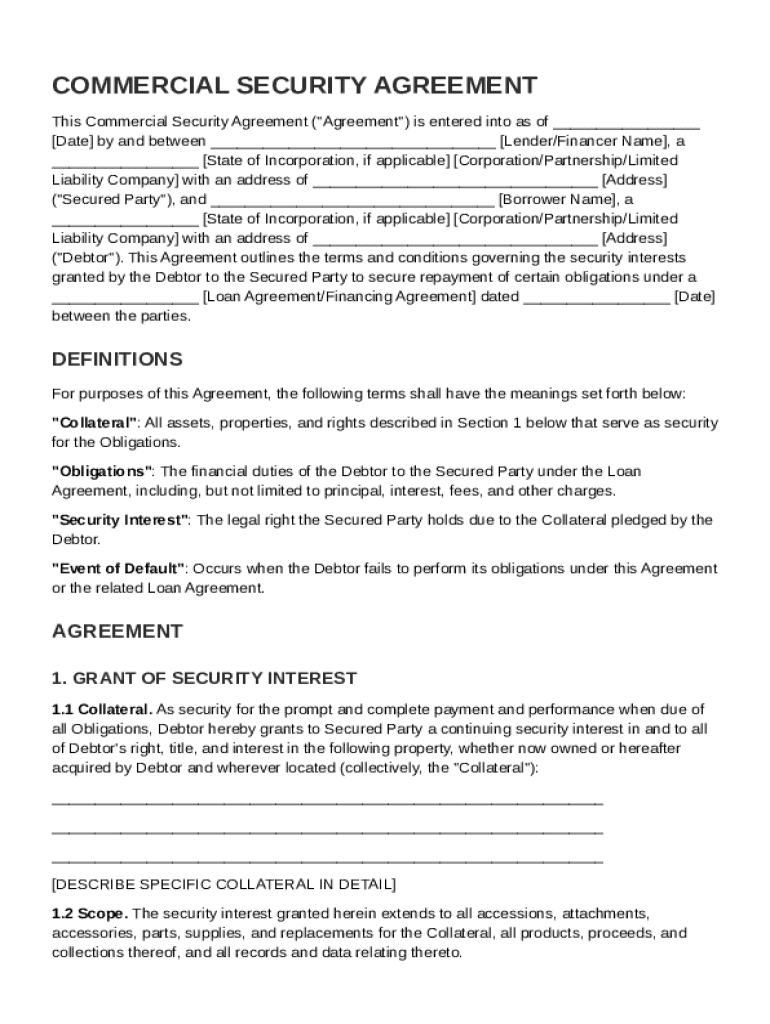
A Commercial Security Agreement is a legal contract in which a borrower, known as the Debtor, extends a security interest in specific collateral to a lender, referred to as the Secured Party. This collateral acts as a safeguard for the lender, ensuring repayment of the financial obligations under the terms outlined in a loan agreement. Within this agreement, several critical terms are defined, such as 'Collateral', 'Obligations', and 'Event of Default'. The agreement also details the rights and responsibilities of both parties, including the maintenance of collateral, conditions that constitute default, and the remedies available to the Secured Party if a default occurs.
Key Elements of the Commercial Security Agreement Template
To construct a comprehensive and legally sound Commercial Security Agreement, several essential components must be included:
- Collateral Description: Clearly defines the assets being pledged by the Debtor to secure the loan. This may include physical assets such as machinery or inventory, as well as intangible assets like patents.
- Obligations: Outlines the specific financial obligations and loan terms that the Debtor must fulfill under the agreement.
- Parties Involved: Identifies the Debtor and Secured Party, including their legal names and contact information.
- Defaults and Remedies: Defines what constitutes a default and the steps the Secured Party may take to remedy the situation, such as collateral liquidation.
- Governing Law: Specifies the state law under which the agreement will be interpreted, which can be crucial in multi-state arrangements.
Important Terms Related to the Agreement
Understanding the language within a commercial security agreement is vital for both parties involved. Key terms include:
- Security Interest: A legal claim on collateral pledged by the Debtor.
- UCC-1 Financing Statement: A legal form filed by the Secured Party to give notice of its interest in the collateral.
- Lien: A legal right or interest that a lender has in the Debtor's property until the obligation is satisfied.
- Perfection: The legal process by which a secured party claims priority over the Debtor's collateral.
Steps to Complete the Commercial Security Agreement Template
Completing a Commercial Security Agreement involves several precise steps:
- Identify the Parties: Ensure all legal names and affiliations are accurate for both Debtor and Secured Party.
- Describe the Collateral: Provide a detailed description of the collateral, including any serial numbers or unique identifiers.
- Define the Obligations: Clearly set out the obligations of the Debtor under the loan agreement.
- Set Default Terms and Remedies: Establish what constitutes an Event of Default and the remedies available.
- Include Governing Law: Specify the applicable state laws under which the agreement will be governed.
- Review and Sign: Both parties should review the completed document thoroughly and execute the agreement with legal signatures.
Legal Use of the Commercial Security Agreement Template
A Commercial Security Agreement serves as a vital legal tool for defining and securing the rights of both the Debtor and the Secured Party in lending agreements. Legal uses include:
- Enforcing Security Interests: Provides the Secured Party a legal claim on the collateral if the Debtor fails to meet obligations.
- Defining Jurisdiction: Clarifies which state laws apply, helping prevent jurisdictional disputes.
- Ensuring Compliance with the UCC: The Uniform Commercial Code outlines standards for secured transactions, which the agreement must adhere to.
Examples of Using a Commercial Security Agreement
The use of a Commercial Security Agreement is common in several business contexts:
- Asset-Based Lending: Businesses often use their inventory or equipment as collateral to secure loans for expansion purposes.
- Small Business Loans: Entrepreneurs may pledge business assets to obtain funding for start-up costs.
- Purchase Financing: Companies secure financing for purchasing new machinery by committing the asset itself as collateral.
Software Compatibility for Managing the Agreement
Effectively managing a Commercial Security Agreement can be streamlined with software solutions compatible with various formats:
- DocHub: Allows seamless editing, signing, and sharing of agreement documents in formats like PDF and DOC.
- QuickBooks: Helps track loans and secured assets within financial records.
- Microsoft Office: Suitable for drafting and editing document templates before finalizing the agreement.
State-Specific Considerations
Each state may have unique requirements or nuances related to security agreements:
- Filing Requirements: Some states require specific filings beyond the UCC-1 to perfect interests, such as additional local registrations.
- Variation in Governing Laws: Differences in state laws can influence how security interests are enforced or interpreted.
Who Typically Uses the Commercial Security Agreement Template
Businesses across various industries may find a Commercial Security Agreement indispensable:
- Manufacturers: Often need to secure loans for purchasing raw materials.
- Retailers: Use inventory as collateral for working capital loans.
- Technology Companies: Pledge intellectual property in exchange for research and development funding.
Understanding these facets equips potential users to leverage the Commercial Security Agreement effectively, ensuring robust legal backing and clarity in financial transactions.