






Definition and Purpose of Non-Disclosure for Employees Agreement Template
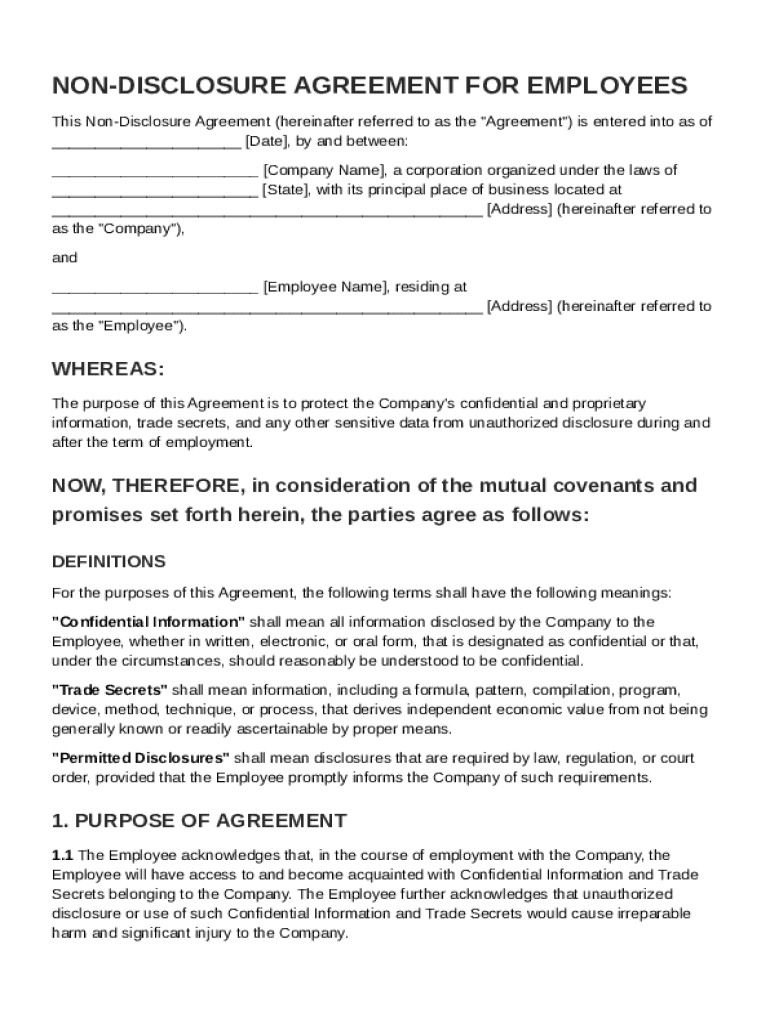
A Non-Disclosure Agreement (NDA) for employees is a legal contract that outlines the obligations of an employee to protect a company’s confidential and proprietary information both during and after their employment. This document is crucial for safeguarding sensitive data, business strategies, trade secrets, and other vital information that could be detrimental to a business if disclosed. The primary purpose of this agreement is to ensure that employees recognize the importance of confidentiality and the seriousness of preserving corporate secrecy. NDAs aim to create a legal obligation for employees to maintain silence regarding any non-public information they access while working for the company.
Key Elements of the Non-Disclosure for Employees Agreement Template
The Non-Disclosure for Employees Agreement Template typically includes several critical components:
- Confidential Information: Specifies what constitutes confidential information, which can include financial data, client lists, business forecasts, plans, and other proprietary data.
- Trade Secrets: Defines trade secrets and the boundaries for sharing company knowledge.
- Duration of Obligations: Details how long the confidentiality obligations last, including post-employment periods.
- Exceptions to Confidentiality: Outlines scenarios where confidentiality is not applicable, such as information becoming public through lawful means.
- Employee Responsibilities: Details the employee's duties regarding the handling, storage, and protection of confidential data.
How to Use the Non-Disclosure for Employees Agreement Template
To effectively use the NDA for employees, follow these guidelines:
- Review and Customize: Start by reviewing the template to ensure it aligns with your company’s needs. Tailor the clauses to reflect the specific type of information that requires protection.
- Discuss with Legal Counsel: Engage with a legal expert to ensure the template complies with applicable state and federal regulations.
- Communicate Obligations Clearly: Prioritize communication with employees about the terms and the importance of the NDA.
- Obtain Signatures: Ensure that the agreement is signed by all relevant parties before employment begins or when access to confidential information is granted.
Steps to Complete the Non-Disclosure for Employees Agreement Template
Completing the NDA template involves several key steps:
- Identify the Parties: Clearly list the employer and employee names, along with any other participating individuals or entities.
- Define Confidential Information: Specify what is considered confidential, using precise language to avoid ambiguity.
- Set the Timeframe: Indicate the duration during which confidentiality must be maintained and any post-employment time limits.
- Lay Out Exceptions: Clearly outline the exceptions to confidentiality obligations.
- Sign and Date the Document: Both parties must sign and date the agreement, establishing a formal, legally binding contract.
Legal Use of the Non-Disclosure for Employees Agreement Template
The NDA must comply with regulations and guidelines to be enforceable.
- Compliance with the ESIGN Act: This ensures electronic signatures collected on DocHub are legally binding.
- Federal and State Laws: Consult about specific state laws governing NDAs as they can vary significantly.
- Dispute Resolution: It is often advisable to include clauses concerning dispute resolution and the governing law if any conflicts arise from the NDA.
Important Terms Related to Non-Disclosure for Employees Agreement Template
Several key terms are crucial for understanding and implementing an NDA:
- Proprietary Information: Information owned by the business that is not generally known or accessible outside the company.
- Non-Compete Clauses: Sometimes included to prevent employees from joining competitors.
- Return of Materials: A requirement to return or destroy any physical or digital information upon termination of employment.
State-Specific Rules for the Non-Disclosure for Employees Agreement Template
State regulations can heavily influence the validity and enforceability of NDAs.
- California: Typically restricts NDAs, especially related to employment concerns following recent legal reforms.
- New York: Imposes strict standards for NDAs and prohibits them in some employment settings, such as harassment cases.
- Texas: Allows NDAs but often requires consideration and reasonableness in scope.
Examples of Using the Non-Disclosure for Employees Agreement Template
NDAs serve vital roles in various scenarios:
- Startups protecting innovative ideas as they engage new talent.
- Technology Firms where employees have access to upcoming product developments.
- Healthcare Organizations safeguarding patient information and data.
Why You Should Implement a Non-Disclosure for Employees Agreement
- Protect Intellectual Property: NDAs help ensure the security of a company's intellectual property.
- Maintain Competitive Advantage: By controlling the flow of information, companies can retain their market edge.
- Legal Assurance: Provides a legal basis for action should confidential information be misused.
These agreements are indispensable for companies across industries that prioritize security and competitive integrity in their operations.