Definition & Meaning
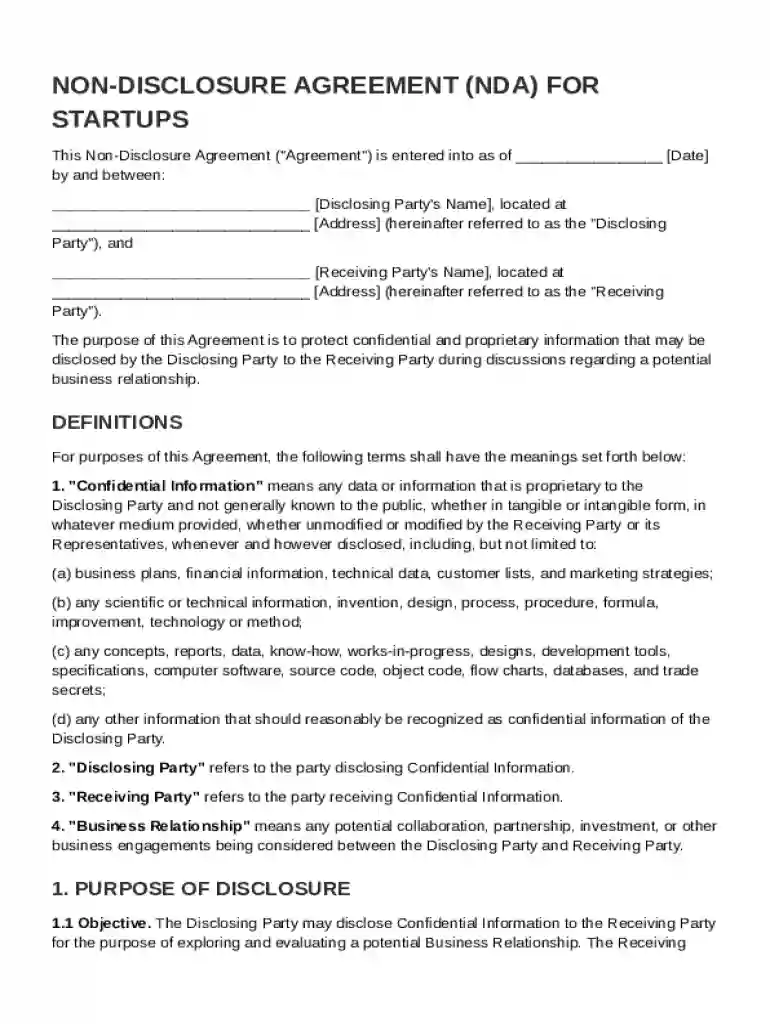
The Non-Disclosure Agreement (NDA) for startups is a legal document used to protect confidential information shared between parties during business discussions. This agreement ensures that sensitive information, often proprietary in nature, remains secure and undisclosed to unauthorized parties. The primary purpose of an NDA is to outline the obligations of the receiving party regarding the confidentiality of the shared information. Key components include definitions of confidential information, duration, and termination terms, and the ownership rights of the disclosed materials.
Key Elements of the Non Disclosure Startup Agreement Template
An effective Non Disclosure Startup Agreement encompasses several critical elements:
- Parties Involved: Clearly identifies the Disclosing Party and the Receiving Party.
- Definitions: Specifies what constitutes Confidential Information.
- Obligations: Defines responsibilities regarding the protection and use of the confidential information.
- Exclusions: Details what information is not considered confidential.
- Duration: Sets the time period during which the information must remain confidential.
- Termination: Provides conditions under which the agreement can be terminated.
- Dispute Resolution: Outlines the process for resolving conflicts that may arise.
How to Use the Non Disclosure Startup Agreement Template
Using this template effectively involves several steps:
- Customization: Tailor the agreement to reflect the specifics of the parties involved and the nature of the information being protected.
- Review: Carefully read through each section to ensure clarity and precision of terms.
- Legal Consultation: Consult a legal professional to verify that all legal requirements are met and that your interests are protected.
- Execution: Once finalized, both parties should sign the NDA to make it legally binding.
Examples of Using the Non Disclosure Startup Agreement Template
Startups often employ NDAs in various scenarios:
- Partnership Discussions: When exploring potential business partnerships where sensitive business strategies are disclosed.
- Investor Meetings: Protects proprietary financial data and business plans shared with potential investors.
- Employee Contracts: Ensures that new employees do not disclose trade secrets and sensitive company information.
- Outsourced Projects: Used when engaging third-party vendors who will have access to confidential data.
Important Terms Related to Non Disclosure Startup Agreement Template
Understanding specific terms within the NDA is essential for its effectiveness:
- Confidential Information: Any data or information that is not publicly known and is shared under a condition of confidentiality.
- Receiving Party: The individual or entity that receives the confidential information.
- Disclosing Party: The entity or individual that discloses the confidential information.
- Breach of Agreement: A violation of the NDA terms, often leading to legal penalties or damages.
Legal Use of the Non Disclosure Startup Agreement Template
Within the United States, NDAs are subject to specific legal frameworks:
- Enforceability: To be enforceable, the NDA should be reasonable in its scope and duration.
- Compliance with Regulations: Must comply with state and federal laws regarding confidentiality and proprietary rights.
- Legal Disputes: The agreement should outline applicable laws and jurisdictions for resolving disputes.
Steps to Complete the Non Disclosure Startup Agreement Template
Completing the NDA involves a detailed process:
- Identify Parties: Clearly state the names and contact information of the disclosing and receiving parties.
- Detail the Information: Specify what type of information is regarded as confidential.
- Set Terms: Define the duration of confidentiality and conditions under which information can be released from the agreement.
- Final Review: Ensure all sections are thoroughly reviewed and amended as necessary.
- Signatures: Both parties must sign the agreement to validate it.
Business Types That Benefit Most From the Non Disclosure Startup Agreement Template
Several business types find NDAs particularly useful:
- Technology Startups: Protects innovative ideas and IP from being shared prematurely.
- Manufacturing Firms: Secures proprietary designs or processes from competitors.
- Healthcare Companies: Maintains confidentiality of patient data and medical research.
- Consulting Agencies: Ensures client strategies and data remain private.