






Definition & Meaning
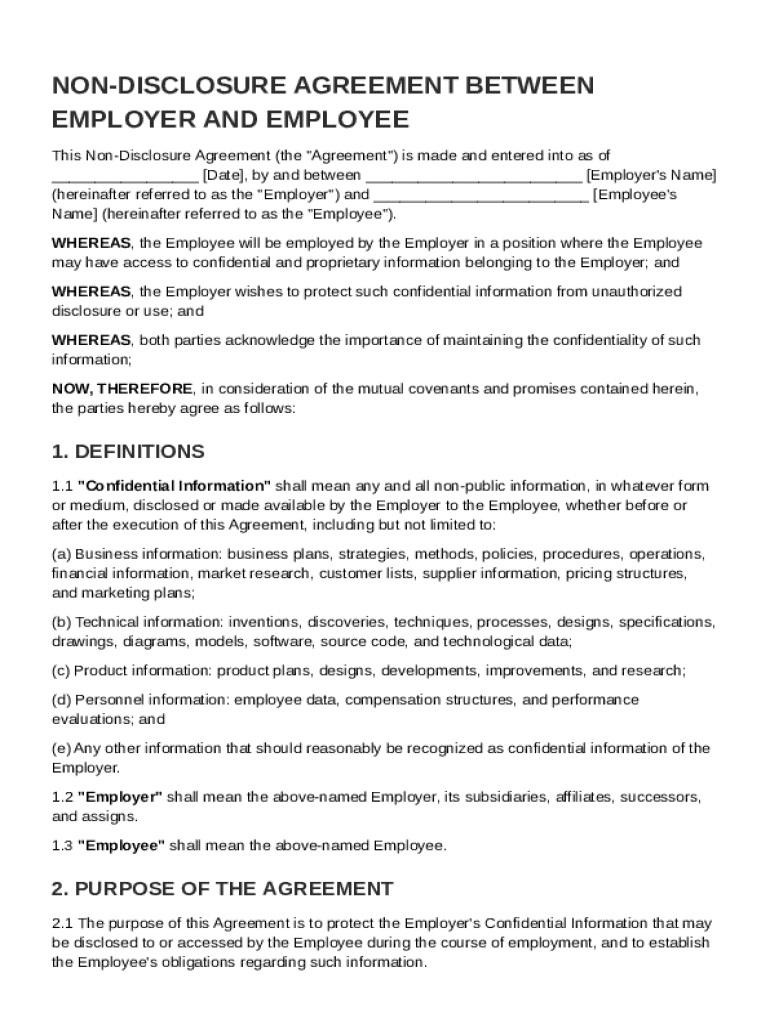
The Non-Disclosure Agreement (NDA) between an employer and employee is a legal document designed to establish a confidential relationship between the two parties. This type of agreement is crucial for protecting sensitive company information shared during the course of employment. NDAs define what constitutes confidential information, outline the employee's obligations to protect this information, and establish limitations on disclosure. They are essential for maintaining the integrity of proprietary data, trade secrets, and any other critical information that could potentially benefit competitors if disclosed.
Components of the NDA
- Confidential Information: Defined to include trade secrets, proprietary data, and any other sensitive business information.
- Employee Obligations: Duties of the employee to maintain confidentiality and the consequences of failing to do so.
- Disclosure Limitations: Specifies who the information can be shared with, if at all, and under what circumstances.
How to Use the Non-Disclosure Between Employer and Employee Agreement Template
Utilizing the Non-Disclosure Agreement template effectively requires a clear understanding of its structure and legal requirements. This document can be tailored to meet the specific needs of different companies while ensuring legal compliance.
Steps to Customize
- Identify Confidential Information: Clearly define what is considered confidential.
- Specify Obligations: Outline the employee's obligations to protect the confidentiality of the information.
- Set Term Limits: Establish the duration for which the confidentiality must be maintained.
- Define Legal Remedies: Clearly state the consequences of a breach of this agreement.
Key Elements of the Non-Disclosure Between Employer and Employee Agreement Template
The agreement is built around several critical components that ensure its effectiveness in protecting confidential information. Each element plays a role in creating a legally binding document.
Core Elements
- Definitions of Terms: Clear definitions ensure there is no ambiguity about what is covered.
- Scope of Confidentiality: Outlines the areas and extent of protection offered.
- Exclusions: Specifies any information not covered by the agreement.
- Duration of Agreement: The period during which the agreement is enforceable.
Steps to Complete the Non-Disclosure Between Employer and Employee Agreement Template
Completing this NDA template involves several steps to ensure it is comprehensive and legally enforceable. Attention to detail is vital throughout this process.
Procedure
- Fill in the Parties' Information: Include full legal names of both employer and employee.
- Detail Covered Information: Clearly specify what information is deemed confidential.
- Outline Employee Responsibilities: Define what actions the employee must take to protect this information.
- Agree on Legal Jurisdiction: Determine under which legal jurisdiction any disputes will be settled.
- Sign and Date: Both parties must sign and date the agreement to make it legally binding.
Legal Use of the Non-Disclosure Between Employer and Employee Agreement Template
Using the NDA template legally involves more than just filling it out; it requires adherence to applicable laws and best practices to ensure it stands up to legal scrutiny.
Best Practices
- Consult Legal Counsel: Ensure the NDA complies with state and federal laws.
- Regular Review and Update: Keep the document up-to-date with any changes in laws or company policies.
- State-Specific Compliance: Adjust the NDA to comply with specific state laws, including considerations for potential differences in enforceability.
Important Terms Related to Non-Disclosure Between Employer and Employee Agreement Template
Understanding key terms related to NDAs is essential for both employers and employees. These terms often determine the scope and enforceability of the agreement.
Essential Terms
- Trade Secrets: Refer to business practices or processes that give a company a competitive edge.
- Proprietary Information: Unique data or details owned by the company.
- Non-Compete Clause: Sometimes included to prevent the employee from joining competitors for a certain time after employment ends.
State-Specific Rules for the Non-Disclosure Between Employer and Employee Agreement Template
Although most NDAs share common elements, their enforceability can vary based on state-specific laws. It's important to tailor the agreement to align with the legal standards of the state in which it operates.
Considerable Differences
- California: Typically more stringent on non-compete clauses but allows NDAs for trade secrets.
- New York: Requires a balance between protecting company interests and respecting employee rights to work.
Versions or Alternatives to the Non-Disclosure Between Employer and Employee Agreement Template
While the standard NDA serves a broad range of scenarios, there are alternative forms and variations that may better suit specific business needs or industries.
Alternatives
- Mutual Non-Disclosure Agreement: Useful when both parties will be sharing confidential information.
- Unilateral NDA: Applicable when only one party is disclosing information to another.
- Industry-Specific NDAs: Tailored to address particularities relevant to certain fields, like technology or healthcare.
By understanding and implementing each of these aspects, individuals and businesses can ensure they are effectively using the Non-Disclosure Between Employer and Employee Agreement Template to protect sensitive information.