






Definition & Meaning
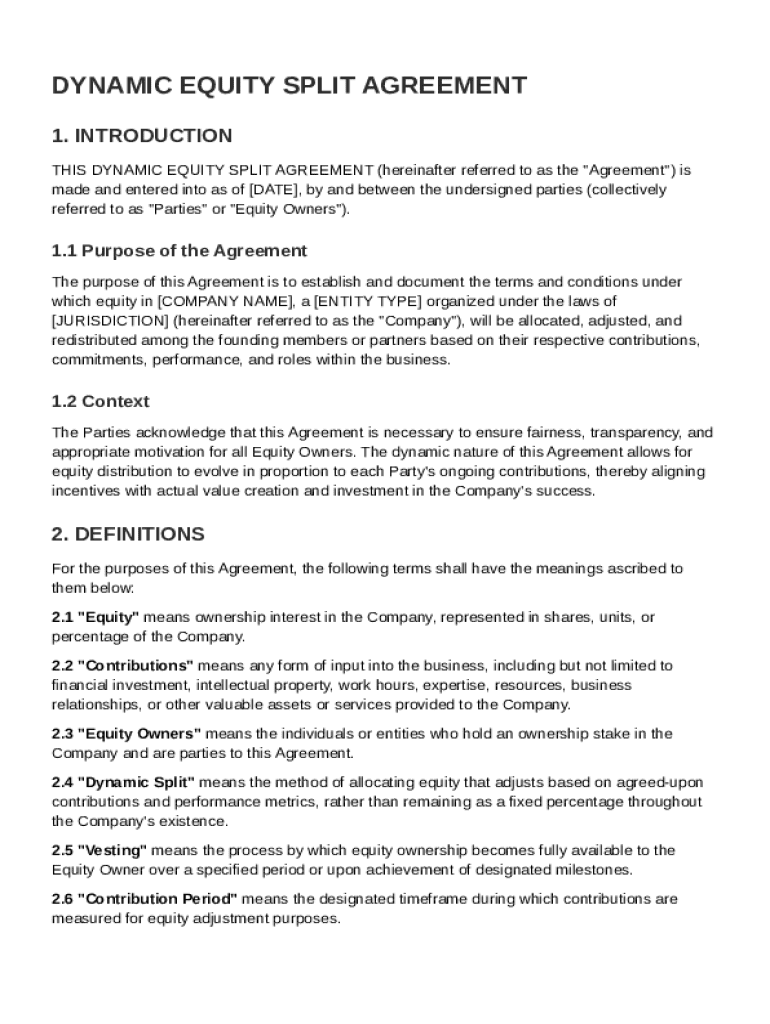
The Dynamic Equity Split Agreement is a legally binding document that outlines how equity is allocated among the founding members of a company, allowing for dynamic changes based on each member's contributions, commitments, and performance. This form ensures fair and transparent distribution of equity, adapting over time as individual inputs evolve. It incorporates key terms, such as initial allocations, performance metrics, and mechanisms for adjustments, fostering long-term equity management grounded in objective evaluation.
How to Use the Dynamic Equity Split Agreement Template
The Dynamic Equity Split Agreement Template is designed to help business founders and other key stakeholders formalize their equity-sharing arrangement. Users should begin by clearly identifying all parties involved. They then allocate initial equity shares, setting criteria for how contributions and performance will influence future distributions. Next, parties should carefully define performance metrics and establish a system for periodic reviews and reallocations based on those metrics. Additionally, the template should contain provisions for vesting schedules, ensuring the alignment of long-term interests with business goals.
Steps to Use
- Identify Participants: List all stakeholders involved in the equity agreement.
- Determine Initial Allocation: Decide on the initial equity shares for each member based on their initial contributions.
- Set Performance Metrics: Establish clear criteria for evaluating ongoing contributions and commitments.
- Define Adjustment Mechanism: Create a system for reviewing and adjusting equity allocations in response to changes in performance.
- Incorporate Vesting Schedules: Implement vesting periods to align member interests with long-term organizational success.
Key Elements of the Dynamic Equity Split Agreement Template
This template includes several essential elements that ensure equitable and transparent equity distribution.
Initial Equity Allocation
This section details the initial division of equity among the founding members. Considerations include the nature of contributions, such as capital investment, intellectual property, or initial work commitment. Clear documentation in this area helps prevent future disputes and provides a basis for reassessment.
Performance Metrics
Performance metrics act as benchmarks for evaluating each member's ongoing contributions. Metrics might encompass sales results, project completions, or leadership roles. The agreement should specify how these metrics will be measured and their impact on equity allocation.
Adjustment Mechanism
This mechanism outlines the process for engaging in periodic reviews and redistributing equity shares based on established performance metrics. It should be structured to enable flexibility while maintaining fairness, and include intervals for assessments (e.g., quarterly or annually).
Legal Use of the Dynamic Equity Split Agreement Template
The template functions as a legal document that governs the equity-sharing arrangements within a business entity. Parties must ensure that the agreement complies with state and federal regulations governing equity distribution and corporate governance in the United States. Legal counsel may be consulted for specific jurisdictional requirements or complex arrangements.
Important Legal Considerations
- State Compliance: Verify the template's alignment with state-specific regulations.
- Inclusion of Dispute Resolution: Establish a process for handling conflicts amicably.
- Amendment Procedures: Include a process for making modifications to the agreement.
State-Specific Rules for the Dynamic Equity Split Agreement Template
While this agreement template provides a general framework, users must consider state-specific regulations that influence equity agreements. State corporate statutes and employment laws can impact elements such as vesting schedules and shareholder rights. Understanding these differences is crucial for compliant and effective equity distribution.
Examples of State-Specific Considerations
- California: Certain employment laws might affect how shares are allocated to employees.
- Delaware: Known for its business-friendly laws, Delaware may offer more flexible arrangements but requires adherence to stringent corporate governance.
Who Typically Uses the Dynamic Equity Split Agreement Template
This template is primarily used by startup founders and business partners early in the formation of their enterprise. It's particularly beneficial for those looking to allocate shares based on future contributions rather than just initial involvement. Entrepreneurs, venture capitalists, and corporate lawyers may also engage with such agreements to aid clients in achieving equitable business growth strategies.


Examples of Using the Dynamic Equity Split Agreement Template
Consider a tech startup where two founders and three early employees are instrumental in product development. The initial equity is divided equally, but as the company grows, performance metrics such as revenue generated by product sales and project milestones could lead to adjustments in equity holdings. Such real-world scenarios illustrate the practicality and need for dynamic equity splits to adapt to evolving business needs.
Versions or Alternatives to the Dynamic Equity Split Agreement Template
While the dynamic equity split model is tailored for flexibility, several alternatives exist. Fixed equity agreements assign shares based on initial contributions without adjustments. Other models include profit-sharing agreements or hybrid models that blend fixed and dynamic elements, offering a middle ground depending on business goals and team structure. Users should select the model that best aligns with their company's vision and growth trajectory.