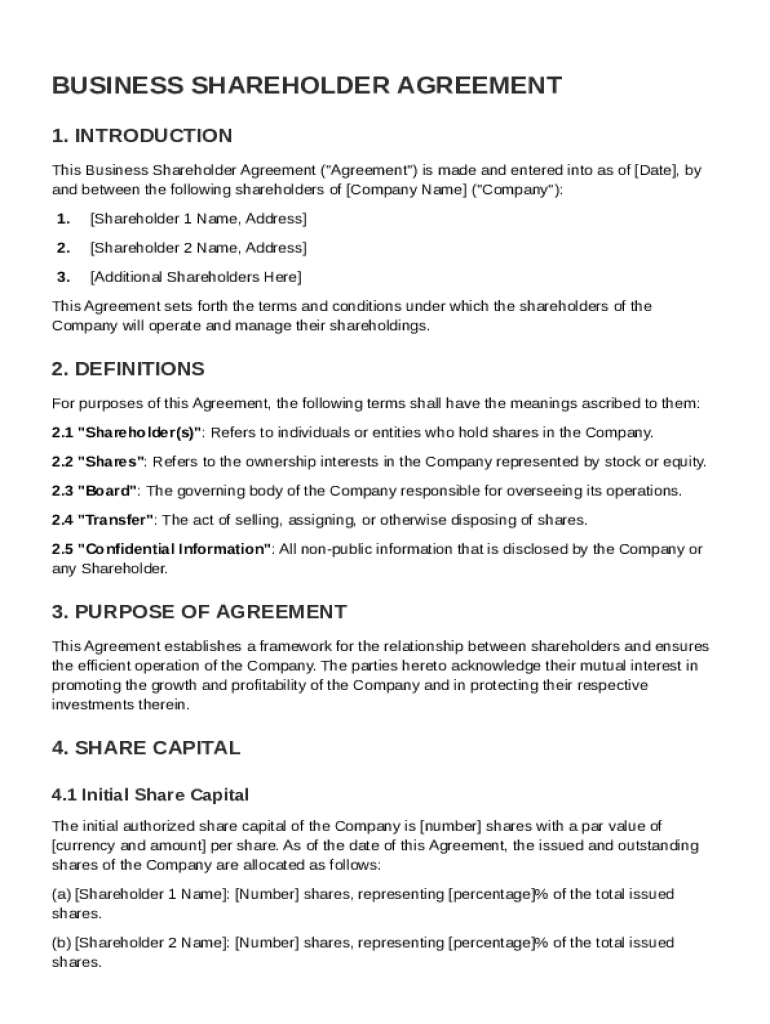







Definition and Importance of a Business Shareholder Agreement
A Business Shareholder Agreement is a legal document outlining the terms and conditions that govern the relationship between shareholders within a company. It serves as a foundation for interaction amongst shareholders, establishing rights and obligations, and detailing governance structures, including the Board of Directors. This agreement plays a crucial role in mitigating potential disputes and safeguarding shareholder investments by setting clear protocols for confidential information handling, share transfers, amendment processes, and termination terms. By having a comprehensive shareholder agreement in place, companies can ensure efficient management and drive growth while fulfilling regulatory compliance.
Key Elements of the Business Shareholder Agreement Template
The Business Shareholder Agreement Template encapsulates several critical components:
- Shareholder Rights and Obligations: Defines the legal rights and duties of shareholders, including voting rights and dividend entitlements.
- Governance Structure: Details the composition and responsibilities of the Board of Directors and outlines procedures for meetings and decision-making.
- Share Transfer Procedures: Specifies the protocols for buying or selling shares, including pre-emption rights and restrictions on share transfers.
- Confidentiality Clauses: Establishes how sensitive information should be protected, ensuring competitive advantages and business secrets are maintained.
- Dispute Resolution: Provides mechanisms such as arbitration or mediation to resolve conflicts arising between shareholders without litigation.
- Amendment and Termination Provisions: Sets out conditions under which the agreement can be revised or terminated, providing flexibility while maintaining stability.
Steps to Complete the Business Shareholder Agreement Template
Composing a shareholder agreement involves several steps to ensure comprehensiveness and legal validity:
- Gather Necessary Information: Collect details of all shareholders, including names, shareholding percentages, and contact information.
- Define Objectives and Roles: Clearly establish the business goals, roles, and responsibilities for shareholders and directors.
- Draft Key Provisions: Utilize the template to input specific clauses related to governance, share transfers, and dispute resolution.
- Review Legal Compliance: Ensure the agreement adheres to federal and state laws applicable to the business entity.
- Seek Legal Counsel: Consult an attorney to review the draft for legal soundness and adequacy.
- Finalize and Execute: Once stakeholders agree on the terms, sign and notarize the agreement to ensure enforceability.
Legal Use and Compliance with Business Shareholder Agreements
To ensure legal enforceability, the Business Shareholder Agreement should be drafted in compliance with U.S. corporate laws. It must adhere to the regulations set forth by the Securities and Exchange Commission (SEC) and state-specific legislation governing business entities. Additionally, the agreement should comply with the Electronic Signatures in Global and National Commerce (ESIGN) Act if signed digitally. Maintaining compliance is essential for protecting shareholder rights and shielding the company from potential legal repercussions.
Who Typically Utilizes the Business Shareholder Agreement Template
This template is typically utilized by:
- Startups and Growing Businesses: To establish initial governance and investor relationships.
- Established Corporations: For restructuring purposes or adapting to new shareholder dynamics.
- Partnerships Incorporating: Partners transitioning into a corporate structure benefit from clear shareholder agreements.
- Venture Capitalists and Angel Investors: These parties often require a formal agreement outlining their involvement and exit strategy.
Software Compatibility and Integration
Platforms like DocHub make the completion and management of shareholder agreements straightforward. With its compatibility across multiple file formats, it caters to users' diverse document needs. Integration with cloud services such as Google Drive and Dropbox ensures documents can be easily accessed, edited, and shared. These features, combined with form field managers for digital signatures and fillable fields, facilitate efficient document execution and enhance collaboration among shareholders.
State-Specific Considerations and Variations
Though the Business Shareholder Agreement Template provides a comprehensive base, considerations may differ based on state regulations. States may have specific requirements related to the incorporation process, distribution of shares, and governance obligations. For instance, differences in how non-compete clauses or indemnification clauses are treated can affect the final document's structure. It is essential to consult legal expertise in the relevant state to ensure all regional legal mandates are addressed within the agreement.
Examples and Use Cases for the Business Shareholder Agreement Template
Understanding real-world applications of the Business Shareholder Agreement can illustrate its necessity:
- Tech Startups: A new tech enterprise with multiple founders can use the agreement to decide equity distribution and manage future funding rounds.
- Family-Owned Corporations: In family businesses, these agreements help mitigate disputes over control and succession planning.
- Equity Financing: Companies seeking external investment use these agreements to clarify investor rights and exit strategies, thereby enhancing investor confidence.
Each use case exemplifies the agreement's role in fostering clear communication and protecting both the company's and the shareholders' interests.