




01. Edit your form online
Type text, add images, blackout confidential details, add comments, highlights and more.

Type text, add images, blackout confidential details, add comments, highlights and more.

Draw your signature, type it, upload its image, or use your mobile device as a signature pad.

Send it via email, link, or fax. You can also download it, export it or print it out.
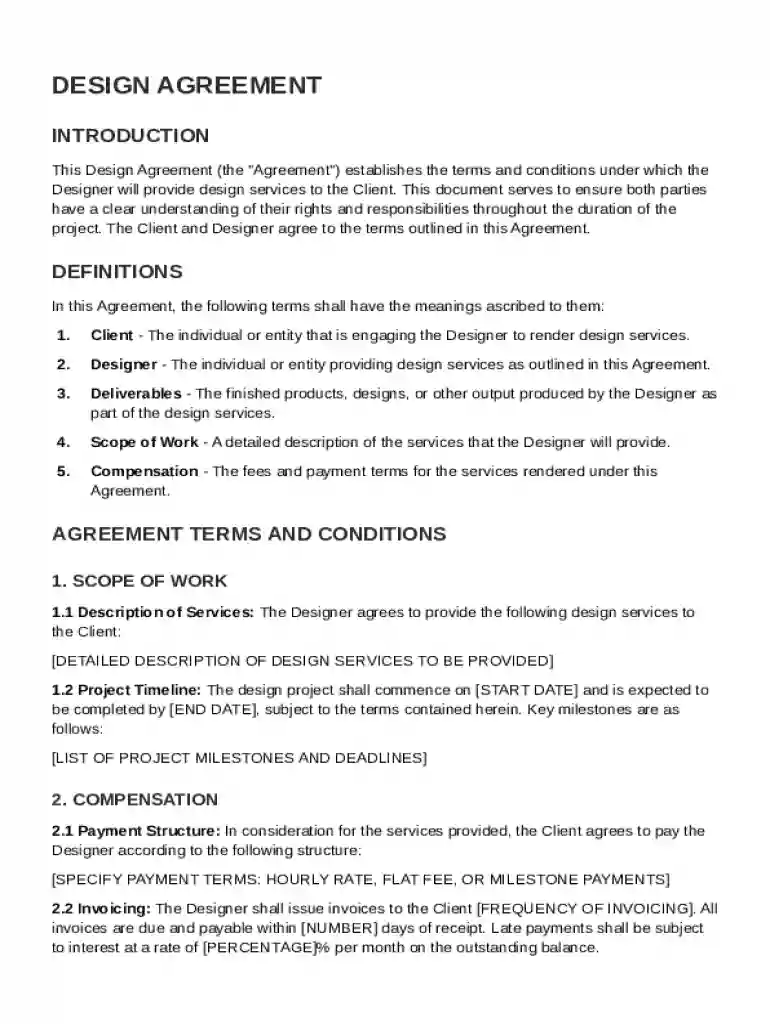
A Design Agreement Template is a critical document that establishes the framework for the professional relationship between a designer and a client. It encapsulates the terms and conditions governing design services, ensuring clarity and mutual satisfaction. Key elements include:
Scope of Work: This section outlines the specific services the designer will provide. It details project phases, deliverables, and timelines, offering a clear picture of what the client can expect. Defining the scope is crucial for managing client expectations and protecting the designer from scope creep.
Compensation Structure: This describes how and when the designer will be paid. It specifies fees, payment schedule, and any deposit requirements. Some agreements may include clauses for additional work beyond the initial scope, listing hourly rates or flat fees.
Ownership and Intellectual Property Rights: This ensures the client and designer understand who owns the final design. Typically, design rights transfer to the client upon full payment, but the agreement should explicitly state this to avoid disputes.
Revision Policies: Outlines the number of revisions included within the agreed fee and how additional changes will be billed. This helps prevent excessive modification requests, which can impact the project's profitability and timeline.
Understanding the terminology used in a Design Agreement Template is necessary for smooth project execution. Here are some important terms:
Client: The individual or organization hiring the designer for a project. The client is responsible for providing project information, feedback, and timely payments.
Designer: The individual or entity providing design services under the agreement. The designer uses creative skills to meet the project's objectives and deliverables.
Deliverables: Tangible or intangible products like logos, graphics, or website elements the designer commits to providing by the project's end. Clearly defining deliverables helps in setting realistic expectations.
Force Majeure: Provisions addressing unforeseeable events, such as natural disasters or technical failures, that prevent the designer from completing the project as planned. This clause extends deadlines and relieves the designer from liability in such instances.
Legal usage of a Design Agreement Template involves ensuring compliance with relevant laws and regulations. This confirms the enforceability of the agreement and protects both parties.
Compliance with Contract Law: The agreement must adhere to contract law standards, including offer, acceptance, consideration, capacity, and mutual consent. This ensures the contract is legally binding.
Confidentiality Obligations: These clauses prevent the unauthorized sharing of proprietary information. They protect both client and designer from the misuse of sensitive data disclosed during the project.
Termination Clauses: Define the circumstances under which either party can terminate the agreement. These typically include non-payment, breach of terms, or insolvency, ensuring there are straightforward processes to resolve disputes.
Completing a Design Agreement Template involves several key steps to tailor the document to specific project needs.
Identify Parties: Clearly state the full legal names and contact information of the client and designer. This needs careful verification to avoid future confusion.
Detail Project Scope: Describe design services, deliverables, and timelines. Use specific language to avoid potential disputes over misunderstandings of project scope.
Define Payment Terms: Include fee structure, payment schedule, and deposit requirements. Clearly communicate late payment penalties or incentive structures.
Review and Revise: Both parties should review the document for clarity and comprehensiveness. Revisions should be documented and agreed upon before signing.
Sign and Store: Once agreed upon, both parties should sign the document. Electronic signatures can be used for efficiency, so long as they comply with the ESIGN Act.
Several professionals and businesses may require a Design Agreement Template to formalize their client interactions.
Freelance Designers: Individuals offering graphic, web, or interior design services use agreements to protect their interests and ensure payment for services rendered.
Design Studios: Agencies providing creative services to multiple clients use templates to streamline the contract creation process, ensuring consistency across projects.
Corporate Clients: Companies engaging in large-scale design projects often require formal agreements with agencies or freelancers to secure their investments.


Using a Design Agreement Template offers several advantages, enhancing the professional relationship between designers and clients.
Clarity and Transparency: Clearly defined terms eliminate ambiguities, fostering a trusting professional relationship. This promotes client satisfaction and protects the designer from misinterpretations.
Dispute Prevention: A comprehensive agreement helps prevent conflicts by setting clear expectations. In case of a dispute, it serves as a reference to resolve issues efficiently.
Professionalism: Presenting a structured agreement enhances the designer's reputation, showcasing a commitment to professionalism and high standards.
Different states may have specific legal requirements affecting design agreements, so it's essential to consider these when drafting the document.
Governing Law: The agreement should specify which state's laws will govern the contract. This helps in legal clarity and determining jurisdiction in case of disputes.
Safeguards for Freelancers: Some states have laws protecting freelancers, ensuring timely payment and fair treatment. These provisions should be integrated into the agreement where applicable.
Registration and Licensing: Depending on the design field, there might be state-specific registration or licensing requirements the designer must comply with to offer services legally.
Real-world scenarios illustrate the practical importance of a Design Agreement Template.
Advertising Campaigns: A marketing agency engages a freelance designer to create visuals for an ad campaign. The agreement outlines deliverables, deadlines, and revision limits, preventing scope creep.
Web Redesign Projects: A company contracts a design studio to redesign its website. The agreement specifies stages of design approval, deliverables, and the intellectual property transfer upon project completion.
Brand Logo Creation: A startup hires a designer to develop its brand identity. The document details the creation process, iterations, and the final ownership transfer of the logo design.
By thoroughly understanding and utilizing these elements, individuals and businesses can enhance document management within the scope of a Design Agreement Template, ensuring efficiency and legal compliance.
At DocHub, your data security is our priority. We follow HIPAA, SOC2, GDPR, and other standards, so you can work on your documents with confidence.


The P-600 is the most commonly used template for Professional Services. It is designed to fit most situations. NO subcontractors.
Download your free professional RFP template with 18+ expert questions. Save 20+ hours on procurement, start evaluating Design Collaboration Tools vendors todayRead more
This DESIGN PROFESSIONALS AGREEMENT (the Agreement) is made between the Design Professional: Design Professional Name. Design Professional Address.Read more


