






Definition & Meaning
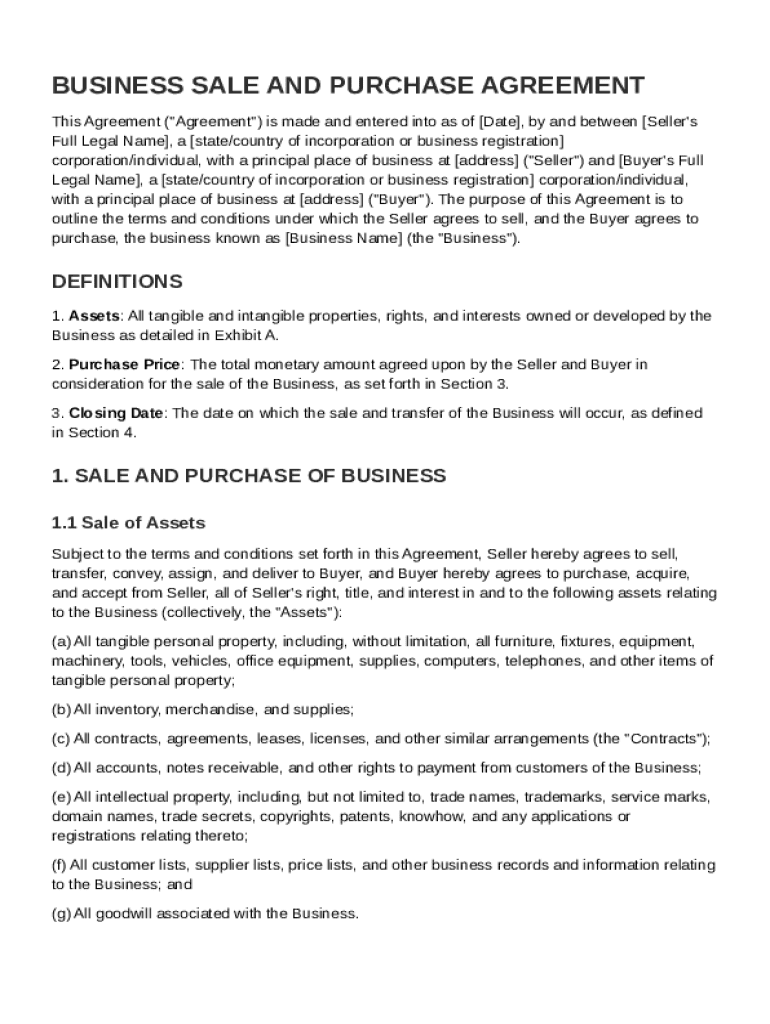
The Business Sale and Purchase Agreement (BSPA) Template is a comprehensive document that outlines the detailed terms under which a seller agrees to sell and a buyer agrees to purchase a business. This template includes essential elements such as definitions of the business assets being transferred, the purchase price, and the payment terms. For both business sellers and buyers, this document serves as a foundational legal framework to ensure that all parties understand their rights and responsibilities. The agreement lays out the closing conditions and lists the representations and warranties each party must make, providing a reliable reference to resolve potential disputes.
Key Elements of the Business Sale and Purchase Agreement Template
A well-drafted BSPA Template contains several crucial elements that are essential to a successful business transaction:
- Assets and Liabilities: Clearly define which business assets are being sold and which liabilities are being assumed by the buyer.
- Purchase Price: Specify the total amount to be paid, including any conditions for price adjustments contingent on inventory levels or debt.
- Payment Terms: Outline how and when payments will be made, whether as a lump sum or via installment payments.
- Closing Conditions: List any actions or conditions that must be fulfilled before the sale can be finalized, such as regulatory approvals.
- Representations and Warranties: Detail the specific assurances both parties make regarding the validity of the business, free of legal liabilities.
- Confidentiality and Covenants: Include clauses that ensure each party keeps sensitive information confidential and agrees to certain behaviors post-closing, such as non-compete clauses.
How to Use the Business Sale and Purchase Agreement Template
Utilizing the BSPA Template requires a clear understanding of your specific transaction needs and careful customization of the document:
- Identify Key Details: Collect all critical information about the business being sold, including asset lists, financial statements, and ownership records.
- Customize the Template: Adjust the template language to reflect the specifics of your deal, ensuring inclusion of accurate financial details and conditions.
- Consult Professionals: Seek legal and financial advice to ensure the agreement complies with applicable laws and accurately reflects the parties' intentions.
- Review and Finalize: Have both parties carefully review the completed document and make necessary revisions before signing.
- Execute the Agreement: Formally sign the document, often in the presence of legal counsel, to make the agreement legally binding.
Legal Use of the Business Sale and Purchase Agreement Template
In the United States, the BSPA Template is a legally significant document that binds the parties involved to its terms and conditions:
- Legally Binding: Once signed, the agreement is enforceable in court, protecting both parties should disputes arise.
- Compliance with Laws: Ensure compliance with both federal and state-specific laws governing the sale of businesses, including those related to taxes and employment.
- Protection and Risk Management: Shields the parties from potential legal and financial risks by clearly defining roles and obligations.
- Facilitates Due Diligence: Provides a structured format that aids both parties in conducting due diligence, ensuring that the buyer fully understands the business's condition.
Important Terms Related to the Business Sale and Purchase Agreement Template
Familiarity with key legal terms can enhance the understanding and execution of the BSPA Template:
- Closing Date: The mutually agreed-upon date on which the transaction is officially completed.
- Due Diligence: The investigative process undertaken by the buyer to verify the seller’s claims about the business.
- Escrow: An arrangement where a third party temporarily holds funds until certain conditions are met.
- Indemnity: A commitment to compensate for any losses or damages that may occur as a result of the purchase agreement.
Steps to Complete the Business Sale and Purchase Agreement Template
Completing this template involves a series of detailed steps to ensure accuracy and compliance:
- Gather Business Information: Compile all necessary business details including financial records, asset lists, and legal documents.
- Draft the Agreement: Tailor the template with specifics of the transaction, incorporating professional guidance.
- Negotiate Terms: Both parties should discuss and agree upon all terms, making adjustments as needed.
- Review by Legal Professionals: Have a qualified attorney review the document to ensure it meets legal standards.
- Final Review: Conduct a final review with all stakeholders to confirm accuracy and clarity.
- Sign and Notarize: Both parties should sign the document, which may require notarization depending on the jurisdiction.
Business Types That Benefit Most from the Business Sale and Purchase Agreement Template
Certain business types find the BSPA Template particularly beneficial due to their complex transactional needs:
- Small to Medium Enterprises (SMEs): Often require clear and detailed contracts when undergoing ownership transitions.
- Franchises: Need to detail brand and operational commitments in the transaction agreement.
- Family-Owned Businesses: Typically involve sale agreements to maintain family interests and manage transition smoothly.
- Retail Businesses: Require detailed asset lists and customer base transfers for effective ownership change.
Who Typically Uses the Business Sale and Purchase Agreement Template
Professionals and entities who commonly use this template include:
- Business Owners: Looking to sell their business either in full or partially.
- Prospective Buyers: Individuals or companies intending to purchase an existing business.
- Legal Advisors: Providing counsel and ensuring compliance with legal standards.
- Financial Planners: Assisting in evaluating the financial aspects of the sale to protect economic interests.


State-by-State Differences
While the BSPA Template provides a standard structure, state-specific legal differences must be accounted for:
- State Regulations: Each state may have unique regulations governing business sales, particularly regarding tax obligations and employment laws.
- Real Estate Considerations: Involving commercial property, requiring adherence to varying state real estate laws.
- Business Structures: Different state rules may apply depending on whether the business is an LLC, corporation, or sole proprietorship.
Providing a robust framework for business transactions, the Business Sale and Purchase Agreement Template is an indispensable tool for ensuring legal compliance and facilitating smooth ownership transfers.