






Key Elements of the Deferred Salary Agreement Template
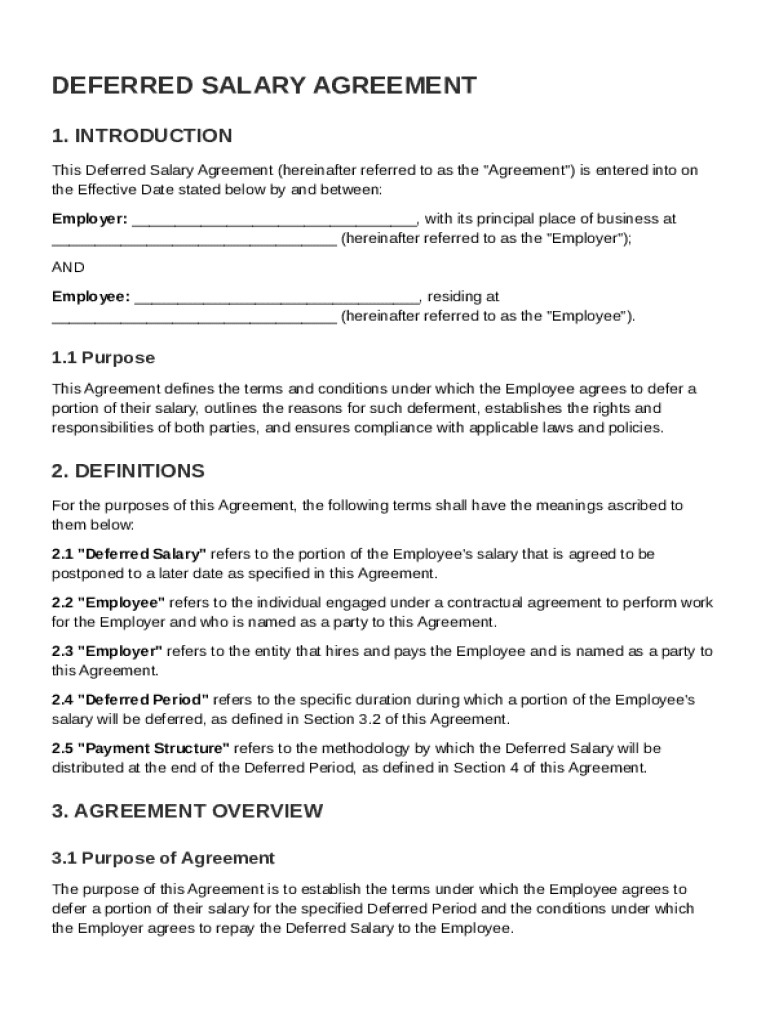
The Deferred Salary Agreement Template is designed to outline specific terms and requirements that both employers and employees must adhere to. Key elements include:
- Payment Timelines: Specifies when deferred salary payments will occur and under what conditions any accrued interest will be paid.
- Interest Rates: Details any interest applicable to the deferred amounts, providing clarity on both the rate and the method of calculation.
- Termination Conditions: Outlines circumstances under which the agreement can be terminated, such as voluntary resignation or termination for cause.
- Compliance: Ensures all terms comply with current legal standards and employment laws.
How to Use the Deferred Salary Agreement Template
The Deferred Salary Agreement Template serves as a vital tool for structuring deferred compensation agreements:
- Download the Template: Acquire the template from a reliable source such as a legal document provider or your HR department.
- Fill in Key Details: Input the necessary details, including employee and employer information, salary amounts, and deferral period.
- Customize Conditions: Adapt sections to reflect any unique terms agreed upon by both parties, like altered payment schedules or additional obligations.
- Review for Compliance: Ensure compliance with both internal company policies and external legal requirements.
- Finalize and Distribute: Once completed, have all relevant parties sign the document.
Who Typically Uses the Deferred Salary Agreement Template
This template is commonly utilized in various professional settings:
- High-level Executives: Often defer salary portions as part of tax planning or compensation structuring.
- Startups: Employees might agree to defer salaries to assist in maintaining cash flow.
- Contractual Employees: Those whose compensation is dependent on project completion might use this template.


Important Terms Related to Deferred Salary Agreement
Understanding key terms is crucial when dealing with deferred salary arrangements:
- Deferral Period: The duration for which salary payments are deferred.
- Vesting Schedule: A timeline that delineates when the employee is entitled to receive full salary rights.
- Deferred Compensation: Portions of income that are set aside for payment at a later date.
- Non-Qualified Plans: Deferred compensation plans that do not adhere to ERISA regulations for tax benefits.
Legal Use of the Deferred Salary Agreement Template
Legal aspects associated with the Deferred Salary Agreement must be adhered to:
- ESIGN Act Compliance: Electronic signatures on agreements are valid under this act.
- Employment Law Adherence: Terms must align with federal and state employment legislation to remain enforceable.
- Data Protection: Secure handling of sensitive employee data within the agreement framework.
Steps to Complete the Deferred Salary Agreement Template
Completing the agreement requires careful attention to detail:
- Download: Access the template from a trusted source.
- Input Information: Fill in both parties' contact details and employment information.
- Detail Deferred Amount: Clearly specify salary amounts to be deferred and conditions attached.
- Specify Timeframe: Enter precise dates for payment deferral and subsequent distribution.
- Finalize with Signatures: Ensure all parties sign the completed document, confirming their understanding and agreement.
Examples of Using the Deferred Salary Agreement Template
Providing practical examples clarifies its application:
- Scenario for Startups: A newly launched company might defer salaries to retain funds for operational costs until revenue stabilizes.
- Executive Bonuses: An executive may defer their performance bonuses to benefit from different tax periods or employer contributions.
Versions or Alternatives to the Deferred Salary Agreement Template
Different versions or alternatives may better fit specific needs:
- Standard Deferred Compensation Plan: This covers broader compensation types beyond salary.
- Phantom Stock Agreements: While not identical, they provide alternative deferred compensation for company shares.
- 401(k) Plan: Recognized for tax purposes and allows deferring income into retirement accounts.
IRS Guidelines
Adherence to IRS guidelines ensures compliance in deferred salary arrangements:
- Section 409A Compliance: Ensure the agreement aligns with regulations regarding deferred compensation to avoid penalties.
- Reporting Requirements: Accurately report deferred compensation on tax documents using appropriate IRS forms.
State-Specific Rules for the Deferred Salary Agreement Template
State regulations can influence the template's application:
- Variations in Employment Law: States like California have stringent labor laws affecting deferral agreements.
- Minimum Wage Laws: Ensure the deferred arrangement does not conflict with state-imposed wage requirements.
Software Compatibility
Using document management tools for the agreement enhances efficiency:
- DocHub: Ideal for editing, filling, and storing the Deferred Salary Agreement Template securely.
- Google Workspace: Integrates seamlessly with tools like Google Drive for easy access and sharing.
Digital vs. Paper Version
The digital version offers advantages over traditional paper methods:
- Efficiency: Electronic agreements expedite the signing process.
- Security: Enhanced protection through encryption and digital access controls.
- Accessibility: Easily accessible from anywhere with internet connectivity.
Eligibility Criteria
Determining who qualifies for deferred salary arrangements is essential:
- Employment Type: Full-time employees often have access, whereas part-time workers may need specific approval.
- Position Level: Typically designated for senior roles or executives due to compensation complexity.