






Definition and Meaning of a Long Term Tenancy Agreement
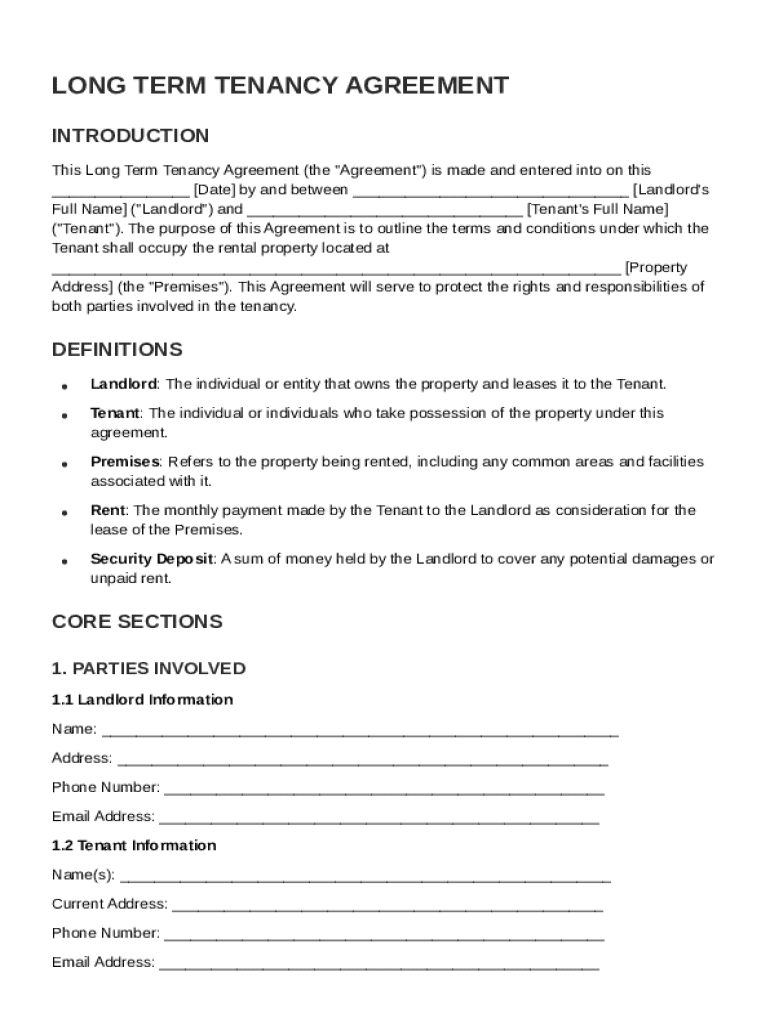
A Long Term Tenancy Agreement is a legally binding contract between a landlord and a tenant that outlines the terms and conditions of renting a property for an extended period. Typically, such agreements extend beyond a year, ensuring stability and clarity for both parties involved. The agreement includes details about rental payments, maintenance obligations, property use, security deposits, and procedures for terminating the tenancy. By defining these terms, the agreement protects the rights and responsibilities of both the landlord and the tenant.
Example Scenarios
- Financial Security: The agreement provides financial security to the landlord by stipulating the regularity and amount of rent payments.
- Tenant Rights: Tenants gain the assurance of long-term housing, preventing unexpected eviction and rent hikes.
How to Use the Long Term Tenancy Agreement Template
Utilizing a Long Term Tenancy Agreement Template can streamline the process of drafting a comprehensive rental agreement. This template serves as a standardized document that can be customized according to specific landlord and tenant needs.
Step-by-Step Process
- Download the Template: Obtain the template from a trusted source, ensuring it aligns with state-specific requirements.
- Fill in Basic Information: Enter the details of both parties involved, including names, property address, and contact information.
- Customize Terms: Amend sections related to rent, security deposit, and maintenance obligations to reflect mutually agreed terms.
- Review for Completeness: Ensure all necessary sections are addressed, such as lease terms, permissible uses, and termination clauses.
- Seek Legal Review (Optional): Have a legal professional review the agreement for compliance and potential oversight.
- Sign the Agreement: Both parties must sign and date the document to make it legally enforceable.
Key Elements of the Long Term Tenancy Agreement Template
A robust Long Term Tenancy Agreement Template includes several critical components that define the rental arrangement. These components ensure legal protection and clarity.
Essential Provisions
- Rent Details: Specifies the rental amount, due date, acceptable payment methods, and any penalties for late payments.
- Security Deposit: Outlines the amount of the deposit, conditions for its return, and any deductions that might occur.
- Maintenance Responsibilities: Details the maintenance duties divided between landlord and tenant, including routine repairs and emergency repairs.
- Lease Duration and Renewal: Indicates the start and end dates of the lease and the process for renewing the agreement.
Important Terms Related to the Long Term Tenancy Agreement Template
Understanding terminology associated with tenancy agreements is fundamental for both parties. These terms help elucidate the expectations and responsibilities of each party.
Key Terms
- Lessor/Lessee: The lessor is the property owner (landlord), while the lessee is the individual renting the property (tenant).
- Habitable Condition: Refers to the landlord's obligation to provide a livable environment, including necessary repairs and upkeep.
- Termination Notice: The required notice period that a tenant or landlord must give to terminate the tenancy agreement.
Why Use a Long Term Tenancy Agreement Template
Employing a Long Term Tenancy Agreement Template is crucial for structuring a clear, concise, and thorough rental agreement. It minimizes misunderstandings and potential conflicts.
Benefits
- Efficiency: Templates expedite document creation by providing pre-structured sections ready for customization.
- Consistency: Ensures that all required legal components are included, reducing the risk of an unenforceable agreement.
- Cost-Effective: Saves time and money by reducing the need for comprehensive legal drafting from scratch.
State-Specific Rules for the Long Term Tenancy Agreement Template
Long Term Tenancy Agreements must comply with state-specific laws to remain enforceable. These regulations can dictate variances in landlord and tenant rights and responsibilities.
Considerations
- Rent Control Laws: Certain states have stipulations regarding how much and how often rent can be increased.
- Eviction Protocols: Procedures and requirements for tenant eviction can differ significantly by state, affecting how agreements are formulated.
- Security Deposit Limitations: Some states mandate maximum security deposit amounts and conditions for their return.
Steps to Complete the Long Term Tenancy Agreement Template
Completing a Long Term Tenancy Agreement Template involves several key steps that ensure the document is ready for execution.
- Input Standard Information: Enter essential details like the names of parties involved, property location, and lease duration.
- Define Specific Terms: Customize sections on rent, deposits, and maintenance to reflect the agreed conditions.
- Draft Additional Clauses: Add unique clauses as needed, such as pet policies or subleasing permissions.
- Finalize the Document: Ensure all sections are completed and have been reviewed for accuracy and clarity.
- Secure Signatures: Obtain signatures from both the landlord and tenant to finalize the agreement's legality.
Who Typically Uses the Long Term Tenancy Agreement Template
The Long Term Tenancy Agreement Template is predominantly used by individuals and businesses involved in residential property leasing.


Typical Users
- Landlords: Those owning residential properties looking to secure long-term rental arrangements.
- Tenants: Individuals seeking stable housing for an extended period.
- Property Managers: Agents or companies responsible for overseeing rental properties on behalf of landlords.